Men's Big and Tall Swimwear Guide
Big and tall swimwear is swim shorts, trunks and board-style swimwear cut on the extended system: big waists that stay secure when the fabric is wet and heavy, tall sizes with the outseam length that keeps coverage where a longer leg intends it. Swimwear is a product with a hostile workplace - water weight, chlorine, sun and sand - and extended sizes multiply every load on waistbands and seams, so this guide is a strictly practical one: closures, fabrics, liners and fit, with no decoration.
Shop Men's Big and Tall Swimwear Now
Shop Men's Big and Tall Swimwear on Amazon Shop Men's Big and Tall Swimwear on eBayThe Amazon and eBay links on this page are affiliate links. If you make a purchase through them, Apparel Search may earn a commission.
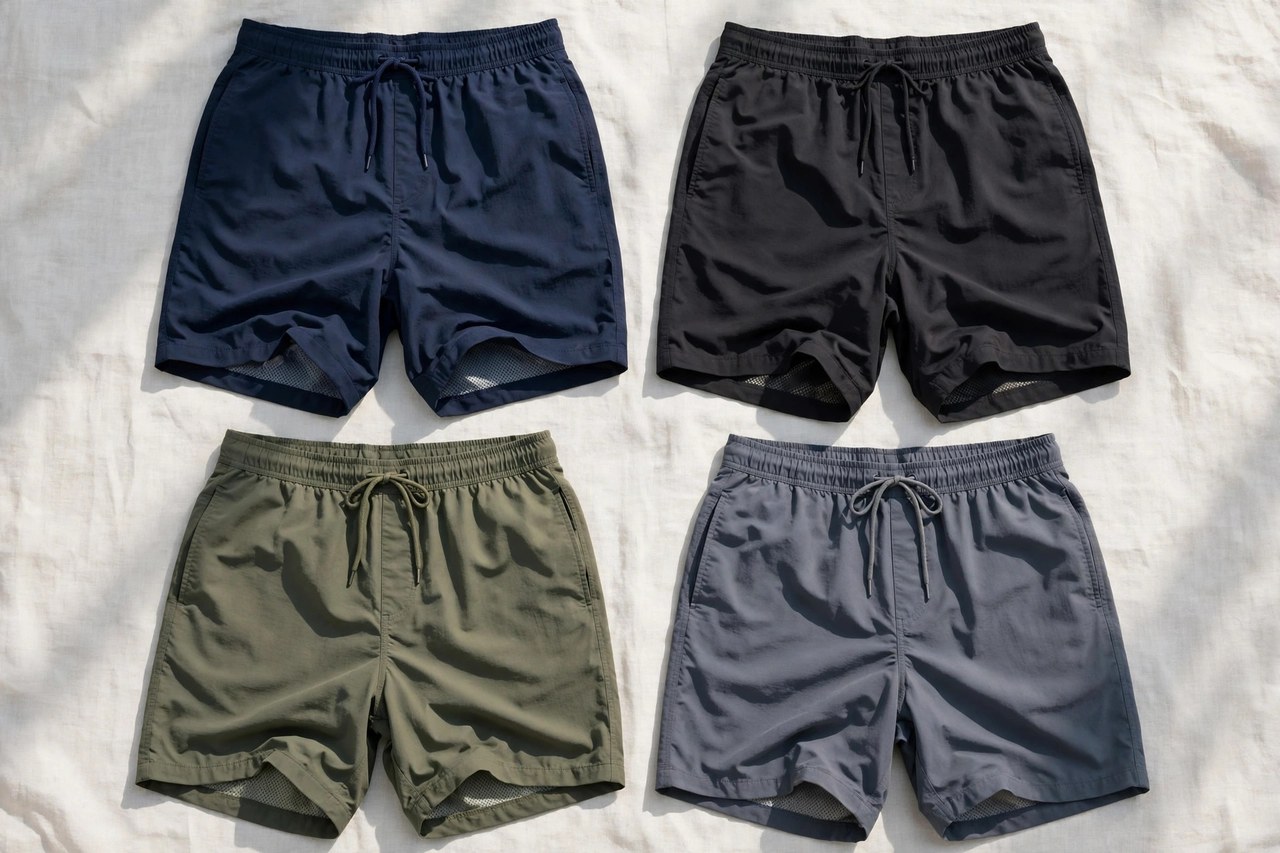
Big and tall swimwear is swim shorts, trunks and board-style swimwear cut on the extended system: big waists that stay secure when the fabric is wet and heavy, tall sizes with the outseam length that keeps coverage where a longer leg intends it. Swimwear is a product with a hostile workplace - water weight, chlorine, sun and sand - and extended sizes multiply every load on waistbands and seams, so this guide is a strictly practical one: closures, fabrics, liners and fit, with no decoration.
Big and tall sizing answers two different bodies with two different ranges: big sizes (1X through 6X in most lines) add circumference - chest, waist, seat and thigh - at regular lengths, while tall sizes (LT through 4XLT) add length - sleeves, body, rise and inseam - at a given circumference. Many men need one, some need both, and buying the wrong axis is the classic big-and-tall mistake: a big size bought for length drowns the shoulders, and a tall size bought for girth strains at every closure. Measure both axes - circumference where the garment closes, and length where it must reach - and order from the maker's own chart, because an X in one brand is a rumor in another.
Sizing for Bigger and Taller Frames
The waistband is the swimwear specification that matters most at size: a full elastic band with a working drawstring is the secure standard, because wet fabric roughly doubles its drag and a band that suffices dry may not suffice out of a wave. Fixed-waist board styles need exact sizing and a functioning lace. Tall swimwear should state its outseam - the difference between a tall cut and a regular one is coverage at mid-thigh versus the knee, a style decision that should be yours, not a warehouse's.
Proportions are the second half of the system. A garment simply scaled up in every dimension fits nobody: proper big-and-tall patterns widen the shoulder and chest without dropping the armhole to the waist, add rise so a waistband sits where trousers are meant to sit, and grade pockets, collars and cuffs up modestly rather than comically. When a tall or big version looks like a regular garment photographed through a magnifier, that is usually better than it sounds - restraint in grading is what keeps a 3X shirt reading as a shirt and not as a tent with buttons.
Fabric and Construction
Fabrics are quick-dry nylon or polyester, increasingly with mechanical or elastane stretch that helps a larger body move without the fabric arguing. Liners divide by preference: mesh brief liners for support, compression liners for chafe control, unlined worn over swim briefs. In big sizes, check seam finishing inside the leg - the chafe frontier - and choose flatlock or soft-faced seams. Chlorine-resistant polyester outlasts nylon in pool service by seasons; for the sea, either serves, and the rinse after matters more than the fiber before.
Whatever the garment, the same buying discipline applies: decide the job first, then the specification that does that job, then the budget - in that order. Read fiber and care labels as specifications, not fine print. Check the garment inside out, because finishing you cannot see from the front - seam allowances, lining attachments, spare buttons, clean thread ends - predicts how the piece will age better than any brand name. And keep the receipt habit: a garment that fits your measurements, your climate and your laundry routine will be worn; one that misses any of the three becomes storage.
Wearing and Care
Care for swimwear in extended sizes follows the same rules as any quality garment, with two additions: the extra fabric weight makes hangers work harder, so fold heavy knits and use broad hangers for tailored pieces; and alterations budget matters more, because a hem or sleeve adjustment is often the difference between an extended size that fits and one that merely covers.
A small maintenance habit outperforms any product: five minutes when a garment comes off - shake it out, hang or fold it properly, note the stain or the loose button - prevents most of the damage owners later blame on quality. Keep a basic kit where the clothes live: a brush, a lint roller, conditioner suited to your leathers, and a needle and thread in black, navy and grey. Garments rarely die all at once; they fade by neglect in small increments, and small increments of care reverse the process.
Common Questions
How do you keep big-size swimwear from sagging when wet?
Closure and fabric: a full drawstring tied over elastic (not elastic alone), quick-dry cloth that does not waterlog, and a fit that is correct dry - swimwear never fits better wet than it did in the shop. Board styles in exact waist sizes with a lace front are the alternative system. If a pair sags in the fitting-room imagination, the ocean will confirm it.
What outseam should tall swimwear have?
By your coverage preference, measured on your leg: the classic board length lands at the knee (outseams around 21-22 inches on tall sizes), modern cuts end two to three inches above it. Regular sizes shorten proportionally on a tall leg, so buy the tall version of your waist size and choose the stated outseam the way you would choose any hem - deliberately.
Mesh liner or no liner in big sizes?
Preference, engineered: mesh liners support and drain, compression liners add chafe protection for long walks and active water days, and unlined shorts over a swim brief give the most adjustable system of all. In bigger sizes the liner's own sizing matters - a liner cut small inside a big short defeats both. Try the system wet if the shop allows; liners are honest only in water.
More Big and Tall Guides
Background
Swimwear in extended sizes is part of the Big and Tall collection, listed on its second page. The links below lead to big and tall clothing stores and onward through the collection’s other categories, and this guide covers the garment’s extended sizing, fabrics, fit and care, written for big and tall men.
Looking for Men's Clothing Stores?
This guide explains men's big and tall swimwear and their sizing. To browse where to buy, visit our men's clothing store directory, where you can find retailers that carry extended sizes.