Men's Beachwear Guide
Men's beachwear is the small, hard-working wardrobe built for sand, salt water and sun: swim shorts or trunks, a light shirt or tee for the hours out of the water, sandals, a hat and the layers that move between beach and town. It is a product category defined by environment - everything must tolerate salt, dry fast, shrug off sand and stay comfortable on sun-warmed skin - and this guide treats it as a kit to assemble rather than a pile of leftovers from other drawers.
Shop Men's Beachwear Now
Shop Men's Beachwear on Amazon Shop Men's Beachwear on eBayThe Amazon and eBay links on this page are affiliate links. If you make a purchase through them, Apparel Search may earn a commission.
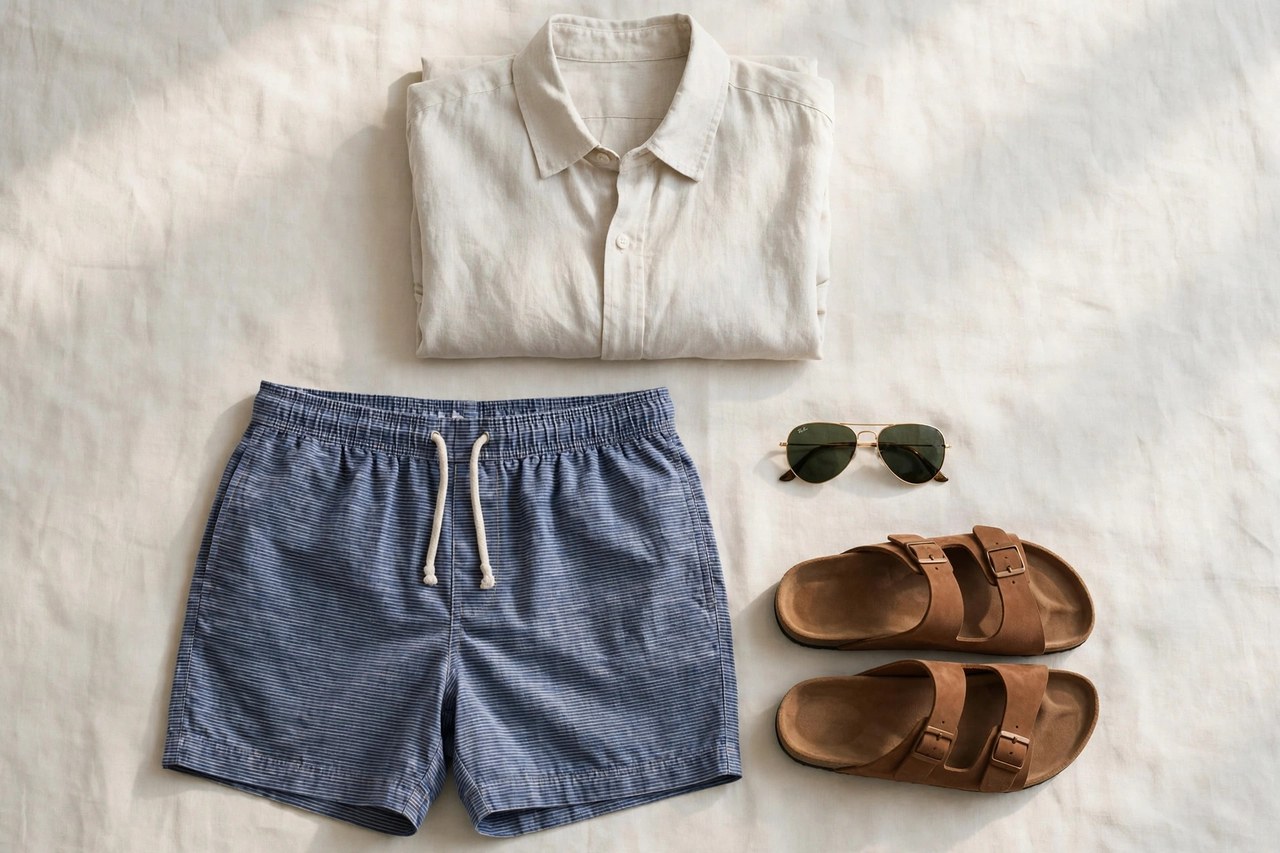
Men's beachwear is the small, hard-working wardrobe built for sand, salt water and sun: swim shorts or trunks, a light shirt or tee for the hours out of the water, sandals, a hat and the layers that move between beach and town. It is a product category defined by environment - everything must tolerate salt, dry fast, shrug off sand and stay comfortable on sun-warmed skin - and this guide treats it as a kit to assemble rather than a pile of leftovers from other drawers. This guide covers the styles worth knowing, the fit points that decide comfort, the fabrics and construction that separate a good buy from a regret, and the simple care that makes the garment last.
Styles and Construction
Swim shorts anchor the kit: quick-dry nylon or polyester, a mesh or compression liner (or none, by preference), and a length chosen by activity - shorter for swimming, longer board-short lengths for surfing and beach sport. Above them rotate tees, tanks and open camp shirts in light colors; a long-sleeve rash guard or sun shirt adds real UV protection for long water days. Sandals should be water-built, not leather, and a wide-brim hat or cap plus sunglasses on a retainer finish the functional list.
Whatever the garment, the same buying discipline applies: decide the job first, then the specification that does that job, then the budget - in that order. Read fiber and care labels as specifications, not fine print. Check the garment inside out, because finishing you cannot see from the front - seam allowances, lining attachments, spare buttons, clean thread ends - predicts how the piece will age better than any brand name. And keep the receipt habit: a garment that fits your measurements, your climate and your laundry routine will be worn; one that misses any of the three becomes storage.
Fit and Sizing
Buy beach pieces by their wet behavior: fabrics that stay heavy and saggy when wet fail the category whatever their dry hand-feel. Waistbands must hold when the garment is waterlogged - a drawstring that works is not optional. Fit swim shorts to move and sit in, try the shirt over the shorts you will pair it with, and remember sun-protective ratings (UPF) are measured facts on labeled garments, not marketing adjectives.
Whatever the category, measure yourself once a year and write the numbers down - chest, waist, inseam, foot length, head circumference as relevant - because bodies change gradually and old size habits change never. Shop from measurements rather than from the size you remember being, try garments in the conditions you will wear them (over layers, with your own shoes, late in the day for footwear), and be honest about alteration: a tailor fixes length and small waist changes beautifully, but shoulders, rises and patterns are the garment you bought forever.
Wearing and Care
Rinse the whole kit in fresh water after every beach day - salt and chlorine are both slow poisons for elastic and dye - and dry it out of direct sun, which fades and weakens fibers even as it dries them. Shake sand out before it reaches the washing machine, store everything bone-dry to keep mildew out of liners, and retire elastic-shot swimwear honestly: a sagging pair helps nobody.
A small maintenance habit outperforms any product: five minutes when a garment comes off - shake it out, hang or fold it properly, note the stain or the loose button - prevents most of the damage owners later blame on quality. Keep a basic kit where the clothes live: a brush, a lint roller, conditioner suited to your leathers, and a needle and thread in black, navy and grey. Garments rarely die all at once; they fade by neglect in small increments, and small increments of care reverse the process.
Common Questions
What fabrics are best for beachwear?
Nylon and polyester lead because they dry fast, hold color against sun and chlorine, and stay light when wet. Cotton is the trap fabric of the beach - comfortable dry, heavy and slow when soaked. For sun shirts, look for a labeled UPF rating, which is a tested protection factor, in a lightweight knit with flat seams.
Should swim shorts have a mesh liner?
It is preference, not correctness. Mesh liners give support and modesty and drain fast, but some wearers find them abrasive on long days; compression liners feel athletic and prevent chafe; unlined shorts over swim briefs or compression shorts are the third legitimate system. Try your choice wet if you can - liners reveal themselves only in the water.
How do you stop beachwear fading?
Rinse salt and chlorine out the same day, wash cool and inside out, and dry in shade - ultraviolet light fades dye even while it dries the garment. Sunscreen stains deserve prompt treatment too, since some formulas react with wash water to yellow light fabrics. Rotating two swim pairs halves each pair's exposure.
More in Men's Clothes Guide B
Planning a Beach Day
Plan the whole beach day, not just the swim: sunblock and trendy swimwear, with board shorts, rash guards and swim shirts to learn about — and the reminder that a day at the beach is not only about swimming, surfing or beach volleyball, because the time in local shops and at meals between beach adventures wants planning too, possibly with a nice pair of Bermuda shorts or a Hawaiian shirt.
Looking for Men's Clothing Stores?
This guide explains men's beachwear. To browse where to buy, visit our men's clothing store directory, where you can find retailers that carry them.