Men's Board Shorts Guide
Men's board shorts are the surf-born swim short: a knee-length, unlined trunk with a fixed waistband and lace-up or drawstring closure, built originally so surfers lying on a board had no rivets, elastic or bulk pressing into them - and no waistband that a wipeout could pull down. They left the surf break for general beach and pool duty because the formula works anywhere: light, quick-drying, secure, and long enough to move in.
Shop Men's Board Shorts Now
Shop Men's Board Shorts on Amazon Shop Men's Board Shorts on eBayThe Amazon and eBay links on this page are affiliate links. If you make a purchase through them, Apparel Search may earn a commission.
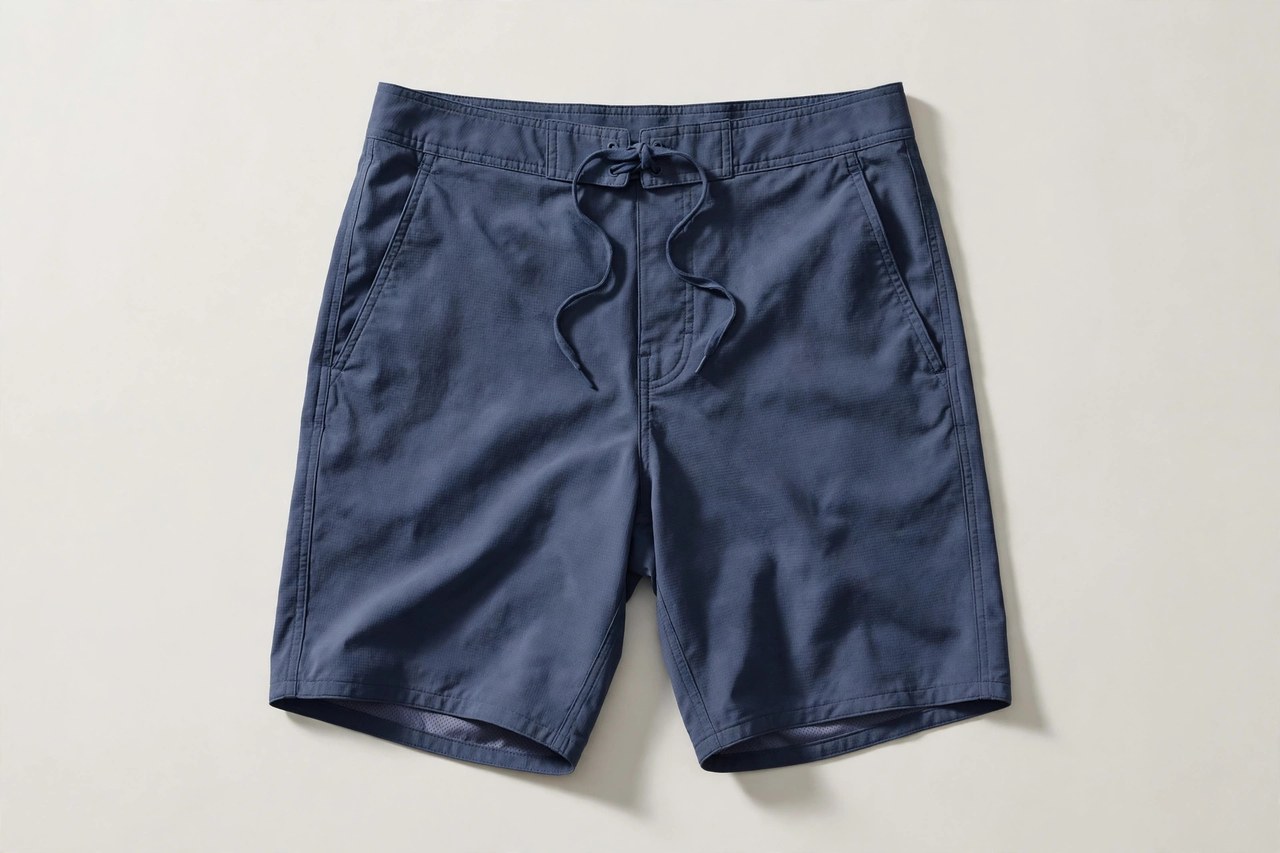
Men's board shorts are the surf-born swim short: a knee-length, unlined trunk with a fixed waistband and lace-up or drawstring closure, built originally so surfers lying on a board had no rivets, elastic or bulk pressing into them - and no waistband that a wipeout could pull down. They left the surf break for general beach and pool duty because the formula works anywhere: light, quick-drying, secure, and long enough to move in. This guide covers the styles worth knowing, the fit points that decide comfort, the fabrics and construction that separate a good buy from a regret, and the simple care that makes the garment last.
Styles and Construction
Traditional board shorts close with a lace-up fly and hook-and-loop or drawstring waist, sit just above or at the knee, and carry one cargo-style pocket with a drainage grommet and a key loop. Modern hybrids add two or four-way stretch, slash pockets and a cleaner waistband so the same short walks from water to town without announcing itself. Fabric is polyester or nylon microfiber, increasingly with elastane; outseam length is the style dial - longer reads surf-classic, a few inches shorter reads modern.
On any leg garment, the rise decides comfort before the cloth does: the distance from front waist through to back waist must match your body, or the waistband will dig sitting and gap standing. Check that pockets are deep enough to be useful, that belt loops are bar-tacked at both ends, and that the hem is finished evenly all round. Seams at the inner leg take the most abrasion, so double stitching there is worth paying for, and a gusset or articulated knee repays its small premium the first long day you spend in the garment.
Fit and Sizing
The fixed waistband makes sizing exact: measure your waist and buy your number, because there is no elastic to forgive a guess - a lace closure adjusts perhaps an inch total. The leg should move freely for swimming and paddling without billowing; stretch fabric earns its premium precisely here. Try board shorts with a full stride and a seated crouch, and check the pocket drains - a ballooning pocket is a design failure you will feel on every swim.
Measure before you shop: waist at the point the waistband will actually sit, inseam from crotch to the hem point you prefer, and - for closer fits - thigh and seat as well, taken over the underwear you wear. Sit, squat and climb an imaginary stair in the fitting room; a leg garment that only works standing still does not work. Remember that waistbands relax about half an inch with wear and that inseams shrink most in the first washes, so buy the fit you want after those changes, not before them.
Wearing and Care
Rinse board shorts in fresh water after salt or chlorine, wash cool with like colors, and line dry - the fabric dries in minutes anyway, and elastane lasts seasons longer out of the dryer. Keep a second pair in rotation if you live in them all summer: even quick-dry shorts benefit from a full dry between swims, and waistband laces last longer rested. Replace when the fabric's water-shedding goes and the short starts staying heavy and wet.
Wash leg garments inside out in cool water to protect color and surface, and dry them low or on the line: heat is what shortens elastic, fades dye and shrinks inseams. Hang or fold promptly - the crease you iron in is a choice, but the wrinkle you sleep in becomes one too. Check hems and pocket corners each season and mend the small fray early; bottoms fail at stress points gradually and then suddenly, and a two-minute repair in October saves a replacement in November.
Common Questions
Why do board shorts have no elastic waistband?
Because they were designed on surfboards. A fixed waistband with a lace-up closure cannot be dragged down by a wave or a wipeout, and it presents a flat, hardware-free front to lie on while paddling - no elastic bunching, no rivets, no zips pressing in. The lace closure also survives salt water indefinitely, where elastic perishes in a few seasons.
How long should board shorts be?
Classically at or just above the knee - roughly a 20 to 22 inch outseam on a medium - though modern cuts run shorter, toward 18 inches, for a cleaner look and easier movement. Choose by activity: surfers and paddleboarders often prefer the coverage of the classic length against board wax and sun; swimmers and runners usually prefer shorter.
Can you swim in hybrid board shorts?
Yes - hybrids are built to: swim-short fabrics and drainage in a trouser-short silhouette. Check for the swim essentials before relying on them: a secure closure, mesh or drainable pockets (slash pockets without drainage hold a cup of water each), and fabric that stays light wet. If those are present, the hybrid is a genuine two-job garment.
More in Men's Clothes Guide B
From Our Original Guide: Surf Trunks, Jams, Board Shorts
Our original guide traced the names: board shorts were originally known as surf trunks, later as jams, and occasionally in British English as swim shorts. They were originally developed for water sports, specifically for surfing, and in recent years have become a popular form of general beach wear and all-purpose summer wear — the career the guide above follows from the surf break to the street.
Looking for Men's Clothing Stores?
This guide explains men's board shorts. To browse where to buy, visit our men's clothing store directory, where you can find retailers that carry them.