Men's Boxing Trunks Guide
Men's boxing trunks are the satin ring shorts of the sweet science: a high, wide elastic waistband, a loose leg cut to mid-thigh, and bold colors with contrast trim that read across an arena. They are equipment, not fashion shorts - every element serves a fighter who must move, pivot and be visible to judges - but their silhouette has influenced gym and street shorts for decades, and this guide covers the genuine garment: its construction, sizing for training and competition, and care.
Shop Men's Boxing Trunks Now
Shop Men's Boxing Trunks on Amazon Shop Men's Boxing Trunks on eBayThe Amazon and eBay links on this page are affiliate links. If you make a purchase through them, Apparel Search may earn a commission.
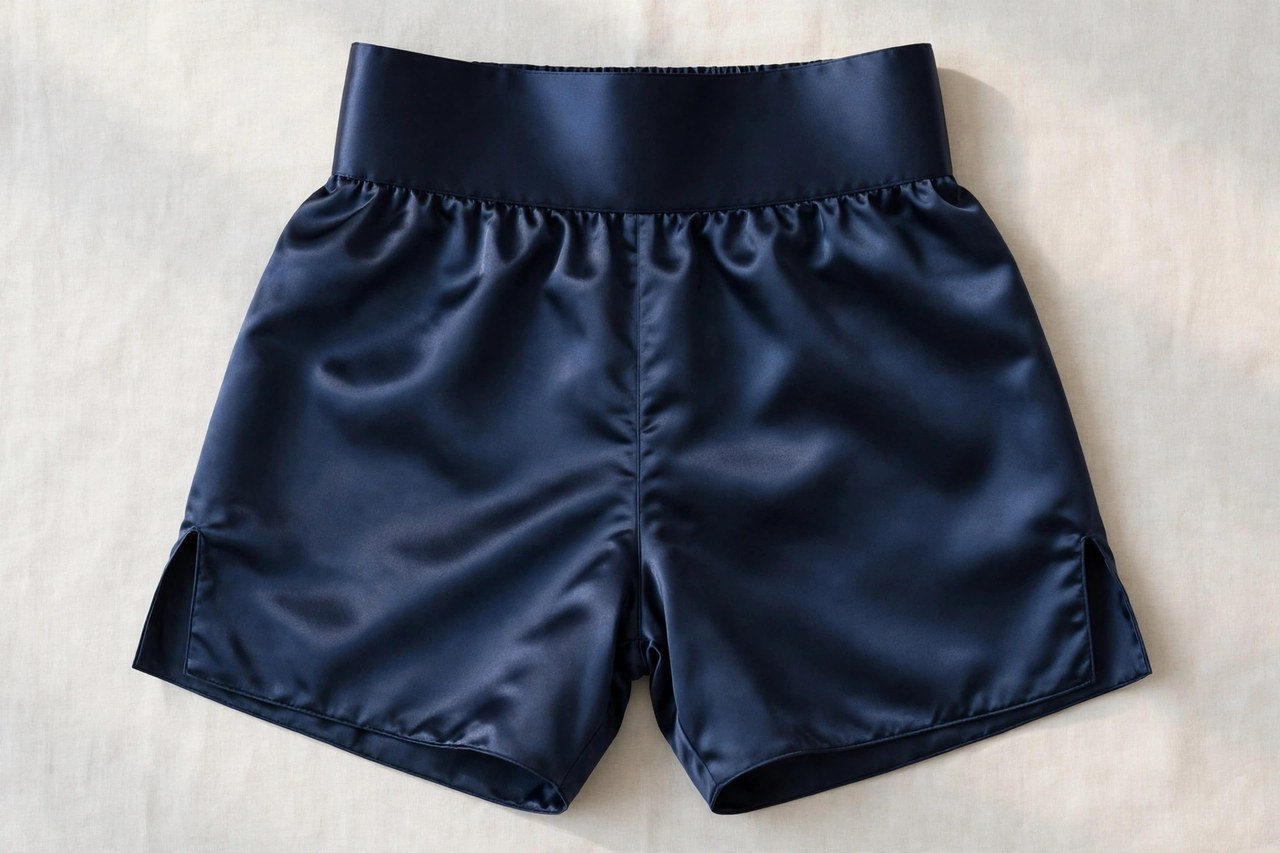
Men's boxing trunks are the satin ring shorts of the sweet science: a high, wide elastic waistband, a loose leg cut to mid-thigh, and bold colors with contrast trim that read across an arena. They are equipment, not fashion shorts - every element serves a fighter who must move, pivot and be visible to judges - but their silhouette has influenced gym and street shorts for decades, and this guide covers the genuine garment: its construction, sizing for training and competition, and care. This guide is built around the questions buyers actually ask: which style, which size, which fabric, and what will it look like after a year of real use - answered in order, with the trade-offs stated plainly.
Styles and Construction
Competition trunks are satin or satin-faced polyester: light, slippery against clinch contact, and quick to shed sweat. The waistband runs wide - two to four inches of elastic - sitting high on the waist, often carrying the fighter's name or gym. Side slits or a generous cut free the leg for footwork and kicks in the hybrid gyms. Training trunks trade a little sheen for durability, adding mesh panels and drawstrings; sparring pairs are usually plainer and tougher than the embroidered show pairs kept for fight night.
On any leg garment, the rise decides comfort before the cloth does: the distance from front waist through to back waist must match your body, or the waistband will dig sitting and gap standing. Check that pockets are deep enough to be useful, that belt loops are bar-tacked at both ends, and that the hem is finished evenly all round. Seams at the inner leg take the most abrasion, so double stitching there is worth paying for, and a gusset or articulated knee repays its small premium the first long day you spend in the garment.
Fit and Sizing
Size boxing trunks by waist with the guard underneath: protective cups and groin guards worn in training add bulk the waistband must accommodate, so fit with your full training kit on. Length should end mid-thigh - long enough for modesty in any fall, short enough never to catch a knee. The leg must allow a full lunge and a high guard without the hem binding; if in doubt between sizes for training, take the roomier one.
Measure before you shop: waist at the point the waistband will actually sit, inseam from crotch to the hem point you prefer, and - for closer fits - thigh and seat as well, taken over the underwear you wear. Sit, squat and climb an imaginary stair in the fitting room; a leg garment that only works standing still does not work. Remember that waistbands relax about half an inch with wear and that inseams shrink most in the first washes, so buy the fit you want after those changes, not before them.
Wearing and Care
Satin wants cool washing inside out and hanging dry; embroidery and appliquéd names crack in dryers. Keep the show pair separate from training pairs - ring trunks carry a fighter's identity, and their condition is part of the presentation. Check waistband elastic each camp: a trunk that slips in sparring will slip in the third round, and elastic gives its warning early and quietly.
Wash leg garments inside out in cool water to protect color and surface, and dry them low or on the line: heat is what shortens elastic, fades dye and shrinks inseams. Hang or fold promptly - the crease you iron in is a choice, but the wrinkle you sleep in becomes one too. Check hems and pocket corners each season and mend the small fray early; bottoms fail at stress points gradually and then suddenly, and a two-minute repair in October saves a replacement in November.
Common Questions
How are boxing trunks different from ordinary gym shorts?
Waistband, length and fabric. Boxing trunks sit high with a very wide elastic band, end mid-thigh with a loose, slit-friendly leg, and use satin or satin-faced cloth chosen to slide in clinches and read under arena lights. Gym shorts sit lower, run longer, and use matte training fabrics. Each looks wrong doing the other's job.
What do you wear under boxing trunks?
In training and competition, protective gear: a groin guard or cup system is standard, often over compression shorts that keep everything in place during footwork. That layered bulk is why trunks are fitted with the full kit on. Competition rules govern what may be worn, so check your sanctioning body's requirements before fight night.
How should boxing trunks fit?
High on the waist with the wide band secure but not digging, and a leg loose enough for a full lunge, pivot and high guard without binding. Fit them over your protective guard. Between sizes, training trunks usually reward the roomier choice; tailored show trunks for competition are often made to the fighter's measure.
More in Men's Clothes Guide B
The Rules Behind the Waistband
Boxing is a combat sport in which two people wearing protective gloves throw punches at each other for a predetermined time in a boxing ring; boxers are prohibited from hitting below the belt, holding, tripping, pushing, biting or spitting; and the boxer’s shorts are raised so the opponent is not allowed to hit to the groin area — failure to abide by the rules resulting in a foul. And note the distinction: boxer trunks are different from boxer shorts.
Looking for Men's Clothing Stores?
This guide explains men's boxing trunks. To browse where to buy, visit our men's clothing store directory, where you can find retailers that carry them.