Men's Corporate Apparel Guide
Men's corporate apparel is clothing supplied or specified by an organization for its people: uniform programs, logo embroidered polos and shirts, corporate suiting and business-casual kits that make a workforce look like one company. It is menswear bought by specification rather than by taste - durability standards, size runs, colorfastness and reorder continuity matter more than fashion - and its customer is as often an employer outfitting fifty men as a man dressing himself.
Shop Men's Corporate Apparel Now
Shop Men's Corporate Apparel on Amazon Shop Men's Corporate Apparel on eBayThe Amazon and eBay links on this page are affiliate links. If you make a purchase through them, Apparel Search may earn a commission.
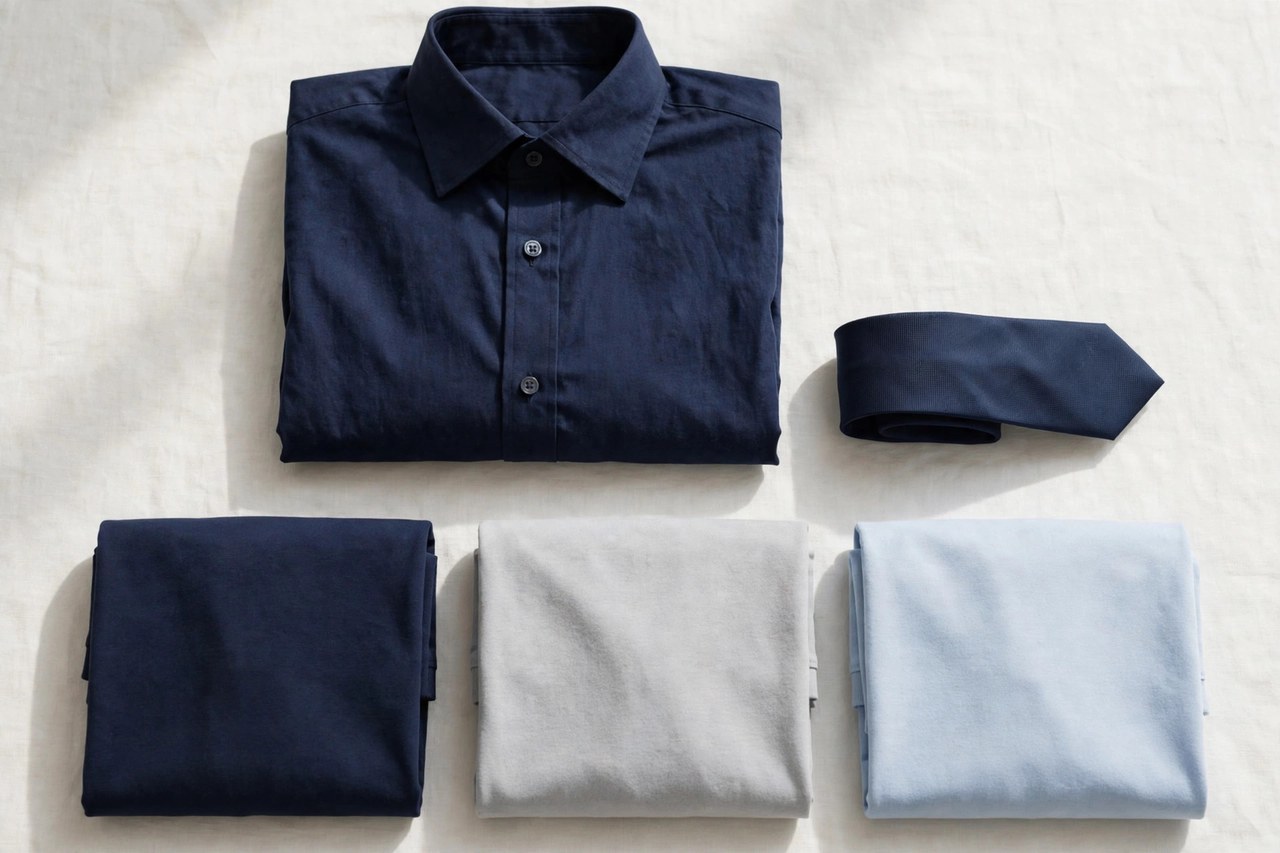
Men's corporate apparel is clothing supplied or specified by an organization for its people: uniform programs, logo embroidered polos and shirts, corporate suiting and business-casual kits that make a workforce look like one company. It is menswear bought by specification rather than by taste - durability standards, size runs, colorfastness and reorder continuity matter more than fashion - and its customer is as often an employer outfitting fifty men as a man dressing himself. This guide is built around the questions buyers actually ask: which style, which size, which fabric, and what will it look like after a year of real use - answered in order, with the trade-offs stated plainly.
Styles and Construction
A corporate program is built in tiers: executive and client-facing suiting and shirts at the top, embroidered polos and casual shirts for the field and office middle, and workwear-grade pieces where the job is physical. The practical science is in the specs: fabrics chosen for industrial laundering, colors held to a standard across reorders and years, size runs from XS tall to 6X so the whole workforce actually fits, and decoration - embroidery over print - that outlasts the garment's wash count. Programs fail on continuity: a polo that cannot be reordered in the same navy in year three is a uniform that quietly stops matching.
The durable buying order is job, specification, budget - in that sequence. Decide what the garment must do, translate that into fiber, weight, construction and size numbers, and only then shop price. Read labels as specifications, inspect the garment inside out where finishing is unposed, and prefer the maker who publishes measurements to the one who publishes adjectives. A garment that matches your measurements, climate and laundry will be worn; one that misses any of the three becomes expensive storage.
Fit and Sizing
Fit in corporate apparel is a size-run problem: measure the workforce rather than assuming it, stock the tails of the distribution (tall, big, and small sizes) and not just the middle, and choose cuts the majority can wear with dignity - classic over slim where one cut must serve all. For the individual man wearing issued apparel, the rules invert: your alterations budget is your friend, because a tailored issued shirt reads as a chosen shirt.
Measure yourself once a year and keep the numbers - chest, waist, inseam, foot, head - because bodies drift gradually while size habits never do. Shop from measurements, try garments under real conditions (over layers, in your own shoes, late in the day for footwear), and be honest about alterations: lengths and small waist changes tailor beautifully; shoulders, rises and patterns are the garment you bought forever.
Wearing and Care
Corporate pieces are laundered hard by design; home wearers should wash gentler than the rating to stretch the garment's life - cool water, low dry, embroidery inside out. Employers should keep a small overstock of core sizes for new hires and replacements, track fade by replacing the most-washed pieces first, and audit the program annually: a uniform is a company's self-portrait, updated or not.
Five minutes when a garment comes off - shake it out, hang or fold it correctly, note the stain and the loose button - prevents most of the damage later blamed on quality. Keep a small kit where the clothes live: brush, lint roller, conditioner suited to your leathers, black, navy and grey thread. Clothing rarely dies at once; it fades by small neglects, and small attentions reverse the process at the same pace.
Common Questions
What is the difference between corporate apparel and a uniform?
A uniform is identical dress specified for a role; corporate apparel is the wider program - uniforms where roles require them, coordinated business clothing and logo pieces where they do not. All uniforms in a program are corporate apparel, but a logo polo worn with a man's own trousers is corporate apparel without being a uniform.
Why is embroidery preferred over printing for logos?
Wash life: a stitched logo survives the garment, while printed logos crack and fade across the dozens of industrial washes corporate pieces endure. Embroidery also reads as more substantial at client distance. Print keeps a role for large graphics and event wear, where garment life is short by design.
What should a small company spec first in a clothing program?
Continuity and fit range: a core item (polo or shirt) from a supplier who guarantees multi-year reorder in the same color, in a size run that covers your actual people including tall and big sizes. Those two decisions prevent the two classic failures - mismatched reorders and employees the program cannot dress.
More in Men's Clothes Guide C
Apparel for Organizations
Corporate apparel is clothing bought by companies rather than by individual men — a program view, not a single-garment view. That is the corporate subject in miniature: systems over items, which is why it connects to the wider clothes and fashion library rather than to single garments.
Looking for Men's Clothing Stores?
This guide explains men's corporate apparel. To browse where to buy, visit our men's clothing store directory, where you can find retailers that carry them.