Men's Sweatshirts Guide
Men's sweatshirts are the fleece-backed jersey tops born in American athletics: the crewneck sweatshirt, the hoodie, the quarter-zip and their descendants - soft, warm, unstructured and now so universal that the sweatshirt is less an athletic garment than the default top of the casual world. This guide covers the crewneck family and its hooded branch: loopback and fleece fabrics, weights, and the fit that keeps comfort from becoming sloppiness.
Shop Men's Sweatshirts Now
Shop Men's Sweatshirts on Amazon Shop Men's Sweatshirts on eBayThe Amazon and eBay links on this page are affiliate links. If you make a purchase through them, Apparel Search may earn a commission.
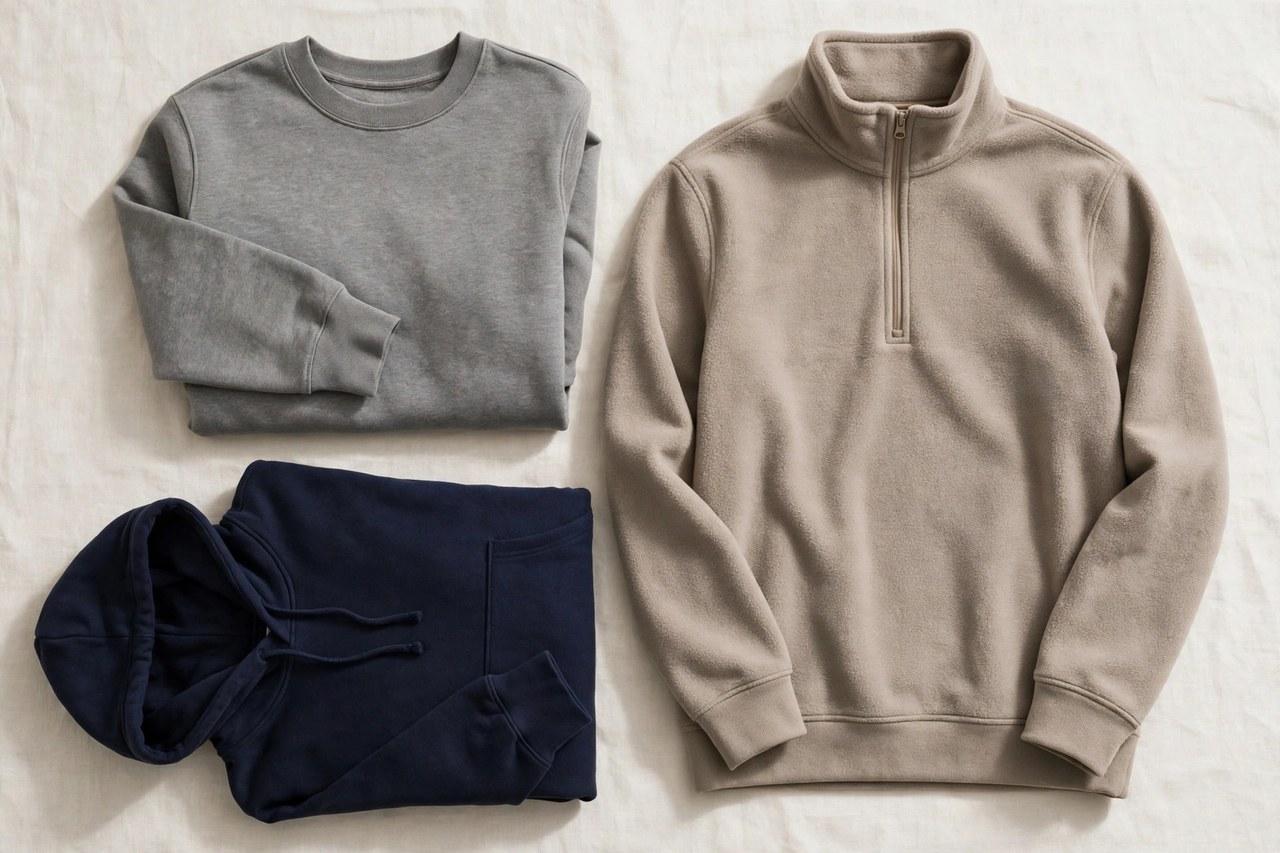
Men's sweatshirts are the fleece-backed jersey tops born in American athletics: the crewneck sweatshirt, the hoodie, the quarter-zip and their descendants - soft, warm, unstructured and now so universal that the sweatshirt is less an athletic garment than the default top of the casual world. This guide covers the crewneck family and its hooded branch: loopback and fleece fabrics, weights, and the fit that keeps comfort from becoming sloppiness. This guide explains what to look for, how the sizing actually works, which fabrics and constructions earn their price, and how to care for the garment so it keeps doing its job season after season.
Loopback, Fleece and the Hoodie's Architecture
A sweatshirt's fabric is a knit with two faces: smooth jersey outside, and inside either loopback (unbrushed loops - lighter, cooler, the original construction) or brushed fleece (raised, warmer, softer, the modern default). Weights run from summer loopback to heavyweight fleece that stands nearly on its own, and fiber follows the familiar split - cotton for hand and honesty, cotton-polyester for shape retention and laundry survival. Construction tells include the raglan or set-in sleeve, the ribbed V-stitch at the crew neck (a heritage detail from the garment's gym origins), side gussets in better makes, and the hoodie's own architecture of double layers, drawstrings and the kangaroo pocket.
A top earns its keep in finishing: seams that hang straight and stay even at eight to twelve stitches per inch, collars and plackets that lie flat after washing, buttons sewn with thread shanks so they sit in their holes without pulling. Hold the cloth to the light - a tight, even weave or knit outwears a loose one at the same labeled weight, and pattern pieces cut on grain keep the garment from twisting around your body by the third wash.
Fit and Sizing
The modern sweatshirt fits like a garment, not a blanket: shoulders near the bone, a body that skims with room for a tee beneath, sleeves to the wrist without the cuff swallowing the hand, and a hem that sits at the waistband. The oversized vintage fit is a style choice made at your size in a boxy pattern, not two sizes up in a regular one. Hoodies should hood without a helmet's bulk - the hood lying flat as a collar when down is the test of its pattern. Quarter-zips are sized like the knitwear they imitate, over a collared shirt without a fight.
Fit tops shoulders and chest first, because tailors cannot cheaply move either: the shoulder seam ends at the shoulder bone, the chest closes without pulling, and both arms raise without the hem escaping the waistband. Tucked lengths must stay tucked sitting; untucked lengths should end mid-fly. Sleeves are the cheap alteration, shoulders the permanent one - reject a wrong shoulder for any reason, forgive a long sleeve for many.
Wearing and Care
Sweatshirts wash like the workhorses they are - warm or cool, inside out for prints, dried low to protect the ribbing and the fit - but fleece has one enemy: heat and time pack its loft flat, so the inside of a beloved sweatshirt is preserved by line drying when patience allows. Hoodies travel rolled, hoods stuffed to hold shape. Replace when the cuffs and hem lose recovery and the fleece feels boardy; a sweatshirt's death is textural, and it arrives long after its color has mellowed into the vintage fade the market imitates.
Launder tops by the label with three defaults: cool or warm water to protect color and trims, dark and printed pieces inside out, and low or line drying, which is the largest single lever on a shirt's lifespan. Fasten buttons and zips before washing to protect the whole load, treat stains before the dryer can set them, and store knits folded so their shoulders keep the shape they were knitted with.
Common Questions
Loopback or fleece sweatshirt?
Loopback - unbrushed terry loops inside - is the cooler, crisper, more original construction: it breathes, layers cleanly, and suits spring, fall and heated rooms. Brushed fleece is warmer and softer out of the bag, the winter and comfort default, at a little bulk. Own the loopback as the year-round garment and the fleece as the cold-weather one, and the sweatshirt drawer covers the calendar.
How should a sweatshirt fit now?
Trimmer than its reputation: shoulders at the bone, body skimming with a tee's room beneath, sleeves to the wrist, hem at the waistband. The current silhouette is structured ease - the garment holds a shape while feeling like rest. Deliberately oversized and vintage-boxy cuts exist as styles, bought at your size in those patterns. Two sizes up in a standard cut is not a fit; it is a surrender.
Why is the inside of my sweatshirt not soft anymore?
Brushed fleece packs and mats with heat, detergent residue and time - the loft that made it soft is a forest of raised fibers, and dryers and hot washes flatten the forest. Line drying, cool washing and turning the garment inside out slow the process greatly. Once the fleece is board-flat it does not recover; that texture, more than fading, is the sweatshirt's true age.
More in Men's Clothes Guide S
From Our Original Guide: A Sweater’s Athletic Cousin
Our original sweatshirts page sorted the family relations this guide keeps: sweatshirts are arguably a type of sweater, but made of a fabric and cut similar to sweatpants; a sweatshirt worn with sweatpants forms a sweatsuit, a kind of exercise clothing originally designed to raise the core body temperature and cause perspiration in order to lose body weight before a weigh-in for a weight-divided sport. It noted the traditional build - thick, usually cotton jersey - the modern range of fiber contents and weights, that sweatshirts are almost exclusively casual attire, and that they may or may not have a zipper or a hood, the hooded version being the hoodie. Its links are carried on this page.
Looking for Men's Clothing Stores?
This guide explains men's sweatshirts. To browse where to buy, visit our men's clothing store directory, where you can find retailers that carry them.