Men's Wool Fashion Guide
Men's wool fashion is the style conversation around the fiber: how designers and dressers use wool's texture, drape and heritage - tweeds, flannels, checks, chunky knits, tailored silhouettes - to build looks rather than merely garments. Where the other wool guides specify pieces, this one reads the fiber as a fashion material: what it signals, how it cycles through trends, and how to wear it with intent.
Shop Men's Wool Fashion Now
Shop Men's Wool Fashion on Amazon Shop Men's Wool Fashion on eBayThe Amazon and eBay links on this page are affiliate links. If you make a purchase through them, Apparel Search may earn a commission.
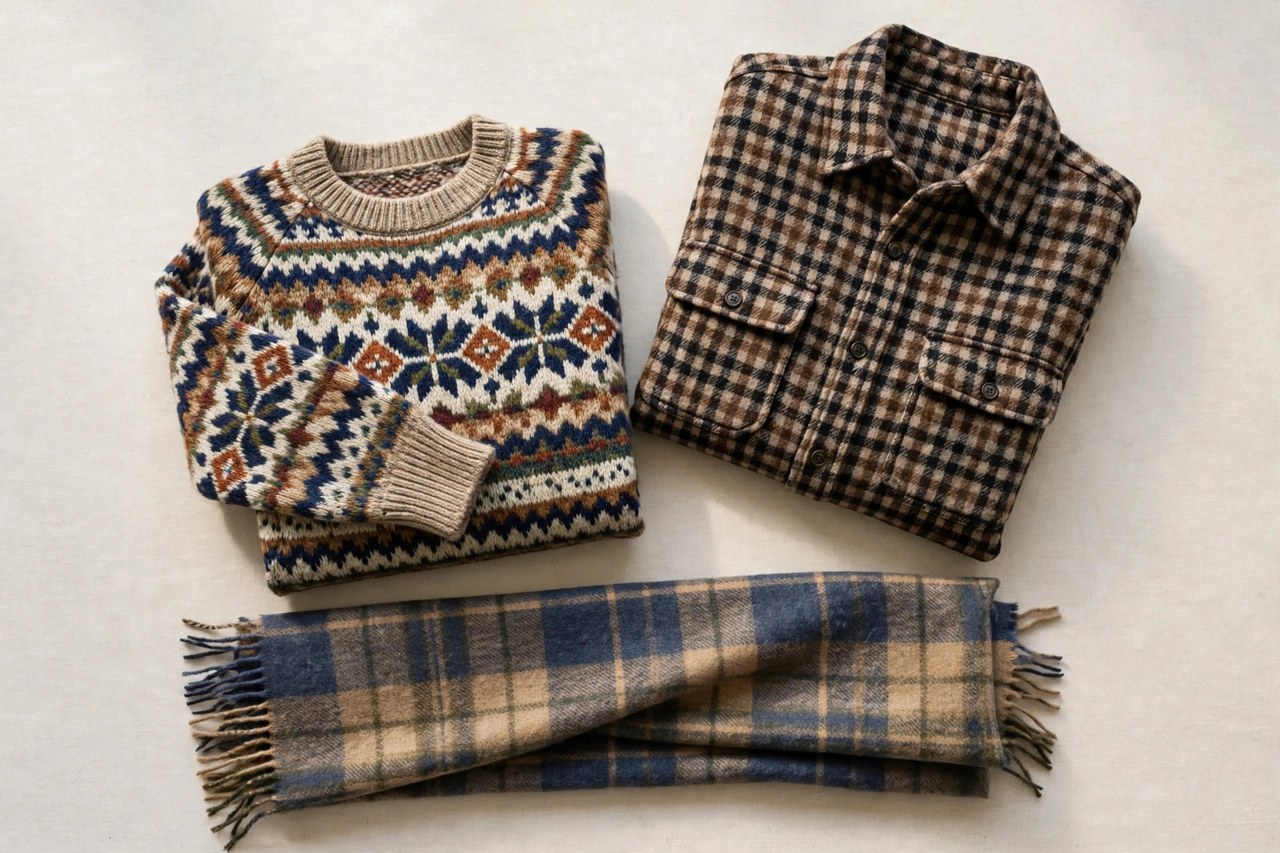
Men's wool fashion is the style conversation around the fiber: how designers and dressers use wool's texture, drape and heritage - tweeds, flannels, checks, chunky knits, tailored silhouettes - to build looks rather than merely garments. Where the other wool guides specify pieces, this one reads the fiber as a fashion material: what it signals, how it cycles through trends, and how to wear it with intent. This guide covers the styles worth knowing, the fit points that decide comfort, the fabrics and construction that separate a good buy from a regret, and the simple care that makes the garment last.
Styles and Construction
Wool carries fashion meanings few fibers can: heritage (tweeds, tartans, country checks), precision (smooth worsted tailoring), and comfort (soft knits, brushed flannels, overshirts). Fashion cycles rotate these meanings - one decade wants the sharp suited silhouette, the next wants blanket checks and workwear layers - but the fiber stays because its surface takes dye deeply, holds pattern crisply, and drapes in a way synthetics still imitate badly. The modern wool wardrobe in fashion terms is built on texture contrast: matte wool against smooth leather, chunky knit against sleek trouser, heritage check against minimal base layers.
Judge wool first as a fiber, before the garment cut gets a vote. Fineness is measured in microns: merino at roughly 18-22 microns feels smooth against skin, while coarser wools trade softness for abrasion resistance and a drier hand. Crimp - the natural wave of the fiber - is what traps air for warmth and gives wool its spring and wrinkle recovery. Staple length matters too: longer staples spin into stronger, smoother yarns that pill less. Then read the cloth: twill weaves like gabardine shed wrinkles and water, flannels brush up into matte warmth, plain-weave tropical wools breathe, and knits trade structure for stretch and comfort.
Fit and Sizing
Wear wool fashion by choosing one statement texture per outfit and letting it lead: a bold check sports coat over quiet flannel trousers, or a heavy patterned sweater with plain wool trousers and clean shoes. Fit follows the current conversation - relaxed, longer layers in soft woolens for casual looks, cleaner lines when tailoring leads - but wool's own rules never change: it needs rest, it molds to you, and it rewards natural color palettes drawn from its undyed range of greys, browns and creams. Vintage wool is fashion's shortcut to character, since older cloth was often denser than today's equivalents.
Wool care starts with rest and air: wool resists odor and soil, so airing a garment overnight after wear replaces most washing. Wash when needed in cool water with wool detergent - hand wash or a true wool cycle - never hot, never agitated hard, because heat plus agitation plus moisture is felting. Roll in a towel to lift water, dry flat or hang tailored pieces on broad hangers, and store clean in a breathable bag with cedar or lavender, since moths target dirty wool. Steam refreshes wrinkles better than pressing; if you press, use a cloth and moderate heat so the surface does not shine.
Wearing and Care
Fashion pieces invite over-buying, so keep care discipline tighter, not looser: rest and air statement knits and jackets like staples, store them clean with moth protection, depill before an outing rather than after a season, and steam textures back to life instead of pressing them flat. A wool fashion piece kept well stays current for years - the fiber outlasts the trend cycle that sold it.
Fit wool with its behavior in mind: wool gives a little with body heat and wear, then recovers with rest, so a new garment should start neat rather than sloppy. Woven wool should skim without pulling at closures; knitted wool should follow the body without compressing the stitch open, which lets wind through and shortens the garment's life. Check drape from the side - good wool falls in clean vertical folds - and remember that tailored wool can usually be let out a seam allowance, while knits can be blocked modestly but never truly resized.
Common Questions
Why does wool keep returning to fashion when trends change?
Because it does three jobs at once: it insulates, it drapes, and its fibrous surface gives designers texture and depth of color that flat synthetics lack. Trends rotate silhouettes and patterns, but the material advantages that made wool fashionable a century ago still hold.
How do I wear patterned wool without overdoing it?
One patterned piece per outfit, grounded by plains in the same color family. A checked jacket with plain grey flannels, or a patterned sweater with plain trousers. Patterns in wool are already textural, so two competing patterns plus texture is where outfits tip into noise.
Is vintage wool clothing a good fashion buy?
Often the best value in the category: mid-century wool cloth was frequently heavier and denser than modern equivalents, and classic cuts cycle back. Check for moth damage, shine at wear points and lining condition, and budget for a specialist clean and small alterations.
More in Men's Clothes Guide W
Background
We all know the fabulous benefits of wool , so it should come at no surprise that it is a perfect fiber for fashion. Fashion is a popular style or practice, especially in clothing, footwear, accessories. And yes, wool can be used to make clothes, portions of shoes, and stylish accessories such as gloves, hats, and scarves. Fashion is a distinctive and often constant trend in the style in which a person dresses. The environment and activities planned for the day, as well as a sense of style help dictate the type of clothing we choose to wear. The fiber is as important to apparel as the color, and silhouette of the garment. In menswear, wool is a popular choice.
Looking for Men's Clothing Stores?
This guide explains men's wool fashion. To browse where to buy, visit our men's clothing store directory, where you can find retailers that carry them.