Women's Designer Sandals Guide
A sandal shows nearly everything — so at the designer level, every strap, edge, and sole has to earn its place. Here is how to judge them.
Shop Women's Designer Sandals Now
Shop Women's Designer Sandals on Amazon Shop Women's Designer Sandals on eBayThe Amazon and eBay links on this page are affiliate links. If you make a purchase through them, Apparel Search may earn a commission.
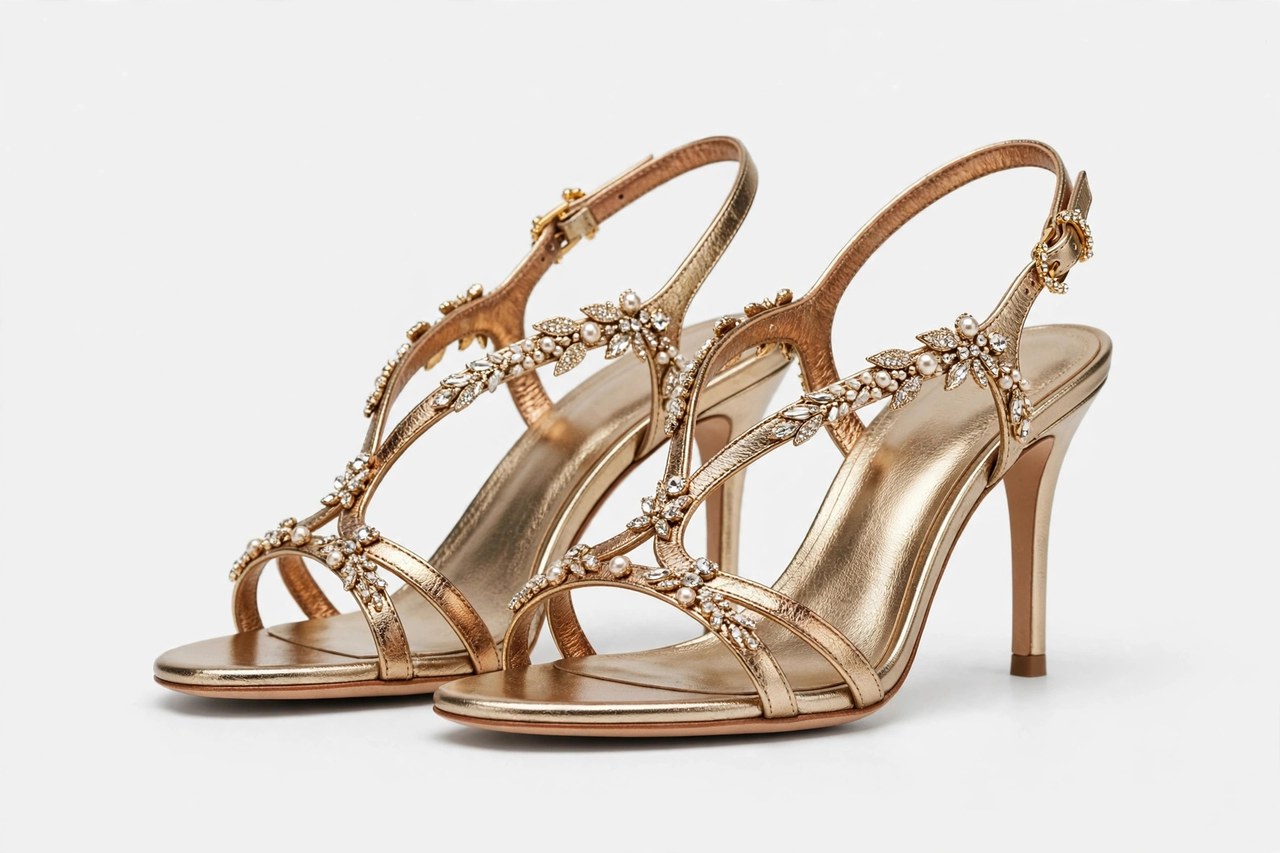
No shoe has less to hide behind than a sandal. With the foot nearly bare, every decision shows: how the straps are cut, whether the edges are finished, how the sole is shaped, and whether the proportions flatter the foot they frame. That exposure is why designer sandals are such a satisfying luxury when they are done well — the craftsmanship is the decoration. Italian and Spanish makers with generations of sandal-making behind them produce flat leather slides and gladiators, elegant heeled sandals, jeweled evening pairs, and modern sculpted platforms that wear as comfortably as they photograph. This guide looks at leather sole construction, strapping and hardware quality, the embellished styles made for after dark, the comfort engineering that now exists even at the luxury tier, and what the prices reflect. It closes with styling ideas and the simple care that keeps fine leather sandals ready for every warm-weather season.
Leather Soles and Strap Craftsmanship
Begin underneath. A traditional quality sandal is built on a leather sole and insole that mold to your foot over the first wears, creating a personal footprint no foam can imitate. Look for soles that are stitched or securely bonded with clean, even edges, a shaped waist that supports the arch line, and a heel — even a small one — that is leather-stacked or neatly wrapped and firmly attached. Straps carry the whole design, so examine them closely: good straps are cut from a single quality hide, dyed or painted cleanly on the edges, and lined or burnished where they touch skin so nothing saws at the foot. Placement is engineering as much as aesthetics — a strap should cross where the foot bends least and anchor where it can hold without pressure. Buckles, rings, and studs should feel solid, move smoothly, and sit flat. Between the toes, a well-made thong post is slim, smooth, and securely anchored; it is the first place cheap sandals fail and the last place fine ones do.
Embellished, Evening, and Signature Styles
Evening is where designer sandals justify their sparkle. Embellished pairs carry hand-set crystals, fine chain, pearls, or metallic leather worked into straps that still lie comfortably flat — decoration applied by hand sits differently from glued trim, and you can feel it in the even spacing and secure settings. A jeweled flat sandal is the experienced dresser's secret for long events: all of the polish, none of the heel fatigue. Heeled evening sandals trade on proportion — a slender strap line, a well-placed ankle strap, and a heel shaped to the house's signature, whether stiletto, sculpted, or block. Metallic gold, silver, and rose finishes act as neutrals after dark and lift black, navy, and jewel-toned dresses alike. Daytime signature styles have their own stars: woven leather slides, minimalist two-strap flats, rope-trimmed espadrille sandals, and gladiator lacing that wraps the ankle. Choose embellishment that suits your calendar — one truly versatile evening pair will out-serve three novelty pairs bought for single occasions.
Comfort Engineering and Price Logic
Luxury comfort used to be an oxymoron; modern designer sandals have quietly fixed that. Better houses now build in padded insoles disguised under fine leather, flexible shanks that let the foot roll naturally, contoured footbeds on flat styles, and heel pitches calculated so weight distributes across the whole foot rather than dumping onto the toes. Ankle straps are positioned to secure the heel without cutting the front of the ankle, and elastic inserts are hidden where a strap needs give. Fit still decides everything: your heel and toes should sit fully on the footbed with no overhang, straps should hold without gripping, and there should be no rubbing point in the shop that you hope will soften — leather eases, but a bad strap placement never moves. Prices run from a few hundred dollars for contemporary designer pairs to four figures for heritage Italian houses and hand-embellished evening styles, reflecting leather quality, hand-finishing, and hardware rather than the amount of material involved.
Styling and Care for Fine Sandals
Designer sandals finish an outfit with unusual efficiency. A minimalist flat in tan or black leather sharpens linen trousers, shirt dresses, and tailored shorts; metallic heeled sandals carry everything from a slip dress to dark jeans and a silk top; woven and espadrille styles bring texture to simple summer cotton. Because sandals expose the foot, proportions matter — delicate straps flatter cropped and slim silhouettes, while a chunkier platform or block heel balances wide-leg trousers and full midi skirts. A considered pedicure is, frankly, part of the styling. Care is light but specific: wipe leather straps and insoles after wear, let sandals dry fully away from direct heat if they get wet, and condition smooth leather occasionally to prevent strap edges from drying and cracking. Store pairs in their dust bags with toes supported so straps keep their shape, and have a cobbler replace heel tips and thin sole protectors before wear reaches the leather itself. Treated this way, a fine pair returns summer after summer, improving with wear.
Related Women's Guides
Photos

More to Explore on Apparel Search
Looking for Women's Clothing Stores?
This guide helps you choose women's designer sandals by style, heel and finish. To browse where to buy, visit our women's clothing store directory, where you can find retailers that carry them.