The Shoe, Explained
Plastic, Translucent and Completely Unmistakable
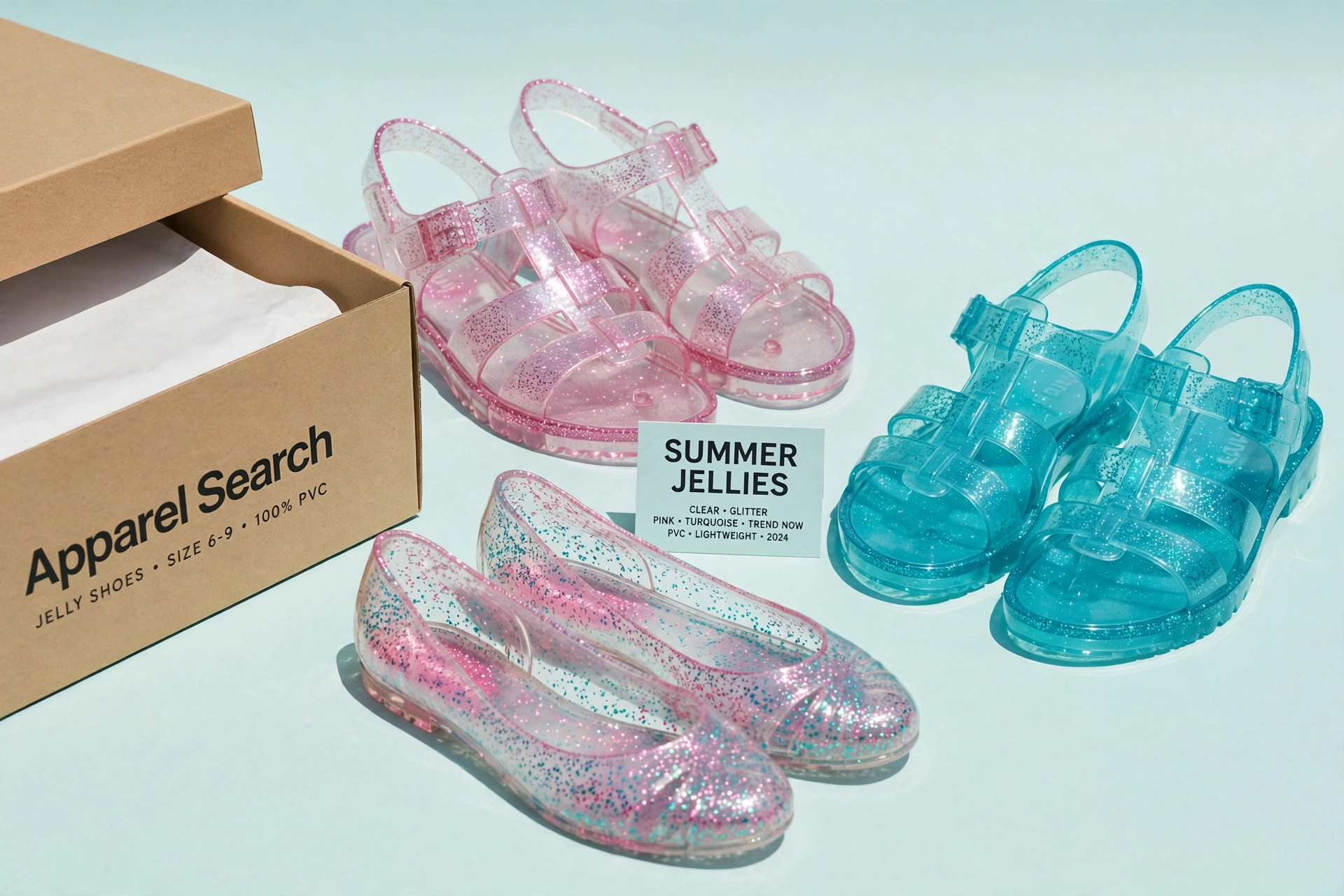
Jelly shoes are footwear moulded from soft, flexible plastic — traditionally PVC — in translucent, glitter-flecked or brightly coloured finishes. The classic shapes are the caged fisherman sandal and the simple flat, and the look is instantly recognisable: glossy, slightly squishy, and cheerful in a way leather never tries to be.
The name describes the material’s jelly-like give. A jelly shoe bends, springs back and shrugs off water, which made the originals practical beach and holiday shoes long before they were fashion statements. This guide covers where they came from, why they returned, and what modern versions are actually made of; the companion pages cover how to style jelly shoes and the jelly sandals vs jelly flats and care comparison.
“A shoe made of sunshine and plastic — the jelly was never meant to be taken seriously, and that is exactly its charm.”
Search Apparel Search
Origins
A 1980s Classic With Older Roots
Jellies became a mass phenomenon in the early 1980s, when inexpensive moulded-plastic shoes in candy colours reached high-street shops and a generation of wearers adopted them as summer uniform. The fisherman shape itself is older — a closed-toe, woven-strap sandal long worn around water — translated into plastic, it became the definitive jelly: protective at the toe, open at the sides, and cheap enough to own in three colours.
The glitter jelly flat was the other classic: a simple slip-on shot through with sparkle, worn with everything from shorts to party dresses. Like many 1980s staples, jellies faded as the decade’s look fell from favour, then cycled back in waves — each return a little more self-aware than the last, trading pure novelty for deliberate retro styling.
The Return
Why Jelly Shoes Came Back in 2025–26
The latest return was documented as trend coverage rather than a single launch: Who What Wear tracked key jelly-shoe trends for summer 2026, WWD reported on the style’s expansion across footwear collections, and Vogue’s sandal reporting singled out translucent “naked jelly” finishes among the season’s defining sandal stories. When the same shoe appears across that many fashion desks at once, it has moved from nostalgia item to current wardrobe option.
Three forces converged. Retro 1980s and 1990s dressing kept plastic accessories in circulation; warm-weather dressing rewarded a shoe that handles sand, pavement and sudden rain in one day; and the translucent finish photographs as playfully modern against minimalist summer clothes. Jelly shoes sit naturally beside the season’s other footwear hybrid — read the sneakerinas and ballet sneakers guide for the sibling trend — and inside the wider women’s sandals guide, where they form the waterproof, closed-toe corner of the category.
Styles at a Glance
The Main Jelly Styles
| Style | Construction | Best for |
|---|---|---|
| Fisherman jelly | Caged woven straps, closed toe, buckle or strap fastening | Everyday summer wear, city walking, holidays |
| Glitter jelly flat | Slip-on flat, glitter suspended in translucent plastic | Dresses, parties, playful daytime outfits |
| Jelly sandal | Open straps or slides on a moulded sole | Beach, pool and the hottest days |
| Modern jelly flat | Ballet-flat or Mary Jane shape in matte or opaque plastic | Polished outfits that still want the jelly finish |
The fisherman and the glitter flat are the heritage shapes; everything else is a variation on their material. Choosing between the sandal and flat families is a fit and coverage decision as much as a style one — the comparison and care page works through it in detail.
Materials Today
Modern Versions and Materials
Traditional jellies are PVC, and plenty still are — it is cheap, glossy and genuinely waterproof. Newer versions also use other flexible plastics and plastic blends, sometimes with recycled content, and finishes have widened beyond the original candy translucency: matte and opaque colour, smoky tints, pearlescent sheens and clear “naked” uppers that show the foot. Cushioned footbeds and textured soles appear on better-made pairs, addressing the two honest criticisms of the originals — hard soles and slippery wet grip.
What has not changed is the care profile: plastic does not breathe, softens in heat and can rub until feet and shoe settle together. Buy them as you would any moulded shoe — check strap edges for sharpness, sole texture for grip, and fastening security — using the same judgement the women’s flats guide applies to flat shoes generally.
Questions
Common Questions
What are jelly shoes made of?
Jelly shoes are moulded from soft, flexible plastic — traditionally PVC, with some modern versions using other plastic blends, sometimes including recycled content. The translucent, glitter and brightly coloured finishes all come from that moulded plastic, which is what makes the shoes waterproof and gives them their jelly-like bend.
Are jelly shoes from the 1980s?
The fisherman sandal shape is older, but jelly shoes became a mass fashion phenomenon in the early 1980s, when inexpensive plastic versions in candy colours reached high-street shops. The glitter jelly flat and the caged fisherman jelly from that decade remain the classic shapes every revival returns to.
Why are jelly shoes popular again?
Fashion coverage through 2025 and 2026 — including Who What Wear’s jelly-shoe trend tracking, WWD’s reporting on the style’s expansion, and Vogue’s sandal coverage of translucent finishes — documented a broad return driven by retro styling, practical warm-weather dressing, and the playful contrast of translucent plastic against minimalist summer clothes.