Compared, Honestly
Two Constructions, Two Different Days
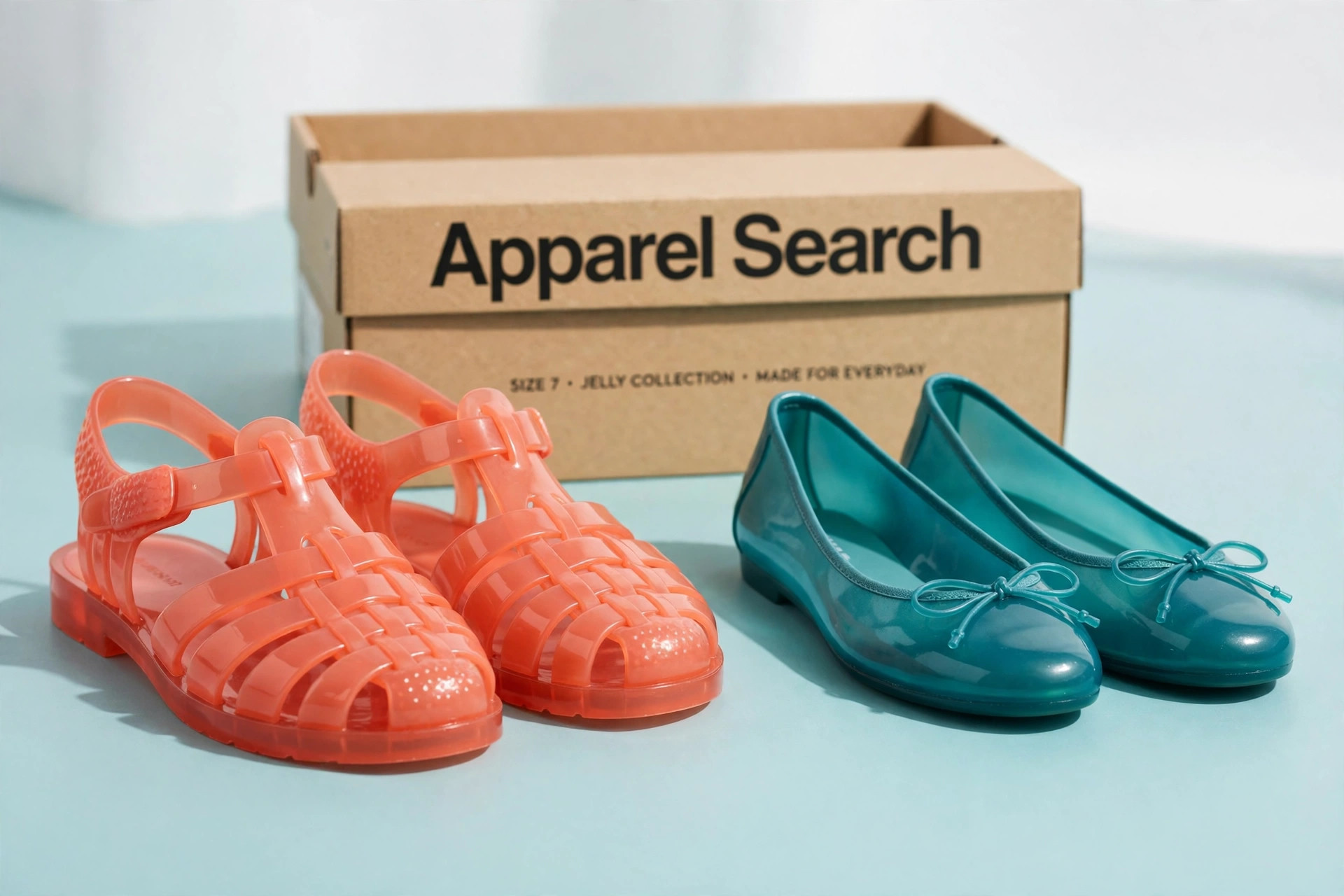
Jelly sandals and jelly flats share a material and almost nothing else. The sandal — straps or a caged fisherman upper on a moulded sole — ventilates, fastens securely and handles water all day. The flat — a closed slip-on in the ballet or Mary Jane line — covers more, dresses up further, and traps more heat. Choosing well means matching the construction to the day.
This page compares the two directly, then deals honestly with the comfort questions every jelly wearer meets — rubbing, blisters and sizing — and finishes with care: washing, heat warping and storage. The background is in the jelly shoes guide; the outfits are in how to style jelly shoes.
“Same plastic, different promise: the sandal breathes and fastens, the flat covers and polishes.”
The Chart
Jelly Sandals vs Jelly Flats
| Jelly sandal | Jelly flat | |
|---|---|---|
| Construction | Open straps, slides or caged fisherman upper; buckle or strap fastening | Closed slip-on upper, ballet or Mary Jane shape; fit holds it on |
| Ventilation | High — air reaches most of the foot | Low — plastic encloses the foot, heat and moisture build |
| Security | Fastened on; stays put in water and on walks | Can slip at the heel until the fit settles; straps on Mary Jane styles help |
| Best for | Beach, pool, holidays, the hottest days | Dresses, tailoring-lite, evenings, cooler summer days |
| Rub risk | At strap edges and buckle points | At heel, toe and topline edges |
In the wider shoe wardrobe the sandal belongs with the women’s sandals guide and the flat with the women’s flats guide — the jelly versions inherit both families’ fit rules, plus a few plastic-specific ones below.
Comfort Realities
Rubbing, Blisters and Sizing
Plastic does not breathe and does not stretch like leather, so honesty helps: jellies rub more than fabric shoes, especially in heat, when feet swell and moisture removes the skin’s tolerance. The fisherman sandal’s multiple straps spread contact and fasten firmly, which is why it is usually the comfortable long-day choice; the flat concentrates contact at heel and topline. Break any jelly in at home in short wears, use blister plasters or a friction balm at known rub points on long days, and never debut a pair on a travel day.
Sizing: buy your true size first. Jellies mould slightly to warmth but do not genuinely stretch, so a tight pair stays tight and a loose flat slips forever. Between sizes in a sandal, choose the size whose straps adjust to a secure hold without the foot overhanging the sole; between sizes in a flat, choose the one that holds the heel with a finger’s width of ease at the toe. Wear them in the afternoon, when feet are at their largest, for the truest test.
Care
Washing, Heat and Storage
Washing is the jelly’s reward: rinse or wash in cool or lukewarm water with mild soap, use a soft brush on textured soles and glitter finishes, and air-dry in shade. Sand, sunscreen and grit wash straight off — one reason the style owns beach dressing. Heat is the enemy: plastic softens and warps in hot cars, on sun-baked decks and near radiators, and a warped jelly rarely returns to shape, so cool a hot pair flat and unweighted before wearing, and never leave them baking as decoration.
Storage: keep pairs flat or loosely stuffed, out of prolonged direct sun, and separate bright colours from pale clothes — strong plastic dyes can transfer against light fabrics in warm, closed spaces. Check strap joins and buckle holes each season; plastic fatigues at flex points before it fails. Treated this way a good pair lasts several summers, which is more than the 1980s originals were ever asked to do.
Questions
Common Questions
Are jelly sandals or jelly flats more comfortable?
For long, hot days, usually the jelly sandal — its straps fasten securely, spread contact across the foot and let air in, while the closed jelly flat traps heat and rubs at the heel and topline. For shorter wears and dressier outfits the flat is fine, especially once broken in at home in short sessions.
Do jelly shoes stretch or mould to your feet?
Only slightly. Warm plastic softens and takes a light impression of the foot, but it does not stretch like leather, so a tight pair stays tight. Buy your true size, test fit in the afternoon when feet are largest, and in flats choose the size that holds the heel without toe pressure.
How do you wash jelly shoes, and can heat warp them?
Wash them in cool or lukewarm water with mild soap, brush textured soles gently, and air-dry in shade. Yes — heat warps plastic: hot cars, sun-baked decks and radiators can soften and distort jellies, so store them flat, shaded and away from heat sources, and cool a hot pair flat before wearing it.
More to Explore
Search Apparel Search