Juniors Clothing Guide
The same garment can exist in both departments. This guide is about the fit decision: how juniors clothing differs from misses and women's, and how to know when to switch.
Shop Juniors Clothing Now
Shop Juniors Clothing on Amazon Shop Juniors Clothing on eBayThe Amazon and eBay links on this page are affiliate links. If you make a purchase through them, Apparel Search may earn a commission.
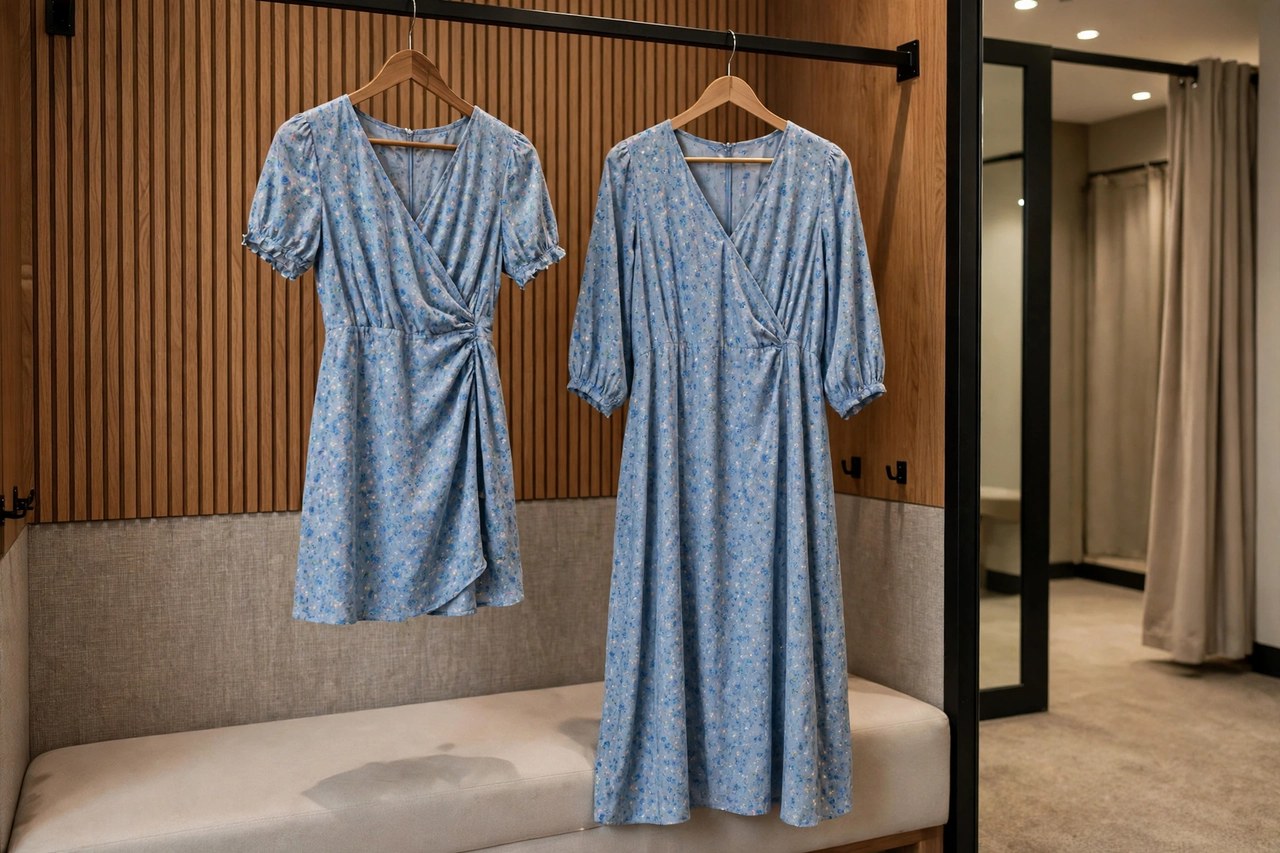
Clothing and apparel are essentially the same thing, and juniors clothing is juniors apparel viewed from the fitting-room side of the counter. The category definition — odd sizes, younger proportions — lives in our juniors apparel guide. This page answers the shopper's version of the question: standing between the juniors department and the misses department with the same dress in both, which one is cut for you?
Learn the differences once and they apply everywhere, because the two size systems differ in the same ways in every garment: where the bust sits, how much waist shaping is built in, how much hip the pattern allows, and how long the back and rise run.
The Five Fit Differences
Bust: juniors patterns place the bust higher and smaller, with less dart shaping; misses patterns allow a fuller, lower bust. Waist: juniors cuts are straighter through the middle, with less suppression between bust and hip; misses clothing assumes a more defined waist and builds the curve in. Hips: juniors run slimmer in the hips and bust than misses sizes.
Length: juniors back length and rises run shorter, matching a shorter torso. Shoulder: juniors shoulders are narrower, which is why a misses jacket on a slight frame slides at the shoulder even when the body fits. None of these is about weight. A woman can wear the same dress size number for a decade while her proportions move her from one system to the other.
When to Switch — and When Not To
The switch from juniors to misses is a fit event, not a birthday. The signs are consistent: juniors tops that pull across the bust while fitting the shoulder; juniors pants that fit the waist but strain at the hip; waistbands that sit oddly because the rise is cut for a shorter torso. When the same complaints repeat across brands, the proportions have changed and the misses department — with its curvier pattern — will simply fit better in the same styles.
The reverse also holds. An adult with a straight, slight build — narrow shoulders, high bust, slim hips — may find juniors clothing fits her better than misses at any age, and there is no rule that says otherwise. Plenty of women shop both departments for different garments: juniors for trend pieces and tees, misses for tailored trousers and dresses where the shaping matters. Department loyalty is not a fit strategy.
Occasion plays a part too. School dress codes and first jobs often push the choice: a juniors department's version of a “nice” dress is cut younger and styled louder, while the misses version of the same idea assumes a workplace. Neither is better — they are answers to different rooms. Trying both when you stand between them takes ten minutes and settles a question that guessing never will.
The Only Rule That Matters
The advice is simple: every young girl's body is different, and there is no such thing as a proper or perfect size. The important thing is to select a garment that is a proper fit for your own body. It does not truly matter if the garment is in the junior, missy, or women's department — simply find the garment that is comfortable for you.
Use the systems as a map, not a verdict. Start where your proportions point, try the neighboring system when a garment almost fits, and judge by the mirror and the measuring tape rather than by the number on the tag. The number is a filing system for patterns; the fit is the point.
Related Women's Guides
More to Explore on Apparel Search
Looking for Women's Clothing Stores?
This guide helps you choose juniors clothing. To browse where to buy, visit our women's clothing store directory, where you can find retailers that carry them.