Juniors Pants Guide
Jeans, leggings, cargos and trousers cut on the juniors pattern: slimmer hips, shorter rises, and every leg style from skinny to wide.
Shop Juniors Pants Now
Shop Juniors Pants on Amazon Shop Juniors Pants on eBayThe Amazon and eBay links on this page are affiliate links. If you make a purchase through them, Apparel Search may earn a commission.
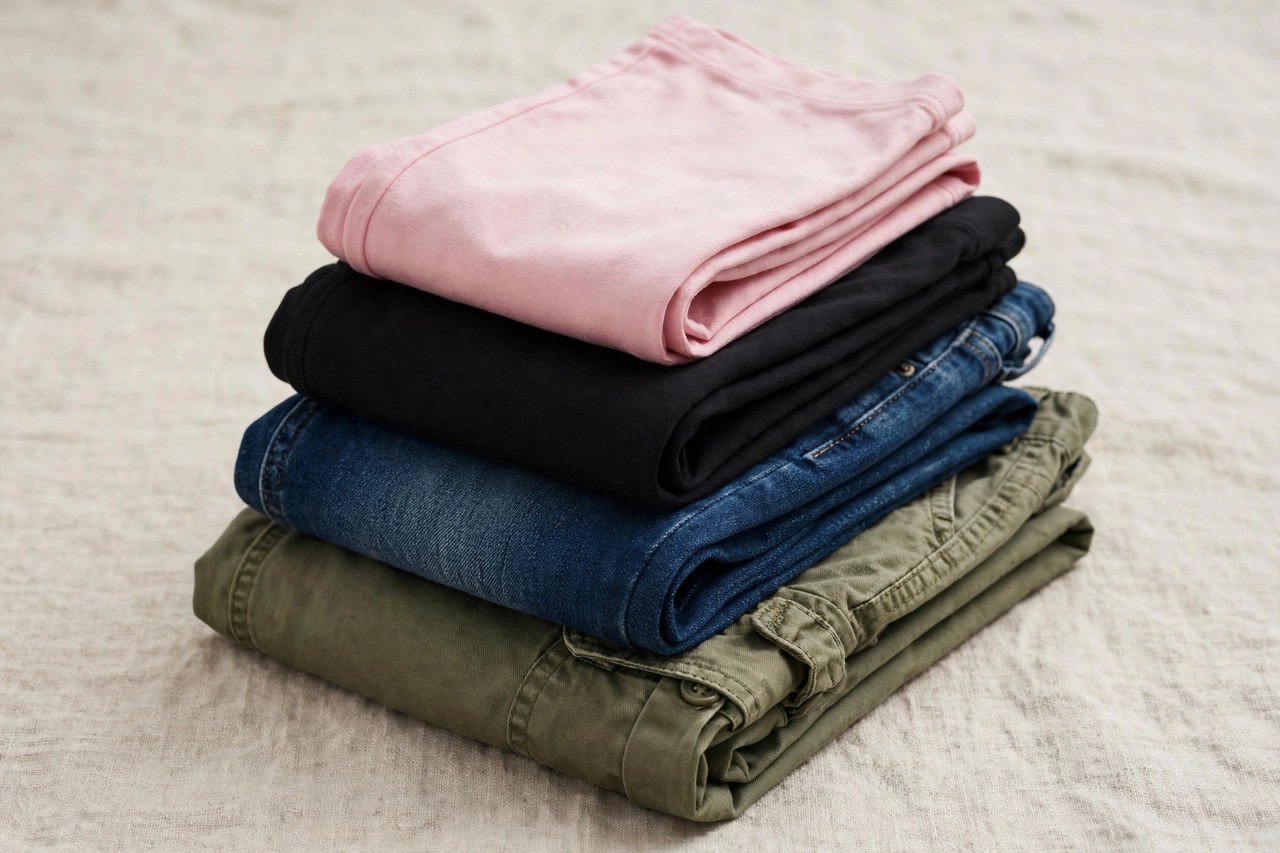
Pants are clothing worn to cover each leg separately. Juniors pants are pants made in junior sizing — which means the juniors pattern, applied to trousers: odd-number sizes, a fit built for younger women, and proportions that differ from misses in specific, predictable places. This guide covers those differences and the styles they run through, from the skinny jean that built the category to the wide-leg and cargo revivals cycling through it.
The general juniors system is explained in our juniors apparel guide, and the full juniors-versus-misses comparison is in juniors clothing. Here the focus is the garment where fit is least forgiving: a top can skim, but pants announce every mismatch at the waist, hip and rise.
The Juniors Pant Fit
The pant sizes for juniors are usually slimmer in the hips than misses sizes, and the rise runs shorter to match a shorter torso. The waistband of a juniors pant sits on a straighter waist-to-hip ratio: less difference between the waist measurement and the hip measurement than a misses pattern assumes. In practice that means a juniors jean that fits a slim, straight figure perfectly can pull at the hip or gap at the back waist on a curvier one — the two classic signs that the misses version of the same style deserves a try.
Length runs shorter too, matching the shorter back length of the juniors block. Five-pocket styling, pocket placement and yoke shaping follow the women's jeans playbook — smaller back pockets sit higher on a juniors jean, a deliberate proportion choice — and the stretch rule is identical: denim with elastane relaxes about a size with wear, so the fitting-room fit should be snug.
Styles Across the Legs
Juniors pants come in a wide assortment of fabrics, colors, sizes, and styles. You can find long pants, short pants, capris — skinny, tight, loose, and everything cycling between. The standing wardrobe is denim-first: skinny and straight jeans as the base, one black pant (jean or legging) as the universal understudy, and a rotating cast of cargos, wide-legs, flares and joggers as the trend of the season dictates.
Beyond denim, the category covers leggings and jeggings (the highest-comfort, lowest-structure end), school-friendly khakis and trousers where dress codes apply, and warm-up and athletic pants shared with the active wardrobe. Shorts and capris are the same pattern with the leg shortened — which is why a brand whose juniors jeans fit you is the first place to look for both.
Uniform and dress-code pants are the quiet corner of the juniors pant business: khaki and navy flat-fronts, cut on the same juniors block, made to be bought in multiples and worn daily. They follow the same fit rules — slim hip, shorter rise — and the same advice about trying the misses equivalent applies the moment they strain. A jegging sits at the opposite pole: a knit pant printed and stitched to impersonate a jean, trading structure entirely for comfort, and a legitimate school-week staple where codes allow denim styling.
Choosing Your Pair
Measure the waist at its narrowest and the hip at its fullest, then read the size chart of the brand in hand — juniors numbering is a system, not a standard, and a 7 in one brand is not a 7 in another. Try the sit test and the stairs test; a juniors rise that is too short for your torso will announce itself in both. And remember the category's standing advice: it does not truly matter if the garment is in the junior, missy, or women's department. Simply find the garment that is comfortable for you — whatever style of juniors pant you are wearing today is most certainly in fashion.
Related Women's Guides
Photos

More to Explore on Apparel Search
Looking for Women's Clothing Stores?
This guide helps you choose juniors pants. To browse where to buy, visit our women's clothing store directory, where you can find retailers that carry them.