Women's Mesh Swimwear Guide
Swimwear built with mesh fabric or mesh panels: what the open knit does in and out of the water, why lining matters, and the sun warning every mesh wearer needs.
Shop Women's Mesh Swimwear Now
Shop Women's Mesh Swimwear on Amazon Shop Women's Mesh Swimwear on eBayThe Amazon and eBay links on this page are affiliate links. If you make a purchase through them, Apparel Search may earn a commission.
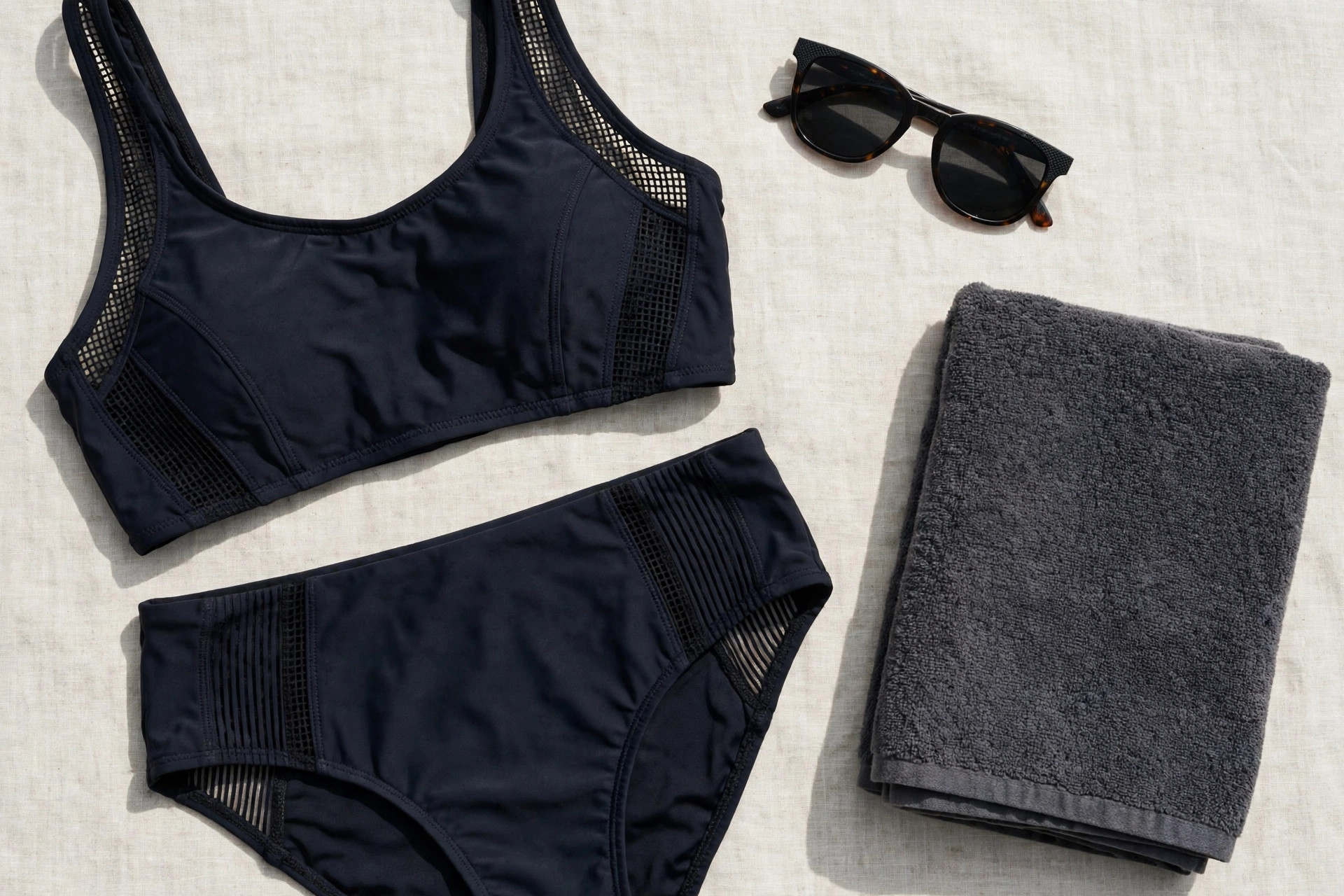
Mesh swimwear is swimwear — clothing worn for swimming — that uses mesh fabric as a main material or as panels within an otherwise solid suit. Mesh is loosely woven or knitted fabric that has a large number of closely spaced holes, and it can be used for swimwear as well as for many other types of clothing. In a swimsuit those holes do real work: they drain water fast, weigh almost nothing wet, and create the sheer-panel look that defines the style.
This is a product guide, not a picture book: it covers how mesh suits are constructed, the difference linings make, how they fit and wear, and the cautions that come with an open-knit garment. Everything here is about choosing a suit you can actually swim in, comfortably and with confidence.
Construction: Panels, Overlays and Full Mesh
Most mesh swimwear uses mesh as a panel or overlay: a solid, lined suit underneath, with mesh set into the sides, the back, the neckline or a skirt overlay. That construction gives the visual effect of mesh with the coverage of a conventional suit, and it is the right default for almost everyone. The mesh is typically a nylon-elastane power mesh that keeps its shape in water.
Full-mesh and sheer-panel suits sit at the other end of the range, and one caution applies directly: see-through swimwear may not be the best option for everyone. If you enjoy mesh, you may want mesh that has a fabric liner as well — a lined suit keeps the look, adds opacity wet or dry, and wears far better at a public pool or a family beach.
The Sun Warning, and Other Practical Points
Be cautious of skin exposed to the sun: the holes in mesh fabric allow the effects of the sun to reach your skin. Mesh is not sun protection, even where the suit covers you — the skin under an unlined mesh panel can burn through the holes while feeling covered. Apply sunscreen under mesh panels before dressing, reapply as you would for bare skin, and treat dark mesh over pale skin as decoration, not shade.
Other practical notes follow from the fabric. Mesh drains and dries faster than solid knit, which makes mesh-panel suits excellent for swim training and holidays with one suit. But mesh snags more easily on rough pool edges, Velcro and jewellery, and its holes stretch under load, so a mesh suit should fit firmly on dry land to stay in place in the water.
Choosing and Caring for a Mesh Suit
Choose by construction first: lined mesh panels for swimming and public wear, and check opacity by holding the suit to the light and stretching it slightly — wet mesh reads more open than dry. Check that panel seams are flat and that mesh edges are bound; a raw mesh edge against the skin will chafe over a long swim. Straps and closures on mesh-panel suits should anchor to the solid parts of the suit, not to mesh alone.
Care mirrors other swimwear with one addition: rinse in cool fresh water after swimming, wash gently, dry flat in shade — and keep mesh away from rough surfaces in the wash by using a laundry bag. Stored clean and dry, a lined mesh-panel suit keeps both its structure and its look, and remains what it was designed to be: a practical swimsuit with an airy, modern finish.
Related Women's Guides
More to Explore on Apparel Search
Looking for Women's Clothing Stores?
If you are ready to shop rather than browse guides, visit our women’s clothing shopping directory for stores carrying women's mesh swimwear and mesh-panel swimsuits and much more, or use the Amazon and eBay buttons at the top of this page.