Women's Overalls Guide
Overalls are trousers with a built-in bib and shoulder straps — workwear that crossed into fashion without ever giving up its pockets, its hardware or its ease.
Shop Women's Overalls Now
Shop Women's Overalls on Amazon Shop Women's Overalls on eBayThe Amazon and eBay links on this page are affiliate links. If you make a purchase through them, Apparel Search may earn a commission.
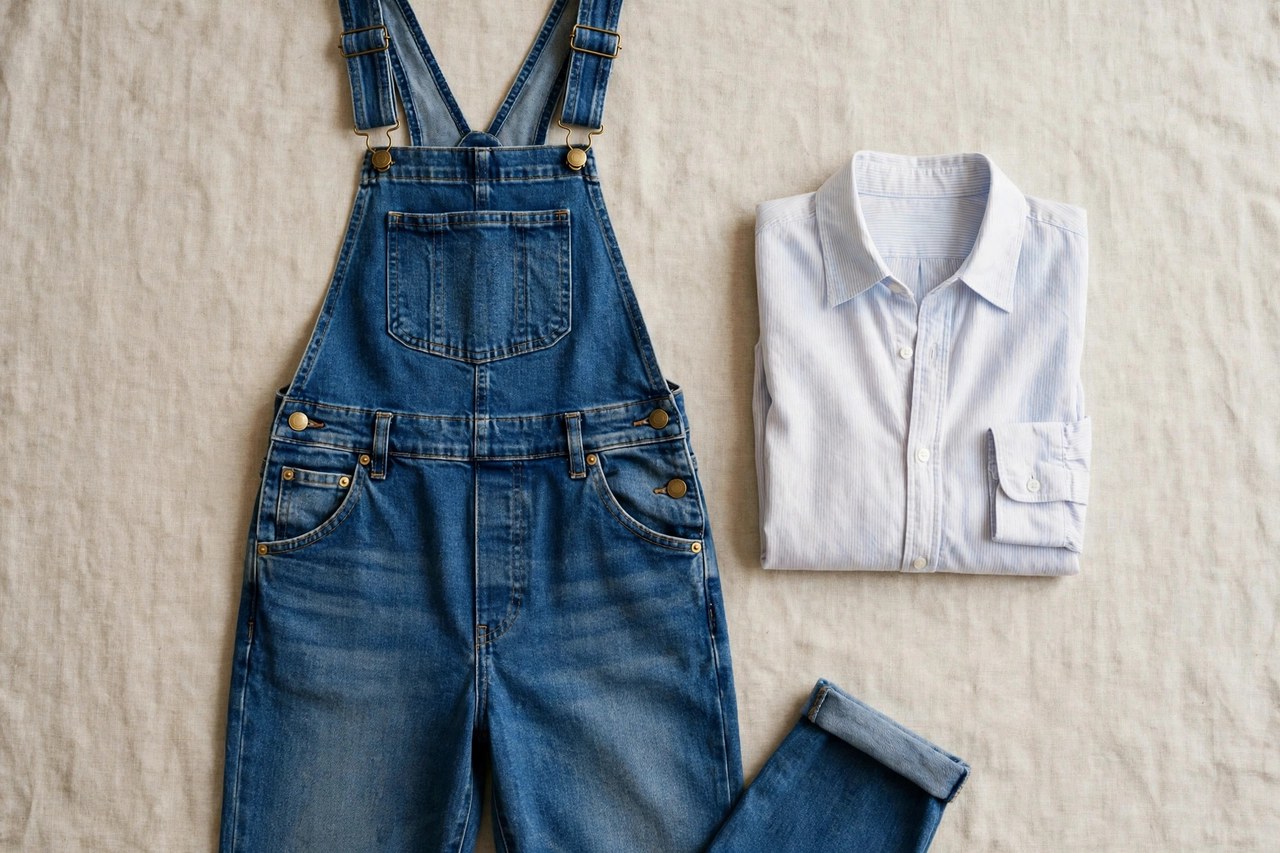
Overalls are a garment built in one piece from the waist up and the waist down: trousers joined to a bib front, held by two shoulder straps that fasten to the bib with buttons, clasps or buckles. In British usage they are dungarees (from the Hindi word for the coarse calico the original work trousers were cut from), and in their bib form they are the defining uniform of a century of physical work — railroad, farm, factory and mine. The pockets are the tell: a divided bib pocket, deep front pockets, hammer loops and rule pockets carried over from the trades.
Women's overalls took that working garment and ran it in both directions at once: authentic workwear for women who actually work in them, and a fashion staple whose charm is precisely the borrowed utility. This guide covers both — the construction and hardware that make a pair genuine, the style family from full-length dungarees to shortalls and skirtalls, and how to fit a garment whose comfort depends on strap and torso length more than on any waist measurement.
Construction and Hardware
Read a pair of overalls by its hardware, as the trades did. The classic fastening is a button-and-loop or clasp hook at each bib corner, with adjustable sliders on the straps so the bib can be set at the right height; side buttons at the waist let the garment open for stepping in and give the fit its forgiveness. Bib pockets were designed as a workstation — watch, pencil, rule, notebook, each with its slot — and on work-grade pairs they still are. Triple-stitched seams, bar-tacked stress points and a reinforced seat mark a work pair; fashion pairs keep the look of these details with lighter execution.
Fabric is traditionally denim, in weights from a soft 8-ounce fashion denim to a 12-ounce work twill, with duck canvas, corduroy, twill and linen blends as the established alternatives. The wash tells the intended life: rigid dark denim is the work and heritage choice, stonewashed and distressed finishes are fashion statements, and white, black and colored denims move the garment furthest from the field. A practical test survives from the workwear era: if the bib pocket cannot hold your phone and the straps cannot adjust, it is a costume of overalls rather than the garment itself.
The Style Family
The full-length overall is the classic: straight or tapered leg, worn with boots for work or with anything from a fitted tee to a silk blouse for the fashion version of the silhouette. Wide-leg and carpenter overalls amplify the workwear volume, extra pockets and loops included. Shortalls cut the leg to shorts and are the summer form, while the skirtall or overall dress replaces the trousers with a skirt below the same bib front. Skinny and fitted overalls in stretch denim are the fashion branch proper, keeping the bib and straps on a tailored body.
Styling turns on contrast. The garment brings the utility; everything else decides the register. A striped Breton top and loafers make it French-casual; a white t-shirt and trainers make it weekend; a fitted black top and heeled boots take the same pair to dinner; one strap undone is the classic styling shrug, worn since the 1990s revival. For actual work, the styling is the specification: break-resistant hardware, a leg that fits over boots, and a bib that holds tools instead of decorating the chest.
Fit and Care
Fit overalls by torso and strap, not by waist. The bib should sit at mid-chest with straps adjusted evenly, neither dragging the bib down nor hiking the trouser rise; the seat and thigh need working ease, because the garment has no waistband stretch to rescue a tight fit when you bend, climb or sit. Between sizes, the larger size in overalls almost always wears better — the silhouette is meant to be relaxed, and a too-neat overall fights its own design. Check the leg over your intended footwear, and the side-button closure with the straps at working length.
Care is workwear care. Denim overalls wash inside out in cold water to hold their color, and work pairs should be washed for hygiene without ceremony — they were built for it. Dry on the line where possible; tumble drying shrinks length and stresses hardware. Oil the metal fasteners of work pairs occasionally, mend bar-tacks when they fray, and patch the seat and knees as the trades always have: an overall is one of the garments where a visible repair is a credential, not a flaw. A good pair should outlast several fashion cycles, and usually does.
Related Women's Guides
Photos

More to Explore on Apparel Search
Women’s Clothes Guide by Letter: Women's Apparel Directory N · Women's Clothing Directory P · Women's Apparel Directory Q · Women's Fashion Directory R · Women's Clothing Directory S · Women's Clothes Directory T
Looking for Women's Clothing Stores?
This guide helps you choose women's overalls. To browse where to buy, visit our women's clothing store directory, where you can find retailers that carry them.