Women's Panama Hat Guide
Handwoven in Ecuador, worn everywhere the sun shines: genuine toquilla-straw Panamas, from fine weaves to wide-brim shade.
Shop Women's Panama Hats Now
Shop Women's Panama Hats on Amazon Shop Women's Panama Hats on eBayThe Amazon and eBay links on this page are affiliate links. If you make a purchase through them, Apparel Search may earn a commission.
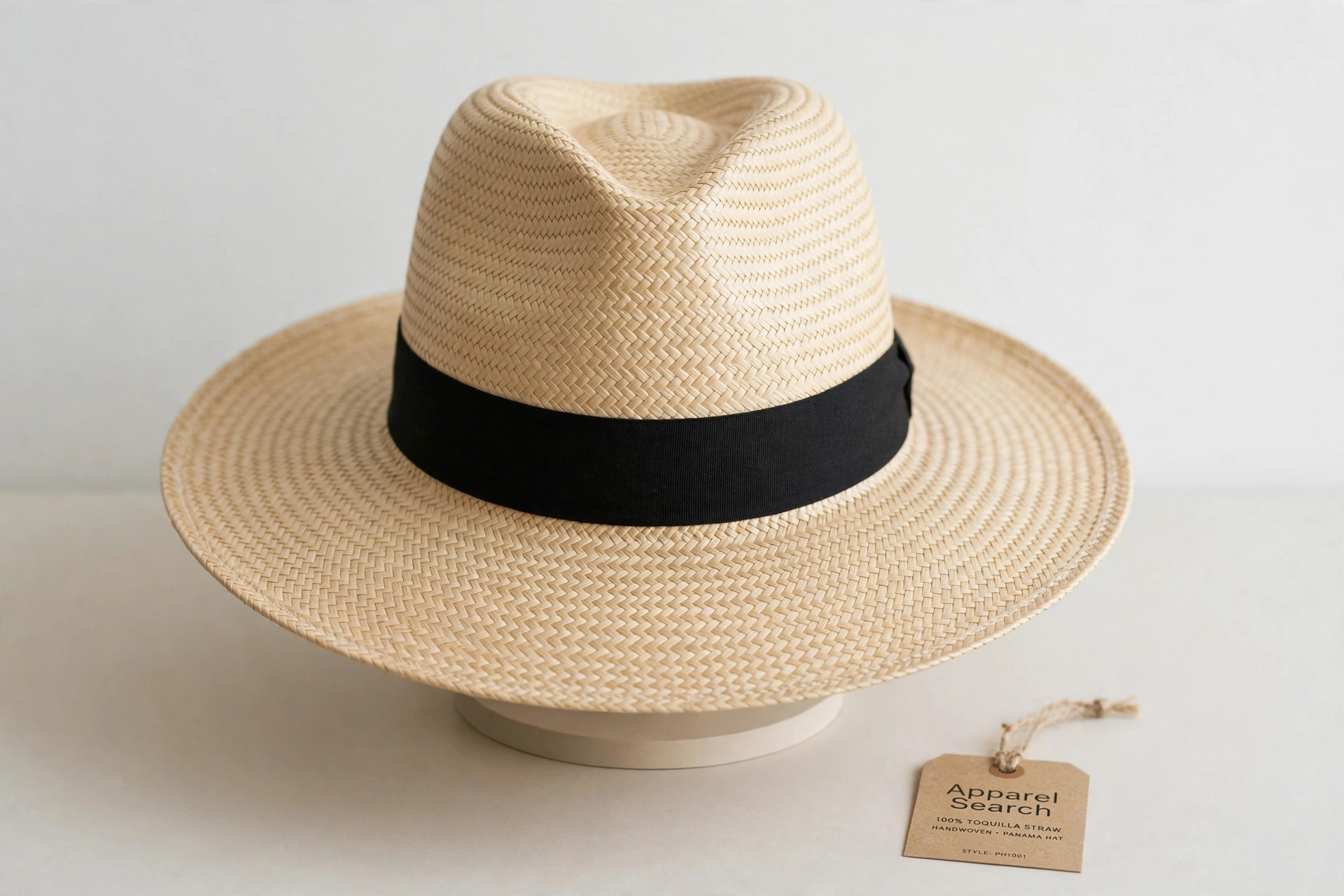
A Panama hat is a lightweight, breathable brimmed hat handwoven in Ecuador from the plaited leaves of the toquilla palm — despite the name, which stuck after the hats were shipped worldwide through Panama during the canal era. A genuine Panama is one of the great summer artefacts: cool as a breeze, elegant with everything from linen suits to swimwear, and, in the finest weaves, a piece of textile art that can take months to make.
Women's Panamas come in fedora shapes, wide-brim sun styles and gambler and optimo crowns, banded in black grosgrain, colours or silk. This guide explains how to recognise a genuine Panama and judge its weave, how grades and prices relate, fit and shaping, styling, and the careful handling — never pinch the crown — that a real Panama deserves.
Genuine Panama: Toquilla Straw and Weave Grades
A true Panama is woven by hand in Ecuador — the finest in Montecristi, the most in Cuenca — from toquilla straw, which is split, boiled and woven so tightly in the best examples that the surface looks like linen rather than straw. Imitations in paper, raffia or synthetic straw can look similar in a photograph but feel stiffer, heavier or plasticky and will not breathe or age the same way. Check the inside: a genuine woven crown shows the weave starting from a central rosette, with no seam.
Grades describe fineness of weave — the tighter and more even the weave, the finer, lighter and more expensive the hat. Everyday Panamas use a coarser, durable weave that shrugs off travel; fine and superfine grades are dressier, softer and priced accordingly, sometimes very steeply. For most wardrobes a good mid-grade Cuenca Panama is the sweet spot: genuinely handwoven, supple, and tough enough for holidays. Hold any Panama to the light — an even weave with no gaps or thick ridges is what you are paying for.
Shapes, Fit and the Crown Rule
The classic Panama shape is the fedora: centre crease, front pinch, medium brim snapped down. Women's ranges add wide-brim Panamas for real shade, gambler crowns with a flatter top and turned-down brim, and the optimo, with a ridge along the crown that can be rolled for travel — the only Panama traditionally rolled, and even then only occasionally and carefully. Bands are usually black grosgrain; coloured and striped bands tailor the hat to summer outfits.
Fit should be snug and level, a finger's width above the brows, in a stated size. And learn the Panama rule early: lift and carry the hat by its brim, never by pinching the crown. Repeated pinching cracks the woven straw at the pinch points — the classic way genuine Panamas die. Handle a fine Panama like the woven textile it is, and it will last for many summers.
Styling, Travel and Care
Nothing finishes summer clothes like a Panama: with a linen suit or shirt dress in the city, a midi dress and espadrilles on holiday, tailored shorts and a white shirt, or over swimwear with a kaftan at the beach club. The natural straw tone suits every colour, and the black band makes it read smart rather than beachy. It is also a genuinely practical sun hat — the brim shades face and eyes while the weave lets heat escape, which is why it has been tropical dress for over a century.
Travel with care: wear the hat on the plane or pack it crown-stuffed and surrounded by clothes; only roll an optimo designed for it, and never fold a fedora Panama. Keep it dry — a light shower is survivable, a soaking can spot and warp it — and dry it naturally on its crown if it gets damp. Wipe with a soft, slightly damp cloth, store in a hat box away from direct sun, and reshape with gentle steam. Treat it as you would good linen, because that is effectively what it is.
Common Questions
Are Panama hats really from Panama?
No — genuine Panama hats are handwoven in Ecuador, mainly in Montecristi and Cuenca, from toquilla palm straw. The name dates from the nineteenth and early twentieth centuries, when the hats were traded and shipped through Panama and worn by travellers and canal workers, and it stuck worldwide.
How can I tell a genuine Panama hat?
Look and feel: genuine toquilla straw is light, supple and breathable, with a fine, even weave and no seams — the crown's weave starts from a small central rosette visible inside. Paper or synthetic imitations feel stiffer or plasticky. A hat labelled handwoven in Ecuador from toquilla straw is the genuine article.
Can you roll up a Panama hat for travel?
Only an optimo-style Panama, which has a ridge along the crown designed for occasional rolling — and even that should be rare and careful. Classic fedora Panamas should never be rolled or folded; travel with them worn, or packed with the crown stuffed and supported by clothing.
Women's Hat Style Guides
Classic, casual and occasion hats for women — every guide in this cluster:
More to Explore on Apparel Search
Next in the hat box: the pillbox hat, another classic shape every hat wardrobe should know.
Next: Women's Pillbox Hat Guide »Looking for Women's Clothing Stores?
This guide helps you choose a panama hat that suits your face, your hair and the occasion. To browse where to buy, visit our womens clothing store directory, where you can find retailers that carry them.