Women's Plus Size Down Jackets Guide
Plus size down jackets trap warmth in lofted insulation — this insulation-focused guide covers fill power, down versus synthetic, baffle fit and sealing out winter in 14W and up.
Shop Women's Plus Size Down Jackets Now
Shop Women's Plus Size Down Jackets on Amazon Shop Women's Plus Size Down Jackets on eBayThe Amazon and eBay links on this page are affiliate links. If you make a purchase through them, Apparel Search may earn a commission.
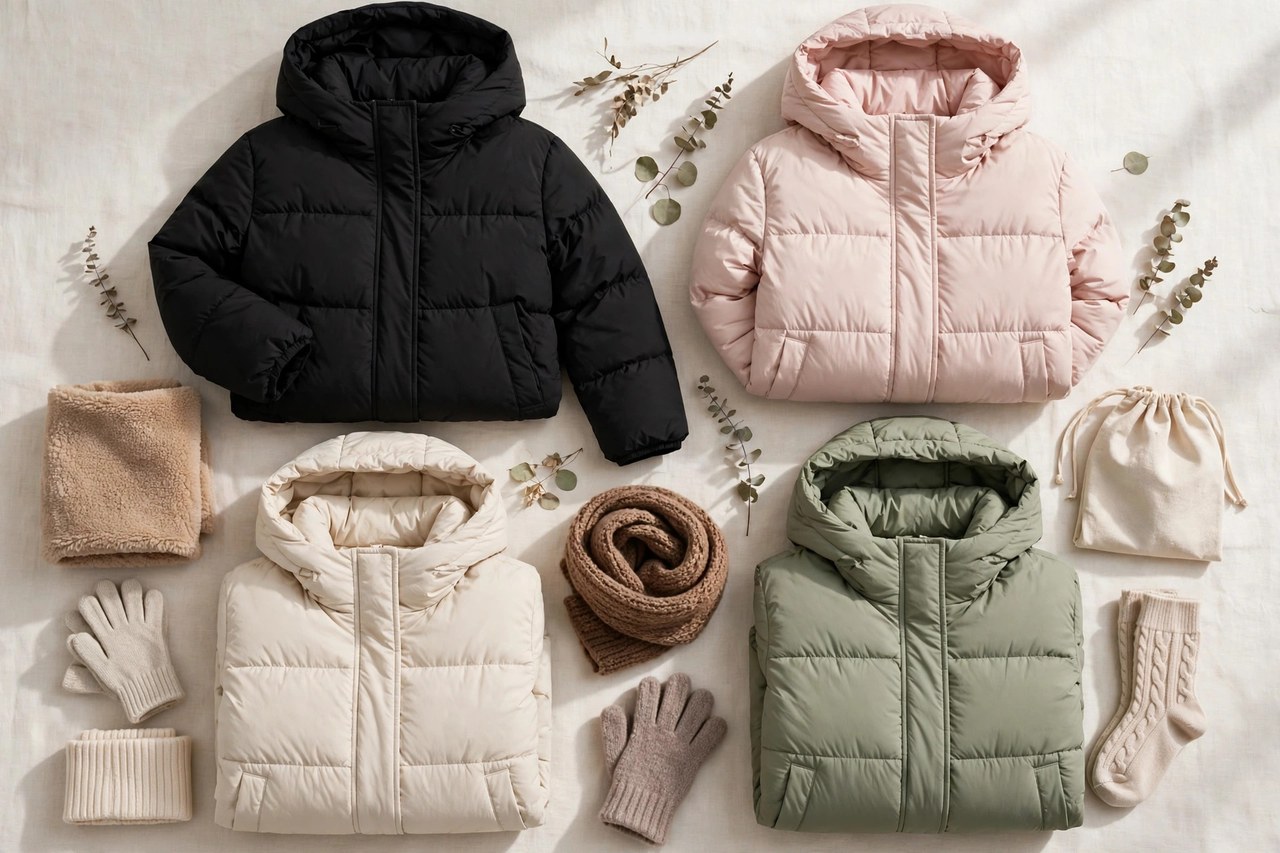
A down jacket insulates with loft: clusters of down feathers trap still air in thousands of tiny pockets, and that trapped air, not the down itself, keeps you warm. For plus size shoppers in sizes 14W to 5X, a well-designed down jacket or longer down parka delivers the most warmth for the least weight of any winter option, which matters when a coat is worn for hours. But insulation only performs when the jacket fits: compressed by a too-tight cut or billowing with cold air in a too-loose one, down loses its magic.
This guide is the insulation specialist within the broader coats guide. It explains fill power and fill weight in plain terms, when synthetic fill beats down, how baffle construction and fit interact at plus proportions, and the sealing details that decide performance in real wind and wet. If you are choosing one serious winter jacket, the numbers and checks below will predict its January behavior far better than its showroom softness or its brand story.
Fill Power, Fill Weight and Real Warmth
Fill power measures loft quality: the cubic inches one ounce of down expands to fill. Common ratings run from about 450 to 900, with higher numbers lofting more, warming more per ounce and compressing smaller for packing. Fill power alone does not state warmth, because a jacket also needs enough down in total. Fill weight, the actual ounces of down inside, multiplied by loft quality, gives real insulation. A high fill power jacket with little fill suits mild cold beautifully and fails in a deep freeze; expedition warmth needs both numbers strong.
Compare jackets by asking for both figures, since brands advertise fill power loudly and fill weight quietly. Construction spreads the insulation: sewn-through baffles are light and packable but leave cold lines at each stitch, while box baffles hold more loft with no pinch points and suit colder designs. At plus sizes, check that baffling is scaled honestly, wider channels holding proportionally more fill, because a plus jacket is a larger garment and needs more total insulation to protect a larger surface at the same standard.
Down Versus Synthetic Fill
Down wins on warmth-to-weight, compressibility and longevity: a quality down jacket, kept dry and lofted, can serve a decade or more. Its weakness is water. Wet down collapses and insulates poorly, and dries slowly, though hydrophobic treated down narrows the gap. Synthetic fills, usually polyester clusters or sheet insulation, cost less, keep insulating when damp, dry faster and suit wet, coastal or sleet-prone winters and shoppers who prefer non-animal materials, at the price of more bulk for the same warmth and a shorter working life as fibers gradually break down.
Choose by your winter's character and your habits. Dry, bitter cold and careful ownership favor down. Mixed precipitation, daily transit in slush, and jackets that live in car trunks favor synthetic or a down jacket under a weatherproof shell. Shell fabric matters either way: a down-proof, tightly woven face prevents feathers escaping, a durable water repellent finish sheds light snow and drizzle, and a fully waterproof parka shell converts an insulated jacket into a storm system for the harshest commutes.
Plus Fit for Insulation: Room Without Drafts
Fit an insulated jacket over your real winter layers, closed, and move: drive, reach up, bend and sit. The jacket needs ease for a sweater and for the down itself to loft, since insulation compressed by strain at the bust, shoulder or hip warms less exactly where the body is closest to the cold. At the same time, excess interior volume invites drafts; drawcords at hem and waist, adjustable cuffs and a close-fitting hood tune the seal without changing size. The right plus down fit feels like a warm room, not a tight vest or a bell.
Length is warmth. Hip-length jackets suit active use and driving, thigh and knee lengths protect far more in standing cold, and long down coats approaching parka territory are the choice for waiting on platforms and walking dogs in January. Sleeves should cover the wrist with arms forward, the back should stay covered when bending, and a two-way zip on longer styles lets you sit and stride without unzipping your warmth away. Check pocket placement with gloves on; a beautiful jacket with unusable pockets fails its winter exam.
Hoods, Sealing Details and Care
Details separate a warm jacket from a warm-enough story. A hood should fit close with the drawcord snugged, move with your head, and ideally detach or stow for formal settings. The main zip needs a storm flap or insulated draft tube behind it, the chin needs a soft guard, and cuffs should seal by elastic, tab or inner knit storm cuff.
Care keeps loft alive. Wash down rarely, in a front-loading machine with down-specific detergent, rinse thoroughly, and tumble dry low with clean tennis balls or dryer balls until completely dry and re-lofted, which can take hours; damp down stored is down ruined. Store the jacket uncompressed on a hanger or in a large breathable sack, never in its stuff sack long term. Looked after this way, a good plus down jacket is a decade-long winter companion, and its cost divides into pennies per warm day.
Related Women's Guides
Looking for Women's Clothing Stores?
This guide helps you choose women's plus size down jackets. To browse where to buy, visit our women's clothing store directory, where you can find retailers that carry them.