Women's Plus Size Jackets Guide
Plus size jackets as the umbrella category in 14W to 32W: blazers, denim, utility, moto and soft jackets fitted through shoulder, arm and closure for layering over real clothing.
Shop Women's Plus Size Jackets Now
Shop Women's Plus Size Jackets on Amazon Shop Women's Plus Size Jackets on eBayThe Amazon and eBay links on this page are affiliate links. If you make a purchase through them, Apparel Search may earn a commission.
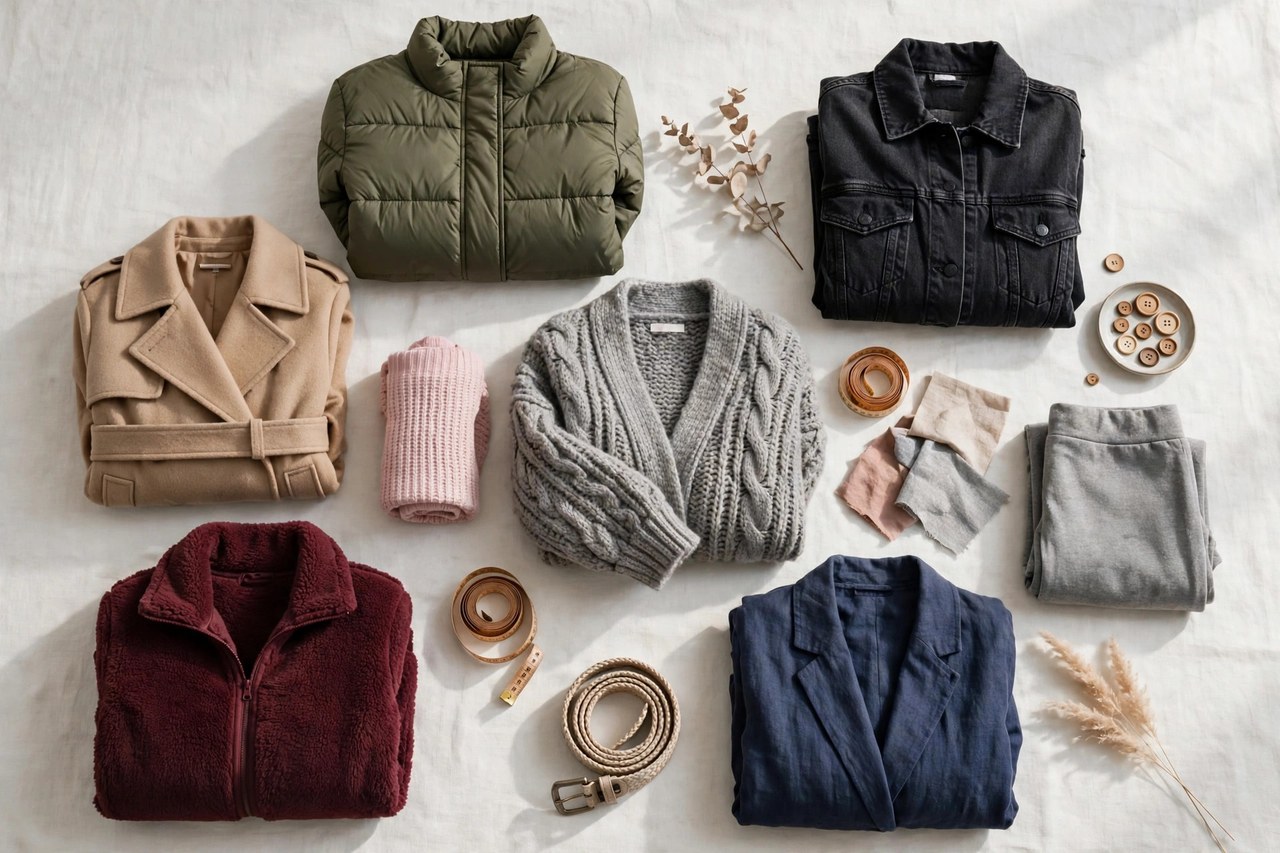
A jacket is the light-to-midweight layer that finishes outfits from spring through fall, and this guide treats it as the umbrella category it is: blazers, denim jackets, utility and field jackets, moto styles, bombers, shirt jackets and soft knit jackets, all in plus sizes 14W to 32W and 1X to 5X. The specialist members have their own pages — leather jackets and down jackets are covered separately in this section, as are coats and full outerwear — so this page concentrates on the everyday jacket family and the fit rules its members share.
Those shared rules exist because jackets fail in the same places on plus bodies across every style. The shoulder and upper arm are graded too small, the closure is asked to work across a bust and tummy it was not patterned for, and the body length lands at a point that cuts the figure badly. A jacket is also the layer most often bought to wear over other clothes, so its sizing must include the layer beneath. Judge every style below against those points first and its fashion details second, and the category becomes reliably shoppable.
The Everyday Jacket Styles
The blazer is the tailored member: structured shoulder, lapels, a button closure and lengths from hip to thigh, in ponte, crepe and suiting fabrics. The denim jacket is the casual classic, whose plus version needs stretch denim or a shaped body to close comfortably rather than hang open by default. Utility and field jackets bring pockets, drawstring waists and cotton twill; the drawstring is a real plus feature, letting one garment fit and define a range of waists.
Soft jackets — knit blazers, cardigan-jackets, fleece and shirt jackets — trade structure for comfort and layering ease, and in plus sizes they carry much of the everyday load, including most work-from-home and travel dressing. Transitional styles blur toward outerwear: quilted barn jackets, softshell and rain shells. The working distinction used in this section is weight and purpose — if it is primarily a coat against weather, it lives in the coats and outerwear guides; if it primarily finishes an outfit and handles mild weather, it is a jacket, and the fit checks here apply.
Shoulder, Sleeve and Closure: The Fit Core
Fit a jacket closed, over the thickest layer you will realistically wear beneath it. The shoulder seam should sit at your shoulder point; jackets forgive less here than any knit, because a dropped shoulder in a structured fabric reads as the wrong size instantly. The upper arm must let you raise your arms forward and up — the steering-wheel and shelf-reach test — without the whole jacket lifting.
The closure is the honesty test. A blazer button should close without pulling into an X of creases across the bust or tummy, and its button stance — the height of that closure — should sit near your natural waist for the intended line. Zips should run smoothly to the top without the fabric below them straining. If a jacket only works open, it is a size or a pattern wrong for you, however it is styled in photographs; open styling is a choice, not a fitting strategy.
Lengths, Fabrics and Layering Logic
Jacket length sets the proportion. Hip-length styles suit most outfits and bodies, ending below the waistband without cutting the seat. Cropped jackets — moto and some denim styles — should end at or just below the waist to work with dresses and high rises; on a longer or fuller torso a crop that lands at the fullest point of the bust or tummy shortens the whole figure.
Fabrics divide by job. Ponte, double-knit and stretch crepe tailor without stiffness and travel well. Cotton twill and denim give structure for utility and casual styles, with one to two percent elastane transforming their close fit. Faux leather and coated fabrics need stretch panels or generous cutting through the arm.
Buying, Alterations and Care
Buy jackets in the order of your actual week: for most plus wardrobes that means a soft tailored jacket or knit blazer first, a denim or utility jacket second, then a style piece. Keep one jacket that closes over a sweater and one that is cut closer for mild days, rather than forcing one garment across the whole temperature range. Neutral colors earn their keep here because jackets are repeat-visible; add the fashion color once the working pair exists.
Alterations worth paying for on jackets: sleeve shortening, taking in at the side or back seams, and moving a button. Alterations not worth attempting: narrowing shoulders, adding arm room, or lengthening a body — buy those right or not at all. Care follows fabric, with structured blazers rested on wide hangers between wears and spot-cleaned to reduce dry-cleaning. A jacket collection built on shoulder, arm and closure fit will finish outfits for years, and it is the fastest way to make the plus basics underneath them — tees, knits, simple dresses — look deliberately dressed.
Related Women's Guides
More to Explore on Apparel Search
- Plus Size Clothing
- Plus Size Clothing Stores
- Shop for Plus Sizes
- Women's jackets
- Plus Size Overcoats
- Plus Size Rain Coats
- plus size
- fashion
- trendy
- stylish
- plus size fashion model
- plus size fashion definition
- Clothing Stores
- Fashion Designers
- Popular Brands
- Apparel
- Women's Clothing Stores
- Women's Clothing Wholesalers
- Women's Fashion
Looking for Women's Clothing Stores?
This guide helps you choose women's plus size jackets. To browse where to buy, visit our women's clothing store directory, where you can find retailers that carry them.