Women's Plus Size Coats Guide
A plus size coat has to close comfortably over the bust and hip, leave room for sweaters, and move with you — this umbrella guide covers every coat type from trenches to parkas.
Shop Women's Plus Size Coats Now
Shop Women's Plus Size Coats on Amazon Shop Women's Plus Size Coats on eBayThe Amazon and eBay links on this page are affiliate links. If you make a purchase through them, Apparel Search may earn a commission.
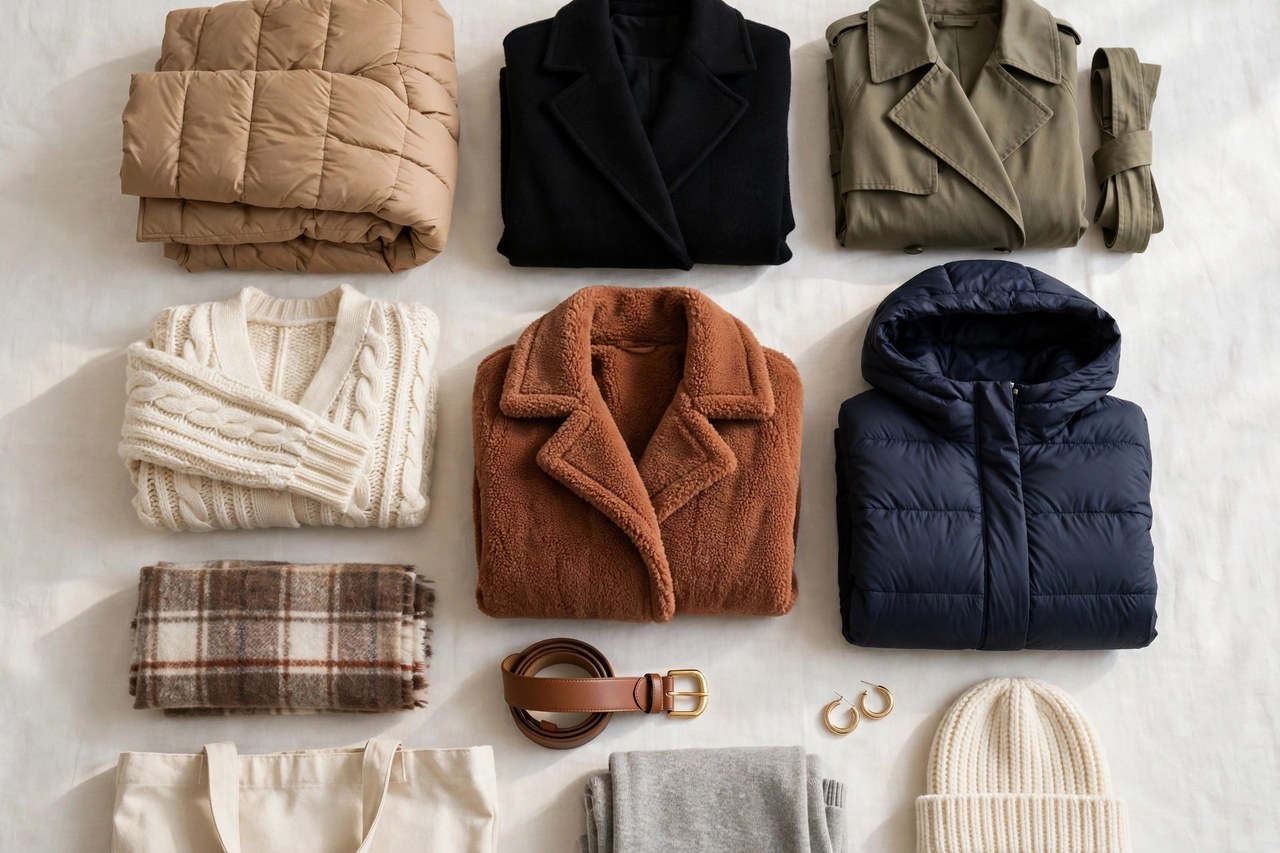
A coat is the most demanding plus size purchase in the wardrobe, because it must do everything at once: close fully over the bust, waist and hip, contain the layers worn beneath it, allow driving, stairs and a full stride, and present a clean silhouette while doing so. Plus size coats in 14W through 5X are cut for that job when they are properly made, with more room distributed through the front, a shaped rather than straight body, and closures placed to work at plus proportions.
This is the umbrella guide to plus coats as a family. It explains the fit architecture every coat type shares, how lengths and silhouettes behave on a curvy body, and how to judge warmth and construction before price. The specialist guides then take single types in depth, notably down jackets and parkas for deep cold, wool coats for tailored warmth, overcoats and rain coats. Start here to learn what a plus coat must do; go there when you know which winter you are dressing for.
The Closure Test and Layering Room
Every plus coat fitting begins with the closure test. Buttoned, zipped or wrapped and belted, over the thickest sweater you realistically wear, the coat should meet without pulling, gaping between buttons, or dragging the hem upward at the front. Sit down closed, raise both arms, and mimic driving. A coat that only closes over a thin top will spend the season worn open, which defeats its purpose and strains its closures every time you force it.
Layering room is engineered, not accidental. Look for a deeper armhole shaped for movement, a sleeve wide enough at the bicep for knit layers, a back vent or pleat that releases the stride, and a lining that glides over sweaters instead of gripping them. Front overlap matters at plus sizes: double-breasted styles and storm plackets need enough wrap that wind does not find the gap. If you consistently size up two sizes to close a coat, the brand's plus block is too straight; change brands, not just size.
Coat Types and Silhouettes for Curves
The wrap and belted coat defines the waist and adjusts through the day, flattering most plus figures when the belt sits at the true waist and the wrap is deep enough to stay modest. A-line and swing coats release from the bust or shoulder, giving hip room without a fitted waist, and work well over dresses. Straight and cocoon coats skim the body in a modern line but need honest hip room and vents to avoid a boxy read. Peacoats, trenches and car coats end at hip or thigh and pair easily with trousers.
Long coats, from below the knee to full length, add drama and real warmth for legs, and on plus bodies they look best with a defined shoulder and some waist suggestion so the column does not widen unchecked. Parkas and puffers prioritize insulation and weatherproofing, covered in the down jackets guide, while wool and cashmere-blend coats prioritize polish, covered in the wool coats guide. Choose silhouette by your dominant need: definition, release, coverage or weather defense, then test the closure in that style.
Lengths, Warmth and Weather
Coat length is a warmth and proportion decision together. Hip-length coats suit drivers and mild climates, thigh and knee lengths are the versatile middle, and long coats protect dress hems and trouser legs in serious cold. On shorter plus shoppers, a long coat needs a strong shoulder, a vertical closure line and often a belt or seam definition to avoid overwhelming the frame; on taller shoppers, length is pure advantage. Check that hems clear the ground on stairs and do not catch behind the knee when walking.
Warmth comes from shell fabric, insulation and sealing details working together. Wool melton and double-faced cloth block wind and hold structure, quilted and down-filled coats trap air for maximum warmth per weight, and waterproof shells with sealed seams handle wet cold. Details decide real-world performance: a collar that closes at the throat, cuffs that seal the wrist, pockets placed where hands naturally fall and deep enough for gloves, and a hood that fits without pulling the shoulders up when raised.
Construction, Sizing and Care
Judge construction at the stress points. Buttons should be sewn through with a shank and reinforced inside, buttonholes stitched densely, zips metal or heavy molded plastic running smoothly under load, and seams at shoulder and armhole clean and strong. A plus coat carries more fabric weight and more closure strain than a straight-size coat, so flimsy findings fail early. A full lining in a smooth fabric, with enough ease to sit without splitting, is a quality marker, as are interior pockets and a hanging loop that is anchored, not decorative.
Size by your largest layer-inclusive measurement, usually bust or hip, and confirm sleeve length with arms forward. Store coats on wide, padded hangers that support the shoulder, brush wool after wear, and air between wearings rather than over-cleaning. Professional cleaning once a season, prompt repair of a loose button, and re-proofing weather coats as directed will keep one good plus coat serving for years, which is the real economy in the most expensive category of the wardrobe.
Related Women's Guides
More to Explore on Apparel Search
- Plus Size Clothing
- Plus Size Clothing Stores
- Shop for Plus Sizes
- Women's coats
- difference between coats & jackets
- Plus Size Leather Jackets
- fashion
- trendy
- stylish
- plus size fashion model
- plus size fashion definition
- Clothing Stores
- Fashion Designers
- Popular Brands
- Apparel
- Women's Clothing Stores
- Women's Clothing Wholesalers
- Women's Fashion
Looking for Women's Clothing Stores?
This guide helps you choose women's plus size coats. To browse where to buy, visit our women's clothing store directory, where you can find retailers that carry them.