Women's Plus Size Leather Jackets Guide
Plus size leather jackets in 14W to 32W and 1X to 5X are cut for broader shoulders, a fuller bust and upper arms that need real ease — so the zip closes flat and the sleeves actually bend.
Shop Women's Plus Size Leather Jackets Now
Shop Women's Plus Size Leather Jackets on Amazon Shop Women's Plus Size Leather Jackets on eBayThe Amazon and eBay links on this page are affiliate links. If you make a purchase through them, Apparel Search may earn a commission.
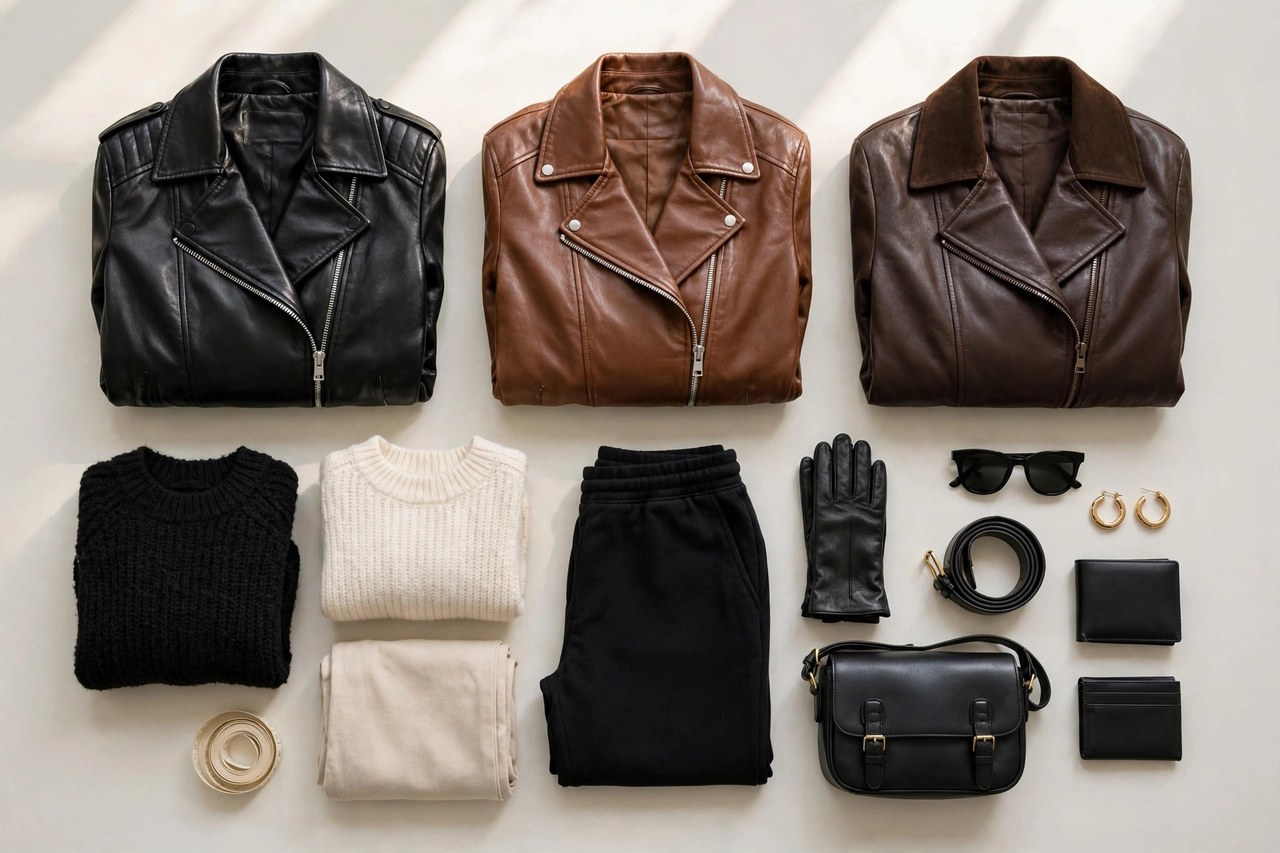
A plus size leather jacket fails or succeeds at the zip. In sizes 14W through 32W and 1X through 5X, the pattern must carry enough ease across the back, bust and upper arm for the front to meet without pulling, while still shaping the waist so the jacket does not hang like a box. Better plus ranges grade that ease deliberately instead of simply widening a straight-size moto, which is why two jackets with the same chest number can feel completely different on.
This guide covers the main plus size leather styles — moto, blazer, bomber and shirt jacket — how genuine and faux leather behave on a curvier frame, and the closure, shoulder and sleeve checks to run before you buy. Leather is an investment piece that should last years, and in plus sizes the difference between a jacket you reach for daily and one that stays zipped open in the closet is almost always pattern, not price.
Shoulders, Bust and the Zip Test
Start with the shoulder seam and back. The seam should sit at the edge of your shoulder, and you should be able to reach forward, hug yourself and lift both arms without the back binding or the whole jacket riding up. Plus patterns that add a back yoke with slight shaping, action pleats or a stretch panel at the back armhole give that reach without adding bulk at the front, where extra fabric would collapse into folds.
Then do the zip test over the layer you will actually wear — a sweater, not just a tee. The zip should close smoothly and lie flat from hem to collar with no horizontal stress lines across the bust or waist and no gaping V at the bottom hem. If it only closes over thin tops, size up or look for a style with a two-way zip, which lets you open the bottom for sitting and driving while keeping the top closed and neat.
Moto, Blazer, Bomber and Shirt Styles
The moto is the classic: asymmetric zip, notch lapels and zipped pockets. In plus cuts, look for a slightly longer body that ends at the high hip, lapels scaled to the chest so they lie flat instead of flipping, and zip pockets placed so they do not sit directly over the fullest part of the hip. A belted hem can define the waist, but check that the belt closes on a middle notch rather than the last one.
The leather blazer brings tailoring — a single button or open front, shaped waist and vented back — and works for offices and evenings where a moto feels too casual. The bomber uses a ribbed hem and cuffs that should hug without squeezing the waist or wrist; in plus sizes that ribbing needs enough length to stay at the waist when you move. The shirt jacket in soft suede or unlined leather is the lightest option, layering like a heavy shirt in transitional weather.
Leather, Faux Leather and Lining
Genuine lambskin is the softest and lightest, draping close and breaking in to your shape within a few wears, which suits plus fits where stiffness fights the curve of the bust and waist. Cowhide is firmer, warmer and more abrasion resistant, but heavier — try a full day weight check if you will wear it for commuting. Suede shows a matte, softer look and needs weather protection from day one. All three will relax slightly with wear, so a new jacket should feel snug, never tight across the back.
Modern faux leather in polyurethane has improved greatly and costs far less, but check flexibility at the elbow and underarm, where cheaper coatings crack first, and confirm the lining is smooth enough to slide over sweaters. Linings matter in plus sizes: a satin or viscose lining reduces friction over knits, quilted linings add winter warmth without needing a larger size, and an unlined jacket gives the closest, coolest fit but shows every layer line underneath it.
Sizing, Layering and Care
Order by your fullest measurement — usually bust — then check the size chart for bicep and back width if listed; upper arm ease is the most commonly skipped plus measurement and the one that decides whether you can bend your elbow comfortably. Between sizes, choose the larger for a winter jacket you will layer and the closer fit for a fashion moto worn over dresses. Extended ranges to 4X and 5X vary more between brands, so inches beat letter labels every time.
Condition genuine leather once or twice a year, store it on a wide padded hanger that supports the shoulder, and keep it out of sealed plastic so the hide can breathe. Blot rain rather than rubbing it, and let a soaked jacket dry slowly away from heat. Faux leather wipes clean with a damp cloth but should not be conditioned with products made for hide. A well-fitted plus leather jacket needs no breaking-in battle — it should zip, bend and sit comfortably from the first week.
Related Women's Guides
More to Explore on Apparel Search
Looking for Women's Clothing Stores?
This guide helps you choose women's plus size leather jackets. To browse where to buy, visit our women's clothing store directory, where you can find retailers that carry them.