Women's Plus Size Overcoats Guide
Plus size overcoats are the long, tailored top layer — knee to calf length coats in wool and structured fabrics, cut in 14W to 5X to button flat over layers and sweep without pulling.
Shop Women's Plus Size Overcoats Now
Shop Women's Plus Size Overcoats on Amazon Shop Women's Plus Size Overcoats on eBayThe Amazon and eBay links on this page are affiliate links. If you make a purchase through them, Apparel Search may earn a commission.
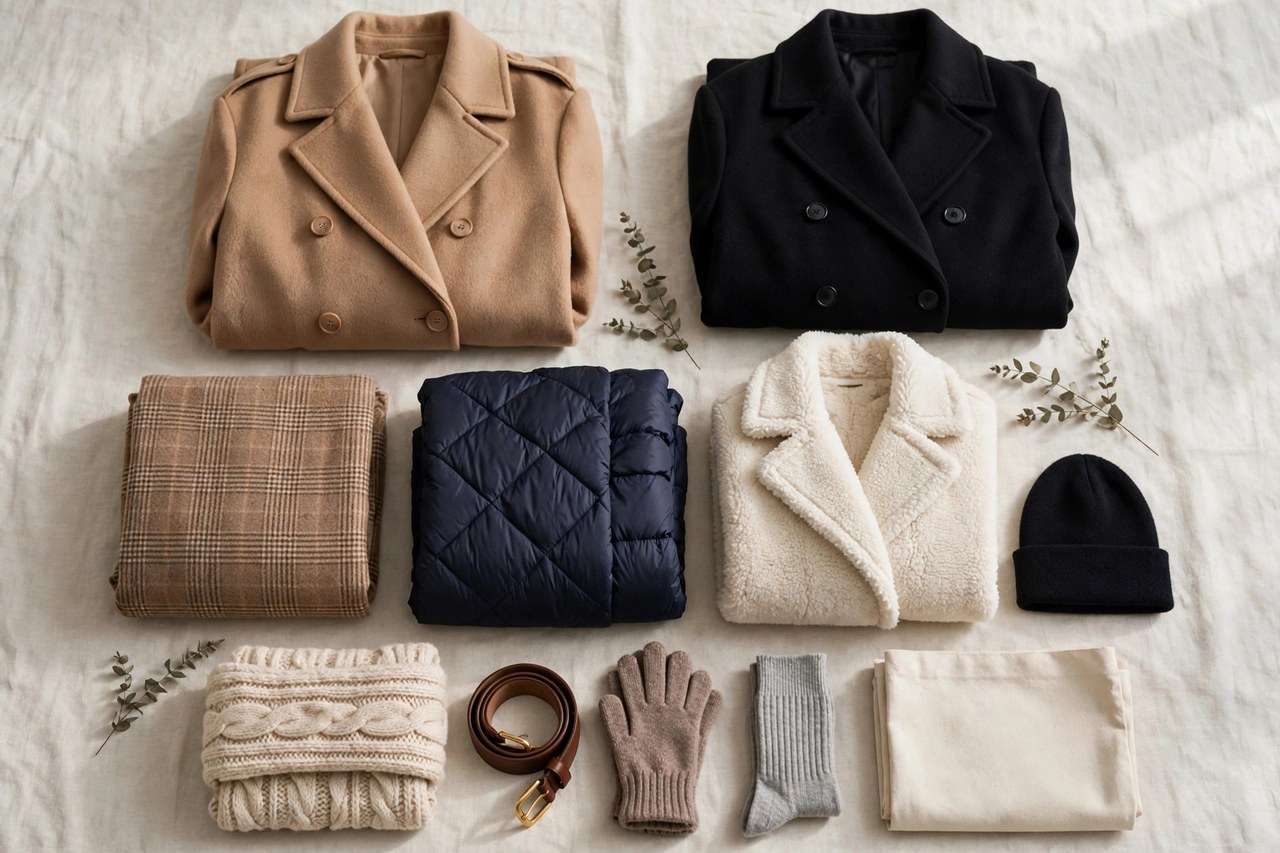
An overcoat is a specific garment, not a synonym for outerwear: a long, tailored coat, usually knee length or longer, designed to be worn over suits, dresses and layered clothing. In plus sizes from 14W to 5X, its tailoring is the challenge — lapels that must lie flat over a fuller bust, buttons that must close without strain lines, a back vent that must stay shut when walking, and enough sweep at the hem to stride without the coat pulling across the hips. This guide is about that long tailored coat alone.
For the full outerwear landscape — puffers, parkas, rain shells and short jackets — use the outerwear guide in this section. Here the focus is narrow and deep: lengths and silhouettes of the classic overcoat, how single and double-breasted fronts behave on a curvier body, which wool and blended fabrics hold a tailored line in larger sizes, and the seated and walking tests that reveal a good plus overcoat from a merely large one.
Length, Silhouette and Sweep
Overcoat lengths run from just above the knee to mid-calf. On plus frames, a length just below the knee is the most versatile: it covers dress hems and trouser seats, reads formal, and avoids the ground clearance problems of very long coats on stairs and car doors. Mid-calf lengths add drama and warmth but need a body height and stride to carry them; petite-plus shoppers should be especially careful, because a too-long overcoat shortens the visible leg dramatically even when everything else fits.
Silhouette choices are wrap, single-breasted, double-breasted and A-line swing. The hem sweep — how much the coat flares from waist to hem — decides whether it closes over fuller hips. A straight coat that buttons at the bust but strains at the hip needs the next silhouette, not the next size up in the same cut. Check the back vent sitting closed while standing and opening only as you stride; a vent that gapes at rest means the hip ease is insufficient, whatever the front suggests.
Breasted Fronts, Lapels and Buttons
A single-breasted overcoat with two or three buttons is the most forgiving plus style: the narrow overlap creates a long vertical line, the lapels form a V that lengthens the torso, and the coat can be worn open without excess fabric. A double-breasted front adds width and formality and can look superb on plus frames when the button stance is set wide enough for the chest and the overlap lies completely flat; if the inner button pulls, the whole front twists and the style fails.
The wrap coat with a belt answers fit differently, adjusting at the waist and forgiving layering changes, but the belt should close with room to spare and the wrap overlap should extend well past the center front so it never opens at the thigh when walking. Lapels should match chest scale — very narrow lapels look pinched on a broad chest, while a confident notch or peak lapel balances it. Buttons themselves should be substantial, firmly sewn, and spaced so the bust button is never the one doing all the work.
Fabrics: Wool, Blends and Structure
Classic overcoats use wool and wool blends, and fabric weight decides both warmth and drape. A firm melton or twill holds the tailored shoulder and lapel roll in larger sizes where a soft, thin cloth collapses, but very stiff fabric resists body curves and stands away at the hem. Camel hair and cashmere blends add softness and luxury at higher prices and need gentler wear. Most practical plus overcoats are wool blended with nylon or polyester for durability and shape retention at stress points like buttonholes and pocket mouths.
Structure inside matters as much as cloth outside. A good plus overcoat has a shaped chest canvas or quality fusing so lapels roll rather than fold, shoulder pads or wadding scaled to support the wider shoulder without exaggeration, and a full lining that lets the coat slide over sweaters and blazers. Half-lined coats are lighter and suit milder climates. Feel the hem weight: a chain or weighted hem in better coats helps a long coat hang straight and return to line after sitting, a detail worth its cost at longer lengths.
Fit Tests, Sizing and Care
Fit-test an overcoat over a blazer or your thickest sweater. Buttons should close with the coat lying flat, sleeves should show a sliver of the layer beneath without swallowing your hands, and you should sit, cross your legs and simulate driving without the front riding up or the vent splitting open. Walk briskly: the hem should swing evenly without wrapping around your legs. Order by bust first, then check the hip measurement against the coat sweep if you are fuller at the hip.
Care keeps tailoring alive. Brush wool after wear, rest the coat a day between wearings, store it on a broad hanger that fills the shoulder, and use a cedar or breathable garment bag for off-season storage. Professional cleaning once a season is usually enough; spot clean promptly and never machine wash a structured coat. A plus overcoat that passes these tests is a decade purchase.
Related Women's Guides
More to Explore on Apparel Search
- Plus Size Clothing
- Plus Size Clothing Stores
- Shop for Plus Sizes
- overcoats definition
- Women's overcoats
- plus size
- Plus Size Leather Jackets
- fashion
- trendy
- stylish
- plus size fashion model
- plus size fashion definition
- Clothing Stores
- Fashion Designers
- Popular Brands
- Apparel
- Women's Clothing Stores
- Women's Clothing Wholesalers
- Women's Fashion
Looking for Women's Clothing Stores?
This guide helps you choose women's plus size overcoats. To browse where to buy, visit our women's clothing store directory, where you can find retailers that carry them.