Women's Plus Size Outerwear Guide
Plus size outerwear is the umbrella category for every coat and jacket in 14W to 5X — this overview helps you choose the right type, weight and closure before the specialist guides go deeper.
Shop Women's Plus Size Outerwear Now
Shop Women's Plus Size Outerwear on Amazon Shop Women's Plus Size Outerwear on eBayThe Amazon and eBay links on this page are affiliate links. If you make a purchase through them, Apparel Search may earn a commission.
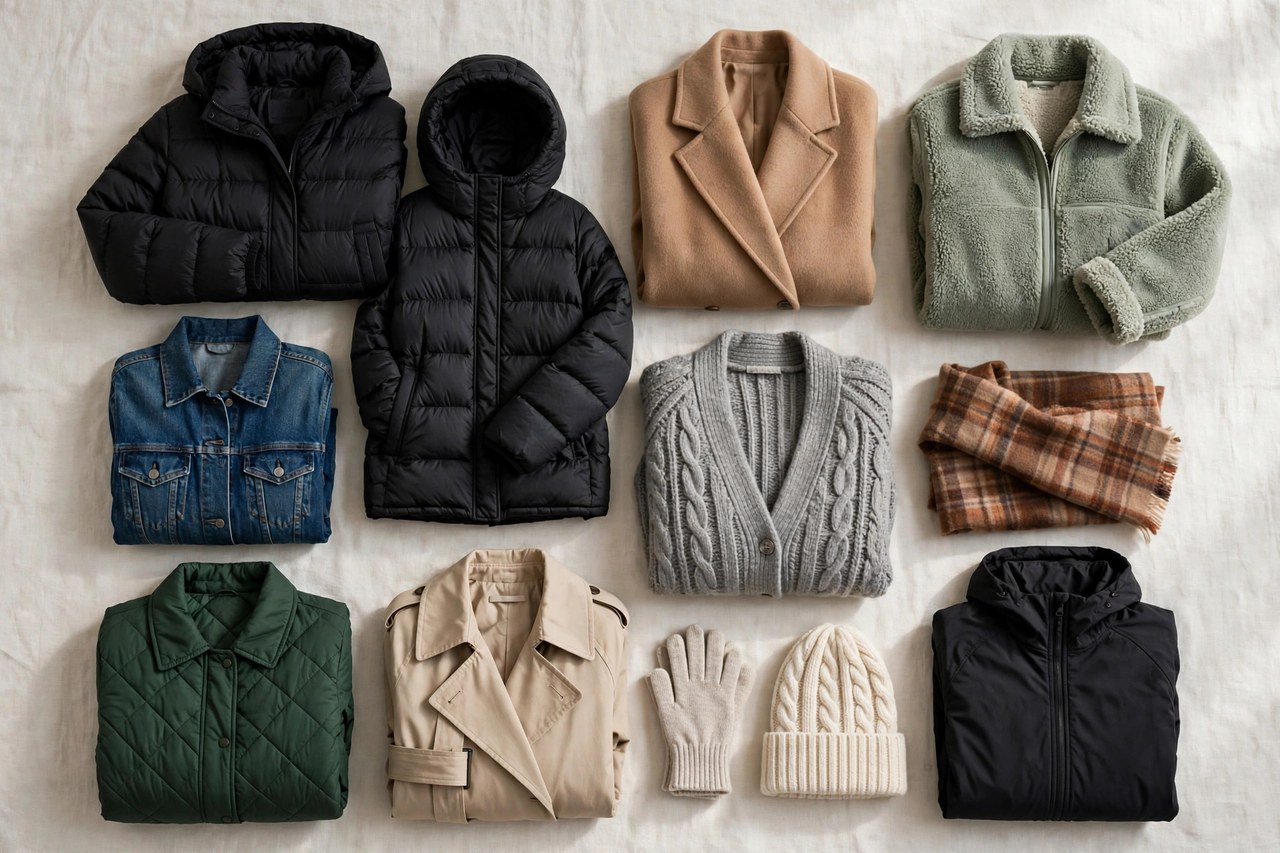
Outerwear is the umbrella word for everything worn as the outermost layer: long coats, short jackets, parkas, puffers, trenches, rain shells and leather and denim jackets. In plus sizes from 14W to 5X, the category shares one fit problem — the garment must close comfortably over both your body and the clothing beneath it, move with you, and keep weather out at neck, wrist and hem. This guide maps the whole category so you can choose the right type before using the specialist coat, jacket and rainwear guides in this section.
Think of outerwear buying in three decisions. First, purpose: daily winter warmth, rain protection, transitional layering or dress polish. Second, length and weight, which follow from climate and how you travel. Third, closure and fit over layers, tested with the bulkiest sweater you realistically wear. Running those three decisions in order avoids the closet of almost-right coats.
The Main Types and What Each Does Best
Long coats — wool overcoats, trenches and long puffers — give the most coverage and polish and suit commuting and dress wear. Parkas add hoods, storm plackets and the deepest insulation for sustained cold. Short jackets — puffers, denim, leather and softshell styles ending at hip or waist — maximize movement and suit driving and active days. Rain outerwear, covered fully in the rainwear and rain coat guides, trades insulation for waterproofing and often layers over a warm mid-layer instead.
Most plus wardrobes need two or three pieces across these types rather than one coat attempting everything: a genuinely warm long option, a waterproof option, and a lighter transitional jacket. Specialty pieces — ski shells, evening wraps, heated jackets — layer onto that base. When a listing calls a garment all-season, test the claim against its insulation weight and whether a removable liner truly adapts it, because most all-season claims mean spring and autumn, not January.
Warmth, Weight and Insulation
Warmth comes from trapped air, supplied by down, synthetic fill or wool and fleece textiles. Down offers the most warmth per weight and compresses for travel, but loses insulation when wet unless treated. Synthetic fills cost less, insulate when damp and suit rain-prone cold climates. Fill power and fill weight numbers let you compare puffers honestly: higher fill power is loftier and lighter for the same warmth. In plus sizes, even quilting distribution matters — channels should be scaled so insulation does not thin over the bust and back where the garment stretches furthest.
Weight is its own comfort factor on a fuller frame. A very heavy coat adds shoulder fatigue on long days, and stiff fabrics resist the curve of the body, standing away at the hem and letting cold air in. Modern lightweight insulation and soft shells have largely solved both problems at mid prices. Match warmth honestly to your climate and commute: the warmest parka is a burden in a heated car and office, while a thin fashion coat fails a windy platform wait no matter how good it looks.
Closures, Hoods, Cuffs and Layering Room
Closures decide real-world usability. Two-way zips allow sitting and driving without unzipping the whole coat, storm plackets over zips block wind, and snaps or buttons over a zip give a cleaner dress front. Button-only coats need close button spacing at the bust to avoid gaping when seated. Check that you can fasten everything wearing gloves if the coat is for deep winter, and that pockets sit where your hands naturally fall, are deep enough for a phone, and close securely.
Hoods in plus sizes should adjust at the back and sides so they stay up without swallowing vision, and should accommodate hair volume and a hat. Cuffs with inner knit stormsleeves or adjustable tabs seal the wrist gap that chills arms first. For layering room, fit-test over your thickest regular sweater: you need enough ease to reach and bend, but a coat bought two sizes up for layering will flap, leak warmth and look borrowed on normal days. Many plus lines build a sensible layering allowance into the pattern itself — trust the chart, then verify with the sweater test.
Sizing Across Types and Care
Order outerwear by bust measurement over light clothing, then apply the sweater test on arrival; hips matter for long straight coats, which may need an A-line or swing cut to close at the hem over fuller hips. Note that a size in a parka brand and a size in a tailoring brand can differ by inches — charts, not memory, for every purchase. Keep a record of the chest and hip inches that worked in each type, because outerwear is bought rarely and forgotten sizing lessons are expensive to relearn.
Care by type: down and synthetic puffers wash on gentle cycles with thorough low-heat drying to restore loft, wool coats brush and air between wears and clean seasonally, leather follows the leather jacket guidance, and waterproof shells need the reproofing routine from the rainwear guide. Store coats on wide hangers, unfastened, with room to breathe, and empty pockets so hems keep their line. A small, well-chosen plus outerwear set, maintained this way, covers years of weather without a single emergency purchase.
Related Women's Guides
More to Explore on Apparel Search
- Plus Size Fashion
- Plus Size Clothing Stores
- Shop for Plus Sizes
- Women's outerwear
- Plus Size Leather Jackets
- Plus Size Rain Coats
- plus size
- fashion
- trendy
- stylish
- plus size fashion model
- plus size fashion definition
- Clothing Stores
- Fashion Designers
- Popular Brands
- Apparel
- Women's Clothing Stores
- Women's Clothing Wholesalers
- Women's Fashion
Looking for Women's Clothing Stores?
This guide helps you choose women's plus size outerwear. To browse where to buy, visit our women's clothing store directory, where you can find retailers that carry them.