Women's Plus Size Rainwear Guide
Plus size rainwear is the whole rain system in 14W to 5X — waterproof pants, boots, hats and layered shells that work together, broader than a rain coat alone.
Shop Women's Plus Size Rainwear Now
Shop Women's Plus Size Rainwear on Amazon Shop Women's Plus Size Rainwear on eBayThe Amazon and eBay links on this page are affiliate links. If you make a purchase through them, Apparel Search may earn a commission.
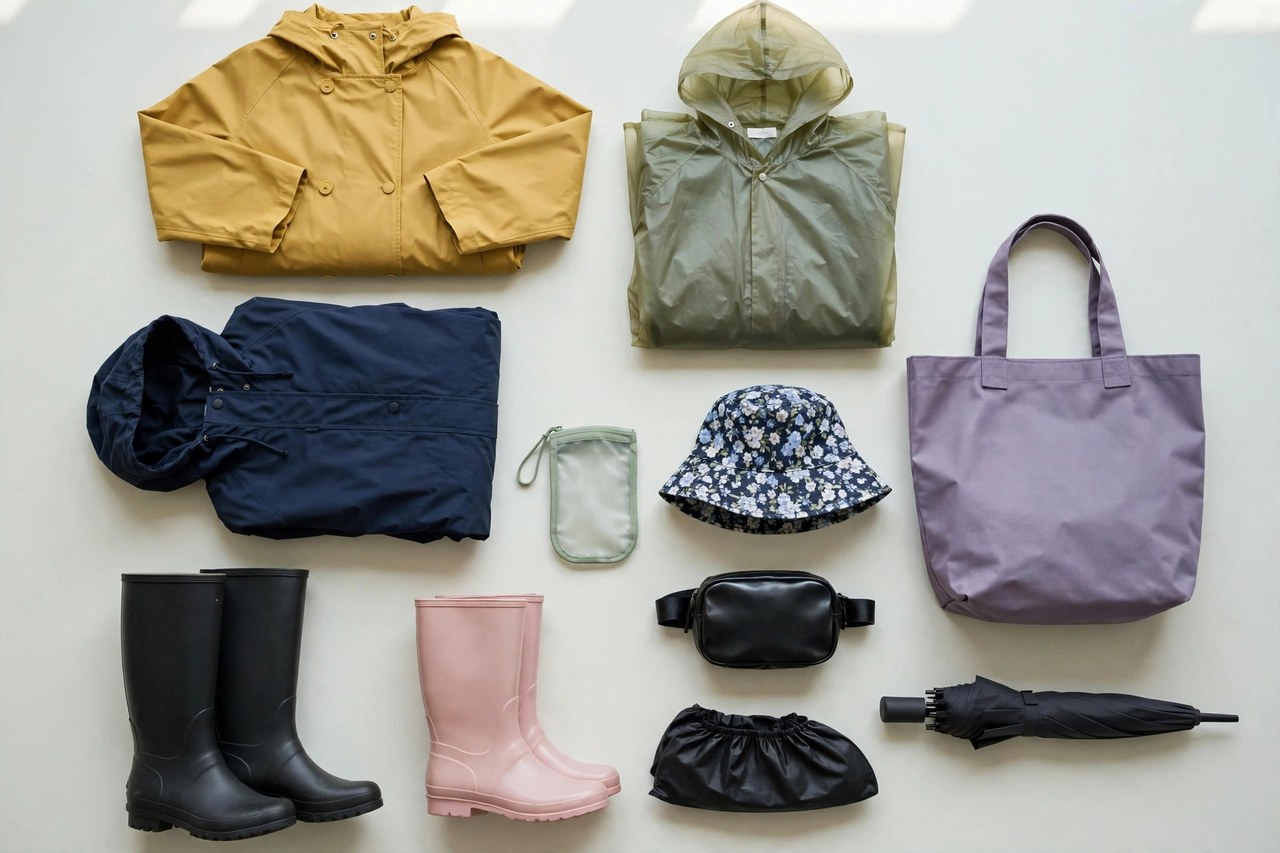
Rainwear is the system, not the single garment. Where the rain coat guide in this section covers the waterproof coat in depth, rainwear means everything worn together to stay dry: waterproof pants or overtrousers, rain boots sized for wider calves, rain hats and hoods, waterproof gloves, and the shell layers that combine coat and pants into full coverage. In plus sizes from 14W to 5X, each piece has its own fit problem, and a system is only as dry as its weakest piece — a superb coat over ordinary trousers still ends in wet legs and shoes.
This guide helps plus shoppers assemble rainwear by need. A walking commute in a rainy city asks for different gear than dog walking, gardening, festivals, school runs or outdoor work. Start from how long you are out, how hard it rains where you live and what you wear underneath, then build outward from the coat you already own or plan to buy. The aim is coverage at the overlaps — waist, wrist, ankle and neck — where rain actually enters a system.
Waterproof Pants and Overtrousers
Rain pants come in two forms. Overtrousers pull on over your regular pants, with wide legs, elastic or drawstring waists and side zips or snaps that open wide enough for shoes; in plus sizes they must be sized over your clothed hip and thigh, not your bare measurement, and long side openings are the difference between gear you use and gear left at home. Waterproof trousers worn alone look more like normal pants and suit all-day outdoor wear, with sealed seams and a water-resistant finish over a membrane.
Fit checks for plus rain pants are specific: the waistband must stay up when the fabric is wet and heavier, the seat needs ease for bending and climbing without pulling the waistband down, and the hem should cover the top of your rain boot while standing yet not trail when walking. Breathability matters even more in pants than coats, because legs work hard and inexpensive coated pants can leave you as damp from condensation as from rain — look for membrane fabrics, mesh lining at the waist and venting where offered, and accept that budget rain pants are for short exposures.
Rain Boots, Hats and Accessories
Rain boots are the rainwear piece where plus fit is most often ignored. A wider calf needs a wide-calf or adjustable-back boot; forcing a standard shaft creates pressure, breaks the seal at the top and makes the boot nearly impossible to remove when wet. Measure your calf at its fullest over the trousers you will tuck in, and match it to the boot shaft measurement, leaving an inch of room. Shorter ankle rain boots and waterproof shoe covers sidestep the calf question for city use, trading deep-puddle protection for easy fit.
A rain hat with a brim protects glasses and keeps drips off the neck in a way a hood cannot while turning your head, and plus-friendly wide brims should still sit securely with a chin cord in wind. Waterproof gloves and mittens in extended sizes keep hands functional for dog leads, bike brakes and gardening tools.
Layering a Rain System and Fabrics
Build the system in layers that each do one job. Next to the body, everyday clothing or a moisture-managing base; in the middle, warmth if the season needs it; outside, the waterproof shell of coat plus pants. Avoid cotton as the layer under a shell in prolonged rain and cold, because wet cotton chills quickly; synthetic or wool layers stay warmer if condensation or a leak reaches them. The shell pieces themselves should be sized to fit over the mid-layer without compressing it, since compressed insulation loses warmth and tight shells lose waterproof integrity at strained seams.
Fabrics mirror the coat choices: membrane laminates for breathable, all-day systems; coated nylon and PVC for inexpensive, fully waterproof short-exposure gear that does not breathe; and waxed or tightly woven cottons for heritage styles that resist moderate rain and need periodic re-waxing. Sealed seams are as essential in pants as in coats. When a listing is silent about seam sealing, assume the garment is shower resistant only and buy it, if at all, for light duty.
Sizing the System, Packing and Care
Size rainwear as a set: try coat and pants together, raise your arms, bend, sit and mimic your actual activity, then check the four overlaps — the coat hem must still cover the pants waistband when bending, sleeves must cover glove tops when arms extend, pant hems must cover boot tops when stepping up, and the hood or hat must meet the coat collar. Those checks predict dryness best.
Care for the system as technical clothing: shake off and hang every piece to dry fully after use, never store rainwear sealed while damp, wash membranes with gentle or specialist cleaner, and refresh water-repellent finishes when beading fades. Mend small seam-tape lifts and punctures with repair tape promptly, because leaks enlarge. Packable sets should live where they will be grabbed — car, office, hall closet — rather than in deep storage. A plus rainwear system assembled and maintained this way turns a rainy forecast from a wardrobe problem into a non-event.
Related Women's Guides
Looking for Women's Clothing Stores?
This guide helps you choose women's plus size rainwear. To browse where to buy, visit our women's clothing store directory, where you can find retailers that carry them.