Women's Plus Size Suits Guide
Plus size suits are tailored two-piece sets cut for curves in 14W and up, with jackets that close smoothly, trousers and skirts with contoured waists, and separates sizing for top and bottom.
Shop Women's Plus Size Suits Now
Shop Women's Plus Size Suits on Amazon Shop Women's Plus Size Suits on eBayThe Amazon and eBay links on this page are affiliate links. If you make a purchase through them, Apparel Search may earn a commission.
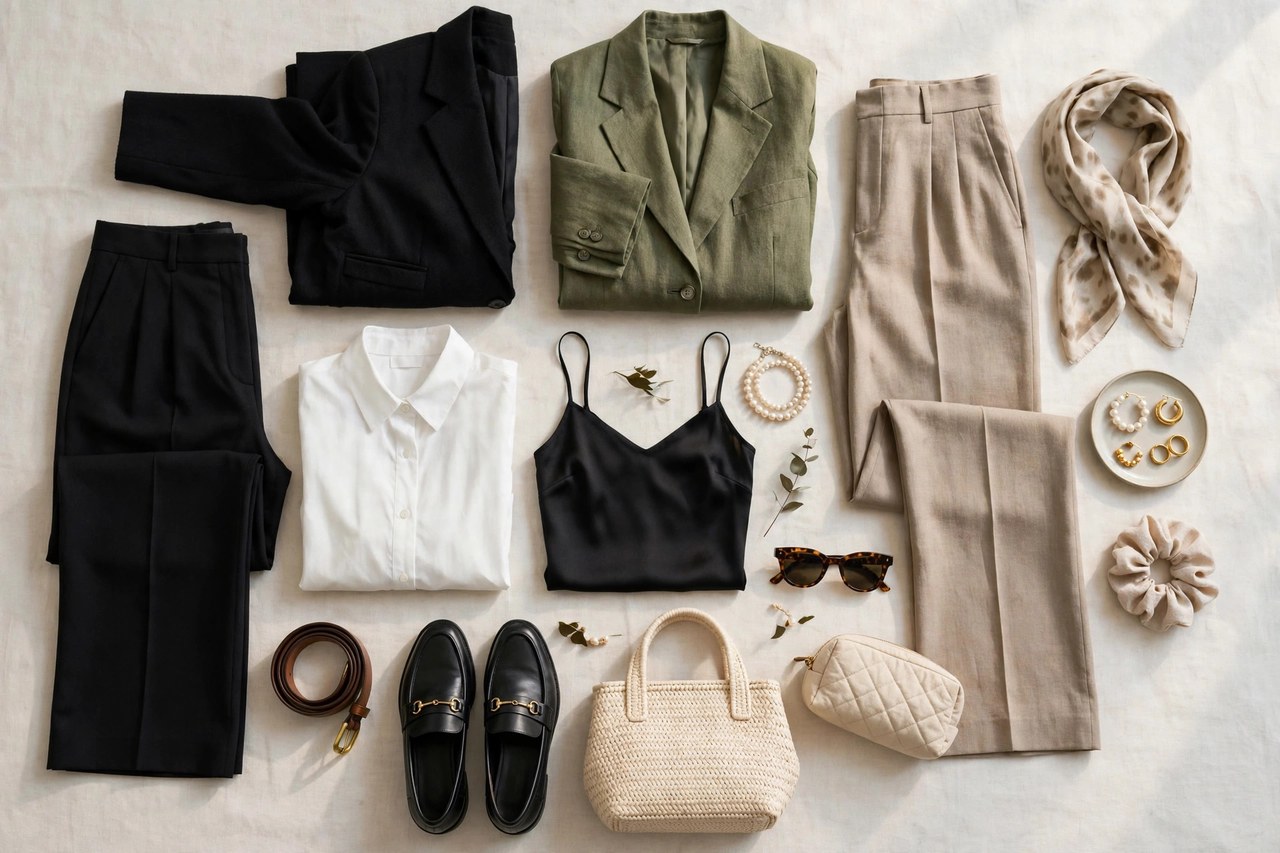
A suit is tailoring's strictest test, because a jacket either closes smoothly over a fuller bust and waist or it announces its failure across the room. Plus size suits in 14W, 1X and beyond are cut on patterns that build the curve into the cloth: bust shaping in the jacket front, a waist that is defined rather than merely large, sleeves with genuine upper-arm room and trousers or skirts whose waistbands follow the waist-to-hip curve instead of bridging it straight and gapping.
This guide covers the tailored two-piece in its work-focused forms: how a plus suit jacket should fit at shoulder, button and sleeve, the trouser and skirt options beneath it, the decisive advantage of buying suits as separates when top and bottom sizes differ, suiting fabrics and construction quality, and the small alterations that finish a suit properly. A good plus suit is professional armor, and the category has improved enough that no one should settle for a jacket that will not close.
The Jacket: Shoulder, Closure and Sleeve
Fit the jacket from the shoulder outward, because shoulders are the one dimension tailoring cannot economically change. The seam should end at your shoulder point, the collar should lie against the neck without gaping, and the back should hang smooth between the shoulder blades. Then close the button: a correctly cut plus jacket buttons without pulling, with the front edges meeting vertically and no horizontal strain lines radiating from the button across the bust or waist. If it pulls, the size or the cut is wrong, whatever the mirror's first impression.
Sleeves need room through the upper arm and length to the wrist bone, showing a sliver of shirt cuff when your arm hangs naturally. Lapels and pocket flaps should be scaled in proportion to the larger jacket, vents should lie closed while standing, and the jacket length should cover the seat's curve without ending at its widest point, which is why slightly longer plus cuts often flatter more than cropped ones. Princess seams and shaped waist seams are the plus shopper's friends; they build the fit into the pattern rather than relying on stretch alone.
Trousers, Skirts and the Separates Advantage
Suit trousers follow the plus pants rules: a contoured waistband that closes the back gap, a rise long enough to sit at the waist under a tucked blouse, and a leg that falls straight from the hip without catching at the thigh or knee. Skirt suits substitute a pencil or A-line skirt graded as carefully as the jacket, with a hem that hangs level. In both cases the bottom half should be comfortable seated through a working day, because a suit is worn in chairs and cars as much as in front of mirrors.
The most practical development in plus suiting is separates: jackets, trousers and skirts sold by the piece in matching fabric, so a woman who wears a 20W jacket and a 16W trouser buys exactly that combination rather than altering a fixed set beyond reason. When buying a matched set, fit the jacket first and accept alteration on the bottom; when buying separates, confirm dye-lot match under strong light. Two suits built this way, one dark and one in a lighter or textured suiting, anchor a professional wardrobe for years.
Fabrics and Construction Quality
Year-round suiting is usually a wool or wool-blend fabric with natural recovery, often with one or two percent elastane woven in for seated comfort; it breathes, resists wrinkles and holds a crease and a lapel roll better than pure synthetics. Polyester and viscose blends lower the price and raise durability, with quality varying widely, so judge by hand and drape. Summer suits turn to tropical wool, linen blends and cotton; winter suits to heavier wool and flannel. Fully or half-lined jackets sit smoother over curves and last longer than unlined ones.
Construction checks repay attention: lapels that roll softly rather than crease flat, buttonholes finished cleanly, buttons anchored with thread shanks, seams pressed open and smooth, and a hem with alteration allowance. Inside, a lining free of pulls at the armhole signals room where you need it. On a plus frame these details are functional, not fussy: a suit under more tension at its closures and seams shows cheap construction sooner, and a well-built suit repays its cost across hundreds of wearings and several seasons of work.
Tailoring, Styling and Care
Budget for the finishing alterations even in a good plus fit: hemming trousers to the exact break for your work shoes, shortening a sleeve, and occasionally taking in a waist. What you should not pay to fix is shoulder width, jacket closure strain or a rise that is fundamentally short, as those are pattern problems, not finishing. Buy the suit that needs only hems and tweaks, in the size that closes, and let the tailor polish rather than rescue the purchase.
Style the suit as separates to multiply it: the jacket over dresses, the trousers with blouses, the skirt with cardigans. Rotate suits between wearings, brush and air them, dry clean sparingly and store on wide hangers. Chosen by closure and shoulder rather than by hope, a plus suit delivers the confidence tailoring promises at every size.
Related Women's Guides
More to Explore on Apparel Search
Looking for Women's Clothing Stores?
This guide helps you choose women's plus size suits. To browse where to buy, visit our women's clothing store directory, where you can find retailers that carry them.