Women's Plus Size Long Sleeve Shirts Guide
Plus size long sleeve shirts in 14W to 5X need sleeve room as much as body room — bicep ease, cuffs that close at the wrist and lengths that cover without swamping the torso.
Shop Women's Plus Size Long Sleeve Shirts Now
Shop Women's Plus Size Long Sleeve Shirts on Amazon Shop Women's Plus Size Long Sleeve Shirts on eBayThe Amazon and eBay links on this page are affiliate links. If you make a purchase through them, Apparel Search may earn a commission.
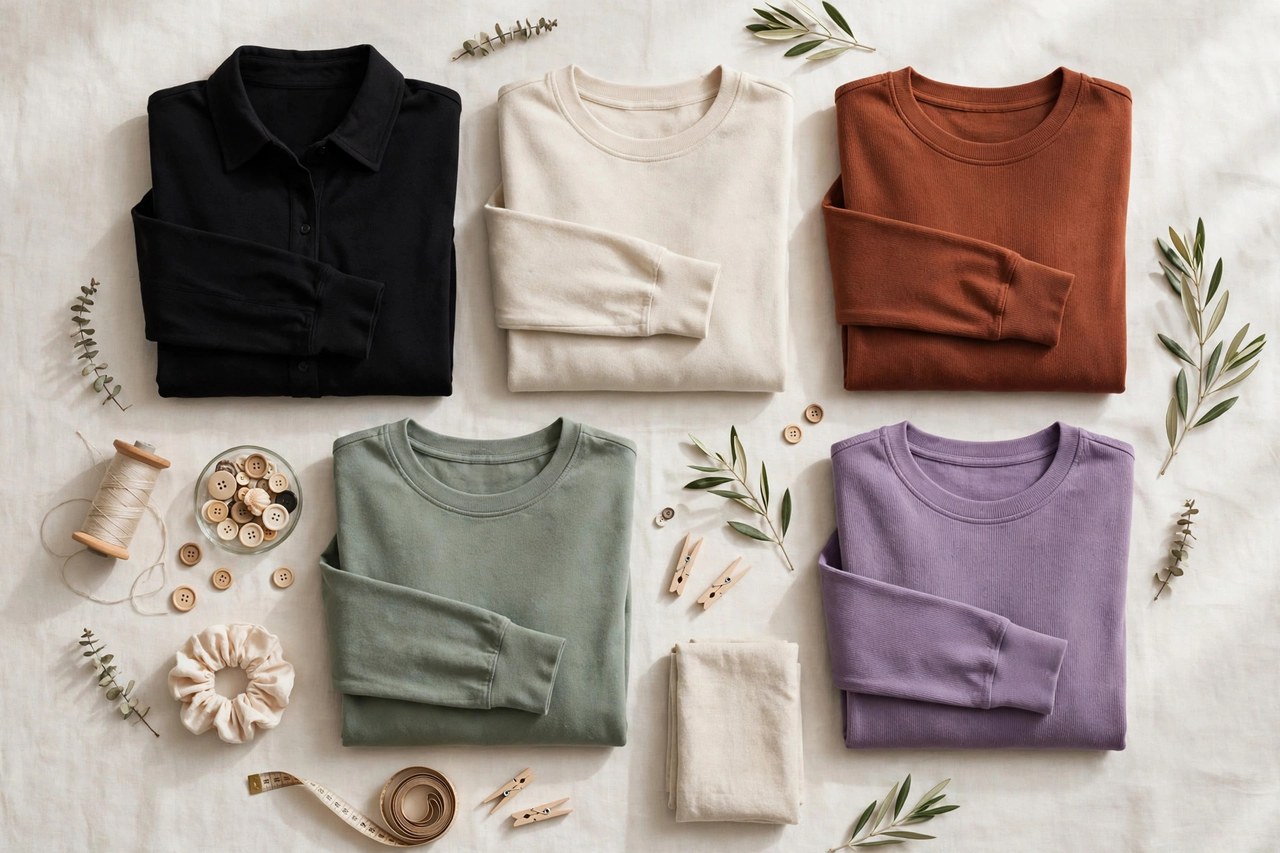
The long sleeve is where plus size shirts most often disappoint. A shirt can fit the bust and waist and still fail at the arm: sleeves that strain at the bicep, cuffs that will not close at the wrist, or extra length that bunches at the forearm because the sleeve was graded for a longer arm. In good plus ranges from 14W to 5X, sleeve width, cuff circumference and sleeve length are graded as carefully as the body, and that is the standard to shop for.
This guide covers woven button shirts, knit long sleeve tees and henleys, and flannel and tunic styles in plus sizes. It explains the arm and torso measurements to check, why button spacing matters at a fuller bust, and how fabric choice changes the fit you need. A long sleeve shirt is a wardrobe foundation across three seasons, so getting its specific fit points right pays off in dozens of outfits.
Bicep, Cuff and Sleeve Length
Measure your upper arm at its fullest and compare it with any listed bicep or sleeve width measurement; leave at least an inch of ease in a woven shirt and slightly less in a knit, which stretches. You should be able to bend the elbow fully and reach forward without the sleeve pulling the cuff halfway up the forearm or straining the armhole seam. Raglan and dropped-shoulder styles offer the most arm freedom, while a set-in tailored sleeve needs the most accurate sizing.
The cuff should close comfortably around the wrist with room for a watch or bracelet, and the sleeve should end at the wrist bone — not at the knuckles and not two inches short. Plus and tall or plus and petite shoppers may need brands that separate those dimensions, since body size and arm length do not grow together. Three-quarter sleeves are a practical alternative that sidesteps cuff and length issues entirely and suits shorter arms, while convertible roll-tab sleeves let one shirt serve both ways.
Bust Buttons, Torso Length and Hem
Button-front plus shirts live by their placket. Look for closer button spacing through the bust, a hidden extra button or snap at the fullest point, or a placket with slight stretch — all reduce the gape that opens when you sit or reach. Princess seams and back darts shape the waist without tightening the bust, and a shaped shirttail hem looks finished untucked while a straight hem suits tucking. If a shirt pulls into horizontal lines at the bust buttons, the answer is the next size or a fuller-bust style, not a safety pin.
Torso length in plus shirts should cover the waistband of mid-rise bottoms when untucked and stay tucked when intended, without so much extra length that fabric bunches at the hip. Tunic lengths, ending at mid-thigh, pair with leggings and slim pants but should still narrow slightly at the waist to avoid a tent effect. Check side vents on tunics: they should open at the hip bone to allow sitting ease, a small placement detail that plus pattern makers who test on real bodies get right.
Knits, Wovens, Flannel and Fabrics
Knit long sleeve shirts — jersey tees, henleys and thermal waffle knits — stretch over the bust and arm and forgive small sizing differences, but cling more, so weight matters: a mid-weight jersey smooths better than a thin one. Look for cotton-modal or cotton-elastane blends that hold shape at the neckline and cuff through washing. Ribbed cuffs and collars should recover when stretched; a neckline that waves after one wash signals weak construction at any price.
Woven shirts in cotton poplin, oxford and rayon give structure and a dressier finish but have no forgiveness, so measurements must be exact at bust and bicep. Flannel shirts add a soft brushed warmth and usually a relaxed cut that layers over tees; in plus sizes check that the relaxed body does not come with sleeves graded two sizes longer. Chambray and denim shirts sit between categories, softening with wear. Match fabric to purpose: wovens for polish, knits for comfort and layering, flannel for warmth.
Layering, Fit Checks and Care
Long sleeve shirts layer in both directions. As a base, a close knit under a plus sweater or jacket needs a smooth cuff that will not bunch inside the outer sleeve and a neckline that sits correctly at the layer point. As a top layer, a woven shirt worn open over a tee needs enough back and arm ease to move like a light jacket. Try both roles in the fitting room if you plan to use the shirt both ways, because the ideal size can differ by one between them.
Run a final check seated: buttons calm, cuffs at the wrist, hem comfortable, no pull across the back when reaching for a keyboard or steering wheel. Care follows fabric — wash knits cold and dry flat or low to protect elastane and ribbing, wash wovens by color and iron or steam collars and cuffs while slightly damp, and button shirts before washing to protect plackets and cuffs. Bought with arm fit first, a plus long sleeve shirt becomes the reliable layer everything else in the wardrobe builds on.
Related Women's Guides
More to Explore on Apparel Search
- Plus Size Clothing
- Plus Size Clothing Stores
- Shop for Plus Sizes
- women's long sleeve shirts
- plus size short sleeve shirt
- fashion
- trendy
- stylish
- plus size fashion model
- plus size fashion definition
- Clothing Stores
- Fashion Designers
- Popular Brands
- Apparel
- Women's Clothing Stores
- Women's Clothing Wholesalers
- Women's Fashion
Looking for Women's Clothing Stores?
This guide helps you choose women's plus size long sleeve shirts. To browse where to buy, visit our women's clothing store directory, where you can find retailers that carry them.