Women's Plus Size Shirts Guide
Plus size shirts are cut for a fuller bust, waist and upper arm in 14W and up, with button spacing, shoulder width and shirttail length that work as a complete shirt wardrobe.
Shop Women's Plus Size Shirts Now
Shop Women's Plus Size Shirts on Amazon Shop Women's Plus Size Shirts on eBayThe Amazon and eBay links on this page are affiliate links. If you make a purchase through them, Apparel Search may earn a commission.
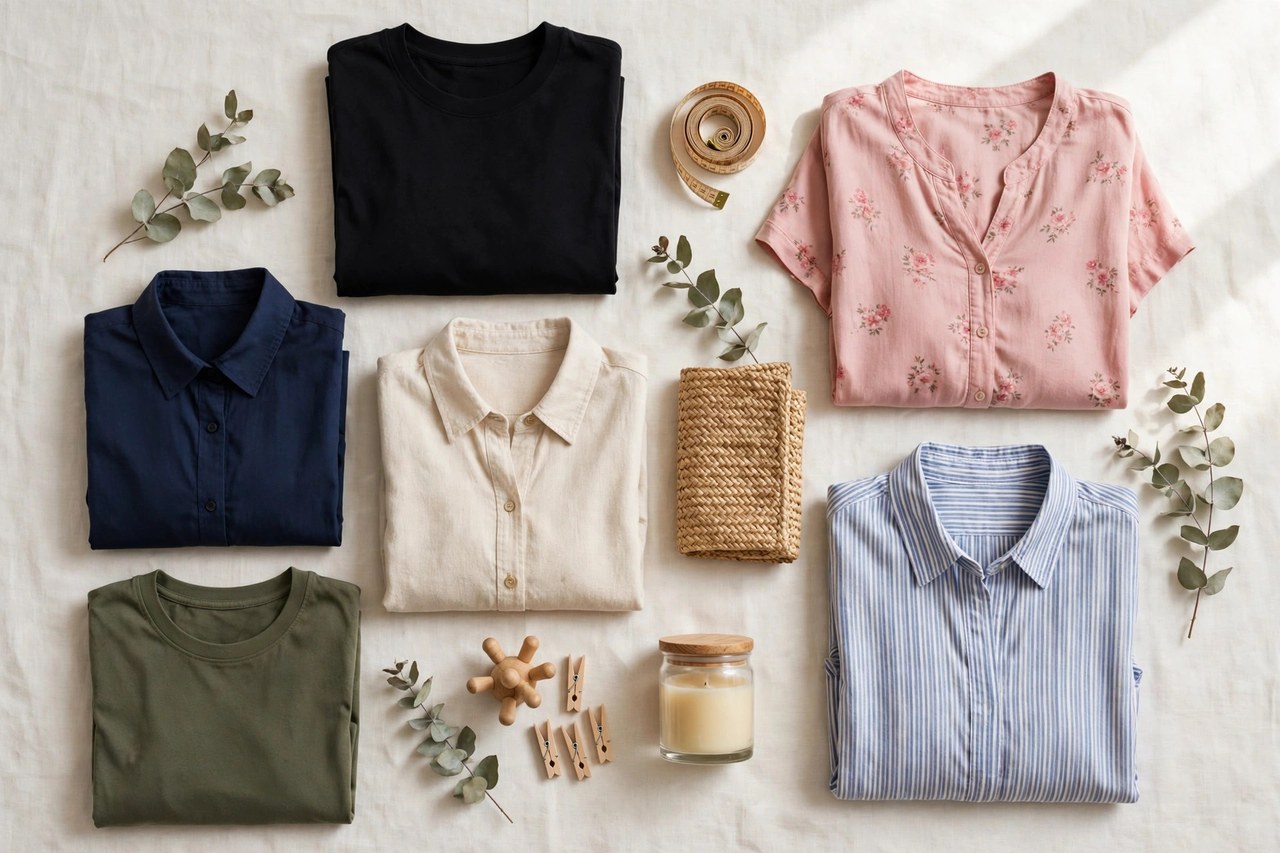
Shirt is the umbrella word for structured tops, from the classic button-front to tunics, camp shirts and popovers, and plus size shirts earn their name at the pattern stage. A true plus cut in 14W, 1X and beyond adds room where curves need it, across the bust, through the waist and around the upper arm, while keeping the shoulder, collar and cuff in proportion. Simply enlarging a straight-size shirt leaves buttons straining and sleeves binding while the shoulder droops.
This guide surveys the whole plus shirt category: how a well-graded shirt fits at the placket, shoulder and sleeve, the main woven and knit styles and what each does best, fabric choices from crisp poplin to fluid rayon, and the fit checks and care habits that keep shirts working hard. Sleeve-specific and single-style guides elsewhere go deeper on individual pieces; here the goal is choosing the right shirt type for the outfit and the day.
Fit at the Bust, Shoulder and Sleeve
The signature failure of a shirt on a fuller bust is placket gaping, the placket pulling open between buttons at the fullest point. Plus patterns fight it with closer button spacing at the bust, a hidden inner button or snap, bust darts or princess seams that shape fabric around the curve instead of stretching across it, and enough front ease that the placket hangs vertically. If you must hold a shirt closed, it is the wrong size or the wrong cut, full stop.
The shoulder seam should sit at the shoulder bone, and the sleeve needs genuine upper-arm room: measure your arm and compare it with the garment's bicep measurement when listed, since a sleeve can fit everywhere else and still bind there. Plus shirts also lengthen the body and shirttail so the shirt stays tucked through a longer torso rise and covers the waistband of trousers untucked. Cuffs should button without strangling the wrist, and a collar should close comfortably if you ever wear it buttoned.
The Main Plus Shirt Styles
The classic button-front in white, blue or a fine stripe is the workhorse for offices and polish, and in plus sizing it pairs with trousers, skirts and blazers without adjustment battles. Tunic shirts run longer with side vents, giving coverage over leggings and slim pants; check that the vent starts high enough to move freely. Camp and resort shirts with open collars and short or rolled sleeves are the relaxed warm-weather option in breathable weaves.
Popover shirts pull on with a partial placket, removing most gaping risk while keeping a shirt's structure. Western and work-style shirts add yokes, snaps and sturdier fabrics. Knit shirts, including polo styles and jersey button-fronts, trade crispness for stretch and easy care. Build the wardrobe in layers of formality: two classic woven shirts, one tunic, one casual camp or knit style covers most weeks, and each additional print or color multiplies combinations with the same bottoms.
Fabrics: Poplin, Linen, Rayon and Knits
Cotton poplin and broadcloth give the crisp, smooth surface that makes a button-front read formal, and cotton with one or two percent elastane adds welcome ease across the bust and back without losing that finish. Oxford cloth is sturdier and more casual. Linen and linen blends are the coolest woven option and soften beautifully, accepting natural creasing as texture. Rayon and viscose shirts drape fluidly over curves and print richly, but they crease, can shrink and need gentler washing than cotton.
Chambray and lightweight denim shirts bridge casual and smart, while flannel serves cooler months. Jersey and ponte knit shirts forgive fit variations and travel without wrinkles, at the cost of some structure. Whatever the fabric, hold it to the light: a woven shirt for work should not be sheer across the bust, and prints should be scaled so a single motif does not sit awkwardly across the fullest point. Fabric weight also matters in plus sizes, since flimsy cloth clings to every underlayer line.
Fit Checks, Sizing and Care
Fit a shirt by its hardest points in order: bust placket lying flat, shoulder seam placed, sleeve allowing a full bend and reach, collar comfortable, and length right for how you will wear it. Raise both arms overhead; a shirt that drags its shirttail out or binds across the back is short on back ease. Use measurements over the size label, because a 2X varies between brands, and note that W sizes are cut with more waist and hip room than standard extended sizes of the same number.
Wash woven shirts cool and remove them promptly to reduce ironing, hang on wide hangers that support the plus shoulder properly, and fasten the top button in storage so collars keep their shape. Rayon goes in a mesh bag on gentle cycles. Iron or steam plackets, collars and cuffs first for the most polished result per minute. A small rotation of well-fitting plus shirts is the backbone of a working wardrobe, and each one earns its place by fitting without negotiation.
Related Women's Guides
More to Explore on Apparel Search
Looking for Women's Clothing Stores?
This guide helps you choose women's plus size shirts. To browse where to buy, visit our women's clothing store directory, where you can find retailers that carry them.