Women's Plus Size Knit Tops Guide
Plus size knit tops in 14W to 32W: jersey, interlock, ponte and sweater-knit tops judged by stretch, recovery, opacity and neckline and sleeve fit on a fuller body.
Shop Women's Plus Size Knit Tops Now
Shop Women's Plus Size Knit Tops on Amazon Shop Women's Plus Size Knit Tops on eBayThe Amazon and eBay links on this page are affiliate links. If you make a purchase through them, Apparel Search may earn a commission.
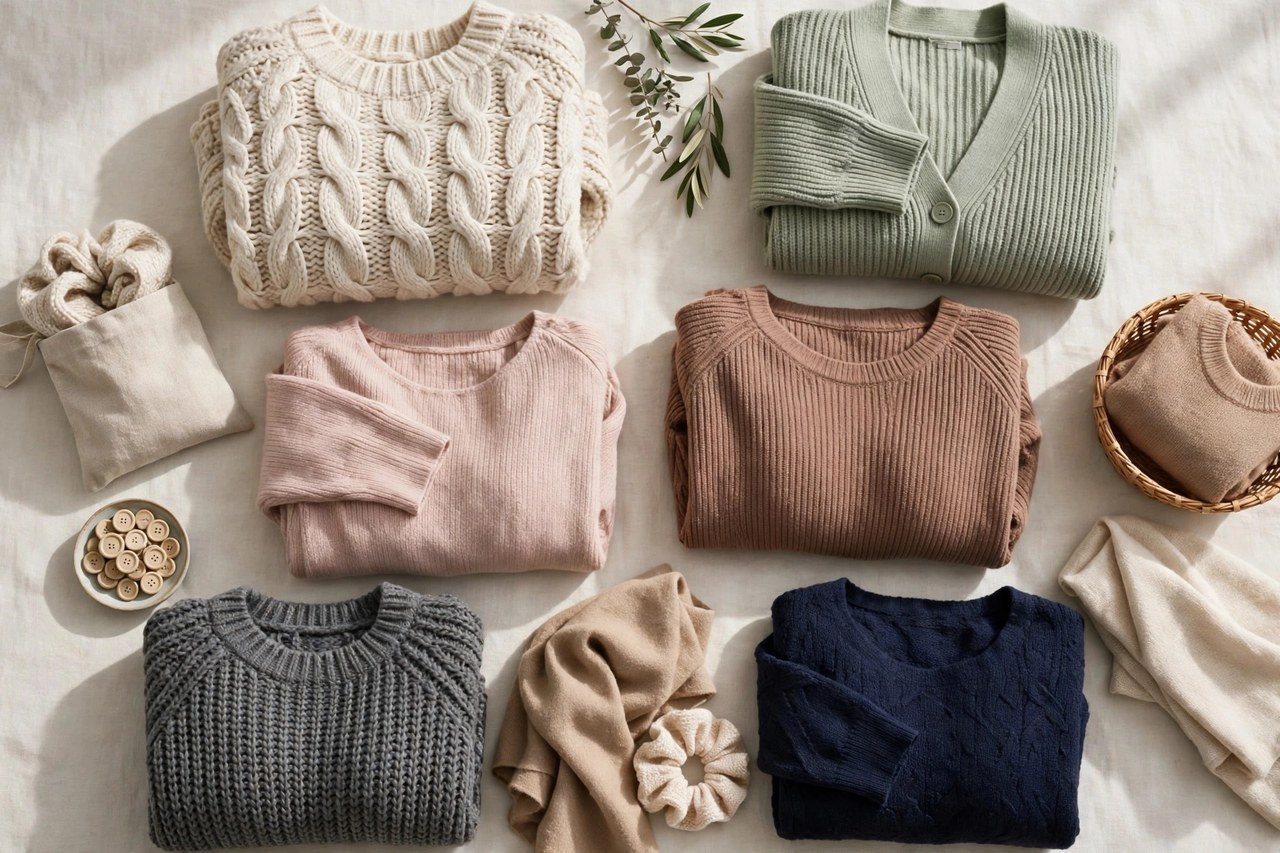
Knit tops are the working core of a plus size wardrobe: the tees, jersey tops, ponte shells and fine sweater knits worn under jackets, over jeans and alone through most of the year. They are also the category where plus quality varies most invisibly, because a knit top's success is decided by properties a photograph cannot show — stretch, recovery, opacity under tension and how the neckline and armhole were graded. In sizes 14W to 32W and 1X to 5X, the same style name covers garments that behave completely differently by the second hour of wear.
This guide explains the main knit families used for tops, how to judge stretch and recovery in hand and on a label, and the plus fit points specific to knits: bust ease without cling, a hem that covers and stays, sleeves with honest arm room, and necklines that hold their shape against a fuller bust. Knit tops are bought more often than almost any other category, so learning to read them once pays back on every repeat purchase, season after season.
The Knit Families: Jersey, Interlock, Ponte and Rib
Jersey is the classic tee knit: light, fluid, single-faced, with natural stretch from its loop structure. In plus tops, jersey weight is everything — a substantial jersey drapes and stays opaque over curves, while a thin one shows every layer beneath and twists as it wears. Interlock knits both faces smooth, giving a firmer, more opaque top with less curl at the hems, a good choice for polished casual tops. Ponte, a dense double knit usually with elastane, is the structured end: it smooths, holds a shape, and makes the knit tops that pass as tailored under blazers.
Rib knits stretch widely and recover along their ribs, suiting fitted tops, henleys and layering pieces; their stretch also means they size generously and cling honestly, so fit them by how much ease you want to see, not only feel. Sweater knits — fine-gauge knitted tops in cotton, merino, viscose or blends — bridge tops and sweaters, with the softness of knitwear and the lighter weight of a top.
Stretch and Recovery: The Two Numbers That Matter
Most modern knit tops add elastane, typically two to five percent, to cotton, modal, viscose or polyester. Stretch describes how far the fabric extends; recovery describes whether it returns. Test both in hand: stretch a section across the bust line of the garment and release — good recovery snaps back flat with no rippling, while tired or cheap elastane leaves the fabric wavy, a fault that will appear at the neckline, cuffs and hem of the worn top within weeks.
Opacity under stretch is the companion test. A knit that is opaque relaxed can go sheer at full stretch over the bust, so hold the stretched fabric to the light before buying, especially in white and pale colors. Fiber choice steers behavior: cotton knits are breathable but can grow and bag; modal and viscose drape beautifully and stay smooth but need gentle washing; polyester and microfiber knits hold color and shape longest.
Necklines, Sleeves and Length on a Fuller Body
Necklines carry more load on a fuller bust. Scoop and V necklines frame and lengthen, but their edges must be stabilized — a bound, banded or faced finish — or they stretch out of line during wear and washing. Crew and boat necks suit layering and smaller bust proportions within plus sizes. Whatever the shape, the neckline should lie against the body without gaping when you bend, which is a pattern-grading point: a well-graded plus neckline is redrawn for the size, not simply widened, so its depth stays where the design intended.
Sleeves are the recurring plus knit fault: an otherwise generous body with a sleeve cut like a straight-size one. Look for sleeves with genuine bicep room and an armhole set high enough that raising your arm does not lift the whole top. Three-quarter sleeves end at a flattering, practical point and dominate plus ranges for good reason.
Styling, Care and Building the Rotation
Build the knit top rotation by neckline and weight: a ponte or interlock top in a dark neutral for structure, jersey tees in your core colors for everyday wear, a rib or sweater knit for texture, and one print or color statement that works under your jackets. Knits layer by thickness — fine jersey under ponte, never the reverse — and tuck by fabric: smooth, firm knits half-tuck cleanly, while soft jersey is better knotted, bloused or left out at a length that was bought to be worn out.
Care preserves the properties you bought. Wash knits cool and gentle, inside out, and dry flat or on low heat; hanger-drying heavy wet knits stretches them at the shoulder, and hot drying kills elastane recovery a wash at a time. Fold knit tops rather than hanging them for storage, rest elastane-rich pieces a day between wears, and retire a top when its neckline waves or its hem twists after washing — those are recovery failures no styling can hide.
Related Women's Guides
More to Explore on Apparel Search
Looking for Women's Clothing Stores?
This guide helps you choose women's plus size knit tops. To browse where to buy, visit our women's clothing store directory, where you can find retailers that carry them.