Women's Plus Size Tops Guide
Plus size tops cover blouses, tunics, button-front shirts and knit tops in 14W and up, each cut to drape over curves with the right length, arm room and neckline balance.
Shop Women's Plus Size Tops Now
Shop Women's Plus Size Tops on Amazon Shop Women's Plus Size Tops on eBayThe Amazon and eBay links on this page are affiliate links. If you make a purchase through them, Apparel Search may earn a commission.
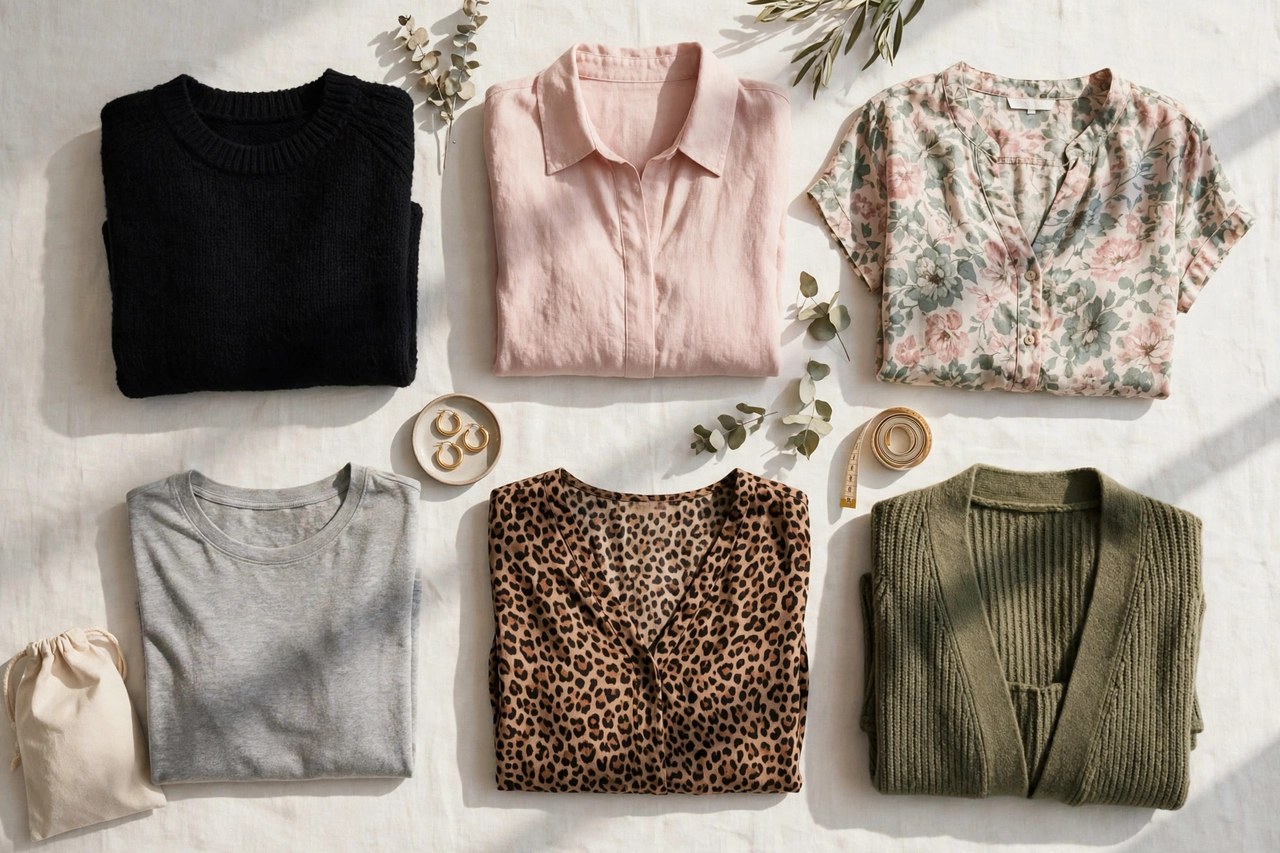
Tops is the umbrella category for everything worn above the waist that is not a dedicated T-shirt, sweater or outer layer: blouses, tunics, button-front shirts, knit tops, shells and camisole layers. In plus sizes, 14W to 32W and 1X to 6X, the category succeeds when each style is patterned for curve proportions, with fuller bust room, a longer front length that accounts for the bust curve, wider sleeves, and hems that clear the hip without pulling. Understanding the umbrella helps you shop each sub-style with the right expectations.
This overview explains how the main top types differ, which lengths and necklines tend to work for different proportions, and how fabrics change drape on a fuller frame. Tees and turtlenecks have their own dedicated guides because their construction is so specific; here the focus is the broader tops wardrobe, from work blouses to weekend tunics, and how to combine them with plus bottoms, jackets and cardigans into outfits that feel balanced rather than assembled from whatever happened to fit in the store that day.
The Main Top Types and When to Wear Them
Blouses in woven fabrics bring polish for work and occasions, with details like pintucks, soft bows and button cuffs that should be scaled to the garment rather than miniaturized. Button-front shirts need hidden extra buttons or a fuller placket allowance at the bust to prevent gaping, a defining plus construction detail. Tunics run longer, typically 30 to 34 inches, and suit leggings and slim pants when they include side slits and enough hip ease to fall straight instead of catching on the hip and riding upward as you walk.
Knit tops offer stretch comfort for everyday wear and travel, from fine jersey shells worn under jackets to ponte tops that hold their shape through a long day. Shells and camis serve as layering bases and need wider straps and higher armholes in plus cuts so they stay covered under cardigans. Empire and babydoll tops place a seam under the bust and flare over the midsection; they work best when the flare starts at the right height and the fabric is fluid, since stiff fabric at the wrong seam height creates volume where none was intended.
Length, Neckline and Sleeve Balance
Length is measured against your proportions, not a single rule. A standard plus top often falls around 28 to 31 inches and should end at a point that feels intentional: mid-hip for jeans and trousers, longer with slits for leggings. Front length matters as much as overall length because the bust curve consumes fabric; quality plus patterns add front length so the hem hangs level instead of hiking up at the front. Necklines follow the same balance: V-necks and open scoop necks create vertical line, boat necks widen the shoulder line, and high necklines pair best with longer bodies or sleeveless cuts to avoid a closed-in feel.
Sleeves set the season and the formality. Sleeveless tops need armholes cut high enough for coverage without binding, short sleeves need bicep ease, and three-quarter sleeves end at a slim point of the forearm and suit nearly every plus wardrobe. Long sleeves should reach the wrist without excess bunching and include enough upper-arm room to layer over a thin base. Flutter, bell and puff sleeves add volume at the arm, so balance them with a cleaner body and a defined hem; fitted sleeves balance a fluid, draped body. Trying tops seated as well as standing reveals pulling that a mirror check alone misses.
Fabrics, Drape and Pattern Scale
Fabric determines whether a top skims or clings. Fluid wovens such as rayon challis, crepe and soft polyester drape over curves and move well in blouses and tunics, while crisp cotton and linen hold structure in shirts but need accurate bust and hip room because they have no give. Knits with 3 to 8 percent spandex recover across the bust and through the elbows, yet very thin jersey shows every line beneath it; midweight jersey and ponte are more forgiving. Matte fabrics generally flatter more than high shine across a fuller midsection, though satin details at the neckline or cuff add occasion polish without covering the whole body in sheen.
Print scale should match garment scale. Small prints can look busy across a larger top, and very large motifs may land awkwardly at the bust, so medium-scale florals, spaced geometrics and vertical or diagonal patterns are reliable starting points. Stripes in varied widths look more modern than uniform wide stripes. Color blocking with darker side panels is a construction feature, not a trick, when the panels follow the body seams. Always check print placement in a mirror from the front: a motif centered unintentionally at the bust or stomach will draw the eye every time you wear the top, regardless of its other qualities.
Wardrobe Building, Layering and Care
Build the tops wardrobe by job. For work, prioritize two or three blouses or ponte tops that fit under your blazers without bunching at the sleeve. For weekends, add tunics and knit tops that pair with leggings and jeans. For occasions, keep one dressier top in a fluid fabric that works with dress pants or a skirt. Fit each top with the bottoms and underlayers you will actually wear, because a blouse that is perfect over a smooth camisole may pull over a thicker base layer, and a tunic balanced with slim pants can overwhelm wide-leg trousers.
Care follows fiber: wash rayon and delicate wovens gently and hang or lay flat as labels direct, since rayon can shrink in length; wash knits inside out and fold them to protect shoulders. Steam usually suits plus tops better than hard pressing, especially around bust shaping and soft details. When a top fits well, note its brand, size system, W versus X sizing, length in inches and fabric blend. Plus tops vary more between brands than almost any other category, and those notes turn future shopping from guesswork into a quick comparison against a known good fit that you can reorder with confidence.
Related Women's Guides
More to Explore on Apparel Search
- Plus Size Clothing
- Plus Size Clothing Stores
- Shop for Plus Sizes
- Women's tops
- Plus Size Knit Tops
- women's shirts
- sweaters
- t-shirts
- sweatshirts
- plus size
- fashion
- trendy
- stylish
- plus size fashion model
- plus size fashion definition
- Clothing Stores
- Fashion Designers
- Popular Brands
- Apparel
- Women's Clothing Stores
- Women's Clothing Wholesalers
- Women's Fashion

Looking for Women's Clothing Stores?
This guide helps you choose women's plus size tops. To browse where to buy, visit our women's clothing store directory, where you can find retailers that carry them.