Women's Plus Size T-Shirts Guide
A plus size T-shirt in 14W to 32W should skim curves without clinging, with sleeves that allow arm movement and jersey that recovers its shape wash after wash.
Shop Women's Plus Size T-Shirts Now
Shop Women's Plus Size T-Shirts on Amazon Shop Women's Plus Size T-Shirts on eBayThe Amazon and eBay links on this page are affiliate links. If you make a purchase through them, Apparel Search may earn a commission.
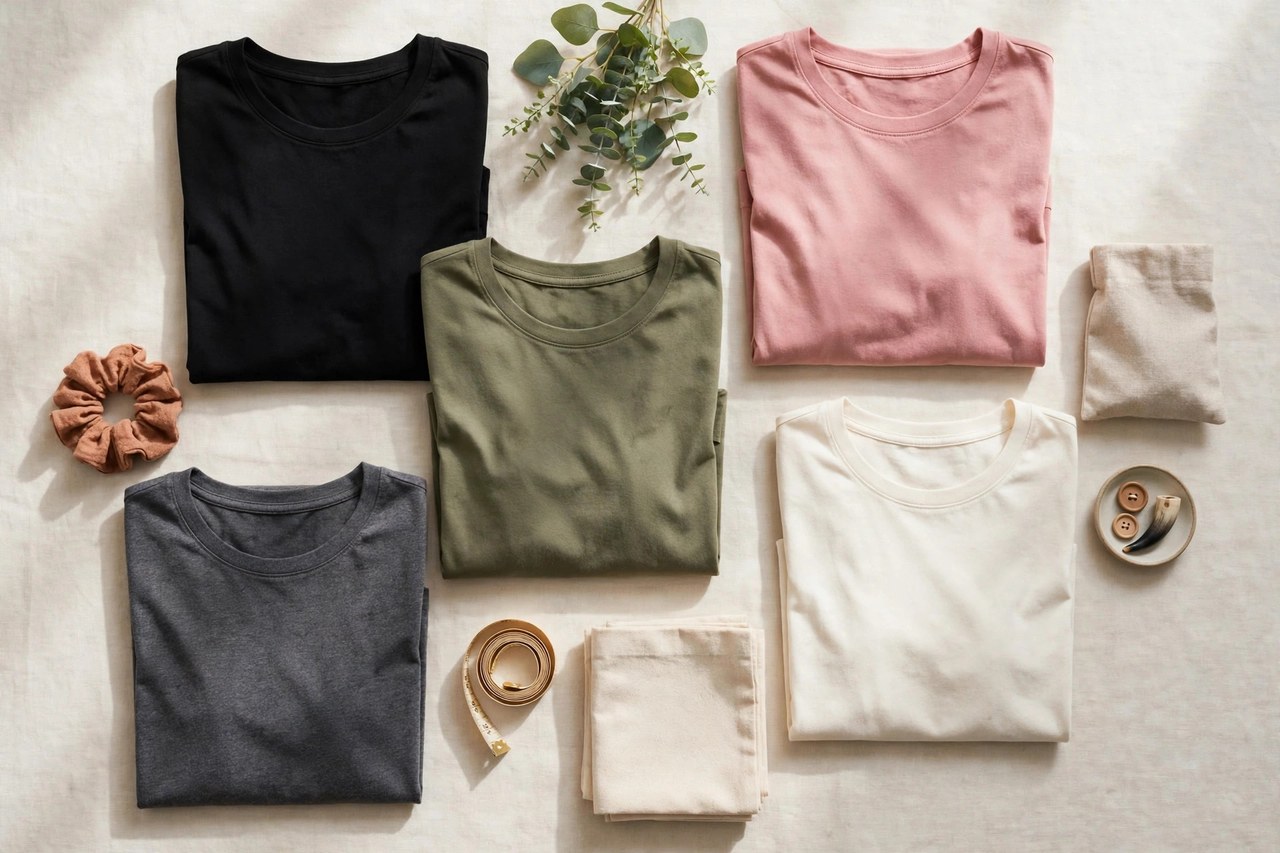
The plus size T-shirt looks simple, but its fit depends on details that straight-size tees scaled upward often get wrong. In sizes 14W to 32W and 1X to 6X, a good tee adds room through the bust, waist and hip in curved proportion, lengthens the body so it covers the waistband sitting or standing, and widens the sleeve so the arm moves freely. A tee that is merely bigger all over tends to hang from the shoulders, pool at the neck, and still pull across the bust.
This guide is tee-specific: necklines, sleeves, body length, jersey weights and graphic placement on a curved frame. It explains why two tees in the same labeled size can fit completely differently, how much stretch helps and how much hurts, and how to build a small rotation of tees that layer under cardigans, wear alone with jeans, and survive weekly washing without twisting, stretching out at the hem, or fading unevenly after only a few months of regular wear.
Necklines, Shoulders and Sleeves
Necklines frame the face and change how a tee reads. A crew neck sits high and neat for layering, a V-neck lengthens the torso line and leaves room for a necklace, and a scoop neck softens the look for warm weather. On a fuller bust, the neckline band should lie flat without gaping when you lean forward; ribbed bands with a touch of spandex recover best. Shoulder seams should end at the shoulder point, because dropped seams on a plus tee add bulk where width is least needed.
Sleeve fit is the most common plus tee complaint. The sleeve opening needs enough circumference for the upper arm plus ease, typically a relaxed short sleeve that ends near mid-bicep without binding, or a three-quarter sleeve that ends at the forearm for cooler days. Cap sleeves can cut into the arm on many plus wearers, while elbow-length sleeves give balanced coverage. Raise your arms when trying a tee: the body should not lift dramatically and the sleeve should not bite, signs the armhole and sleeve were graded for curves rather than simply widened.
Body Length, Shape and Hem
Plus tees come in classic straight, slightly shaped and tunic lengths. A classic body around 28 to 30 inches in larger sizes covers a jeans waistband with room to move, while tunics at 32 inches and longer pair with leggings and need side slits or a curved hem so fabric does not pull across the hips. Side seams should hang vertically; seams that spiral toward the front signal poor cutting or fabric that will twist further in washing. A shaped tee with gentle waist definition usually flatters more than a boxy cut or a tight cut.
Hem construction affects longevity. Look for a hem with enough stitch elasticity to stretch over the hips without popping threads, and check that the hem lies flat rather than rippling, which suggests the fabric was stretched during sewing. Curved and high-low hems can work well on plus frames when the longest point still covers the seat lightly without clinging. If a tee constantly needs tugging down, the issue is usually length or hip ease, and sizing up one size in a shaped style solves it better than choosing an oversized boxy tee.
Jersey Fabrics, Stretch and Graphics
Tee jersey ranges from lightweight slub to substantial interlock. 100 percent cotton breathes well but can stretch out at the neck and hem and shrink in length. Cotton-polyester blends hold color and shape better for everyday rotation, and a small amount of spandex, around 3 to 5 percent, improves recovery across the bust and at the elbow of long sleeves without making the tee feel like activewear. Heavier jersey, roughly midweight, drapes more smoothly over curves and shows fewer underlayer lines than thin jersey, which tends to cling and highlight every seam beneath it.
Graphics and prints scale differently on plus tees. A chest print should sit centered at the bust, sized in proportion to the larger canvas rather than copied at straight-size scale where it can look lost, or enlarged so much that it cracks across the bust curve. All-over stripes look best in narrow to medium widths, and side-panel or raglan color blocking can add sporty definition. For workplace-casual wear, solid tees in quality jersey with a finished neckline read cleaner than novelty graphics. Pre-shrunk fabrics and garment-dyed tees offer more predictable fit after the first wash.
Building a Tee Rotation and Care
Start with fit, then color. Most plus wardrobes work best with a core of white, black and navy tees in the neckline you wear most, plus two or three seasonal colors or prints. Buy duplicates of a tee that fits exceptionally well, because plus tee cuts change between seasons even within the same brand. Layer tees under blazers and cardigans by choosing smoother, midweight jersey without a chest pocket, and reserve relaxed, longer tees for leggings and weekend wear with jeans or casual pants rather than forcing one style to do every job.
Wash tees inside out in cold water to protect color and prints, and dry on low heat or line dry to preserve length and spandex recovery. Fold rather than hang heavier tees, since hangers stretch the shoulders and neck over time. Replace a tee when the neck band stays wavy after washing, side seams twist despite careful laundering, or the body has shrunk above the waistband. Kept in rotation and washed gently, a well-cut plus tee in good jersey should stay presentable for years, not a single summer of weekly wear.
Related Women's Guides
More to Explore on Apparel Search
- Plus Size Clothing
- Plus Size Clothing Stores
- Shop for Plus Sizes
- types of t-shirts
- Blank T-shirts
- Maternity T-shirts
- Novelty T-shirts
- Women's Novelty T-shirts
- Women's Henley T-shirts
- fashion
- trendy
- stylish
- plus size fashion model
- plus size fashion definition
- Clothing Stores
- Fashion Designers
- Popular Brands
- Apparel
- Women's Clothing Stores
- Women's Clothing Wholesalers
- Women's Fashion
Looking for Women's Clothing Stores?
This guide helps you choose women's plus size t-shirts. To browse where to buy, visit our women's clothing store directory, where you can find retailers that carry them.