Women's Plus Size Sweaters Guide
Plus size sweaters are knits cut for a fuller bust, waist and upper arm in 14W and up, with lengths, necklines and gauges chosen so they layer and drape instead of clinging or boxy bulk.
Shop Women's Plus Size Sweaters Now
Shop Women's Plus Size Sweaters on Amazon Shop Women's Plus Size Sweaters on eBayThe Amazon and eBay links on this page are affiliate links. If you make a purchase through them, Apparel Search may earn a commission.
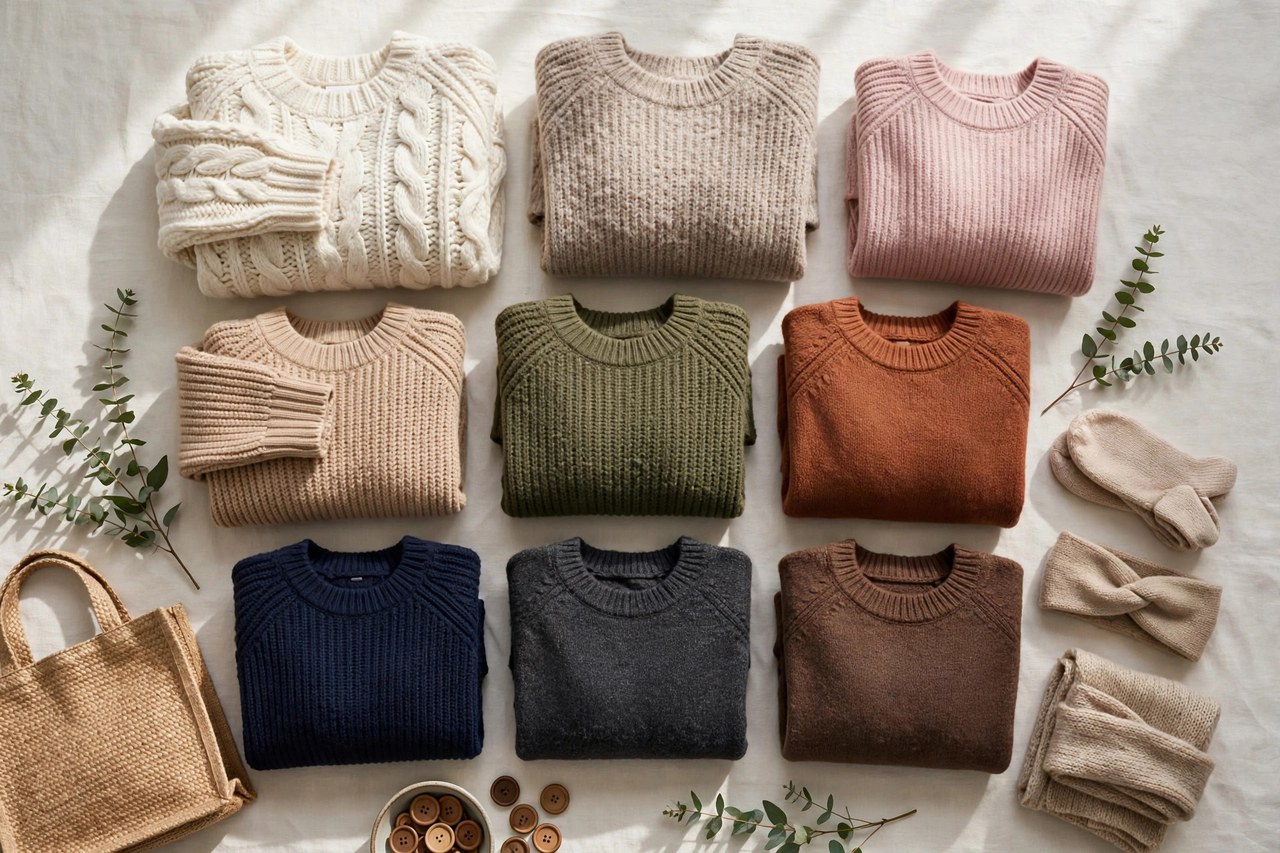
A sweater is the most shape-sensitive garment in knitwear, because knit fabric follows the body it covers. On a plus size frame that quality cuts both ways: a well-graded sweater in 14W, 1X and beyond drapes over curves with ease built into the bust, waist and sleeve, while a merely enlarged knit either clings across the fullest points in strained stitches or hangs in boxy surplus everywhere else. Plus sweater patterns grade the upper arm, the torso length and the hip release along with the bust, and that is the difference you feel.
This guide surveys knit sweaters as a category: pullover and cardigan fits, the necklines and what each does for a fuller bust and face, gauges and fibers from fine cotton knits to chunky winter yarns, and the shaping details that make a sweater finish an outfit rather than merely cover it. Wool sweaters have their own dedicated guide elsewhere in this section, so here the emphasis stays on the knit wardrobe as a whole and on choosing weight and fit by season and layer.
Pullovers and Cardigans: Fit Through the Body
A plus pullover should skim rather than grip: enough ease that the knit rests on the bust without its stitches visibly stretching open, and enough length that the hem sits at a deliberate point, high hip for wearing with skirts and trousers, longer for tunics over leggings. Side shaping or a slightly A-line body keeps the hem from clinging at the hip. The sleeve needs true upper-arm room and a shoulder that sits at the shoulder; dropped shoulders are a style choice, but the drop should look designed, not defaulted.
Cardigans add the layering advantage: worn open they create a long vertical line over dresses and tops, buttoned they must close without the button band rippling or gaping across the bust, the knit equivalent of shirt placket strain. Check the band on the fullest point and prefer cardigans with a little structure at the shoulder so the fronts hang straight. Twinsets and sweater jackets extend the family toward polish. In all knits, ribbed hems and cuffs should hug gently; a hem band that grips the hip tightly will ride up and bunch the body above it through the day.
Necklines: Crew, V, Cowl and Turtleneck
Necklines steer both comfort and proportion. The V-neck is the plus wardrobe's reliable flatterer, opening the chest, lengthening the torso line and layering cleanly over shirts and camisoles; check the depth lands where you intend with the underlayer you own. Crew and scoop necks sit higher and suit finer gauges and layering under blazers, with the scoop giving a fuller bust more room to sit naturally. Boat necks widen the shoulder line and need a smooth fit across the upper chest to avoid gaping when you lean.
Cowl necks add soft volume at the chest in fluid folds, comfortable and forgiving, though very deep cowls on a fuller bust need a camisole strategy. Turtlenecks and mock necks, covered in depth in the turtleneck guide, give the sleekest cold-weather base when the neck ribbing is soft enough not to bind. Whatever the neckline, the back neck should sit against the body without standing away, and shoulder seams or raglan lines should be smooth, since knit irregularities at the shoulder print through coats and jackets all winter.
Gauges, Fibers and Shaping Details
Gauge, the fineness of the knit, sets a sweater's whole character. Fine-gauge knits in cotton, merino blends or viscose layer under jackets, tuck into skirts and read almost like woven tops. Mid-gauge knits are the everyday center, warm without bulk. Chunky knits bring texture and serious warmth but add visual volume, so on a plus frame they work best with simpler shaping, a clean V or open cardigan front and slimmer bottoms beneath, letting the knit be the statement rather than an all-over expansion.
Fibers trade warmth, weight and care. Cotton knits breathe but can grow in length; acrylic blends hold shape; viscose blends drape fluidly; wool families, detailed in the wool sweaters guide, insulate best. Shaping details separate designed plus knits from scaled ones: longer back hems, side vents that let a hem sit over the hip, side pockets and pattern scale enlarged in proportion to the garment.
Layering Weights, Fit Checks and Care
Build the knit wardrobe by weight: fine-gauge layers for under jackets and over dresses, midweight pullovers and cardigans as the daily core, and one or two genuinely warm knits for deep winter, each in the size that fits your bust and arm without strain. Fit checks are tactile: stitches lying closed across the bust, sleeves bending without pulling the body sideways, hem staying at its length when you sit, and no need to tug the body down after reaching, the classic sign a sweater is a size or a length short.
Knit care protects shape above all. Fold sweaters rather than hanging them, since a plus sweater's extra fabric weight stretches shoulders on a hanger. Wash gently and cool, dry flat for wool or viscose blends, and store clean against moths. Bought by gauge and honest fit, plus sweaters become the most comfortable tailoring in the wardrobe.
Related Women's Guides
More to Explore on Apparel Search
- Plus Size Clothing
- Plus Size Clothing Stores
- Shop for Plus Sizes
- Women's sweaters
- Women's Wool Sweaters
- Women's Cardigan Sweaters
- Women's Argyle Sweaters
- fashion
- trendy
- stylish
- plus size fashion model
- plus size fashion definition
- Clothing Stores
- Fashion Designers
- Popular Brands
- Apparel
- Women's Clothing Stores
- Women's Clothing Wholesalers
- Women's Fashion
Looking for Women's Clothing Stores?
This guide helps you choose women's plus size sweaters. To browse where to buy, visit our women's clothing store directory, where you can find retailers that carry them.