Women's Plus Size Turtlenecks Guide
A plus size turtleneck should frame the neck without squeezing it, with a collar height, knit weight and body length chosen for layering or wearing alone in sizes 14W and up.
Shop Women's Plus Size Turtlenecks Now
Shop Women's Plus Size Turtlenecks on Amazon Shop Women's Plus Size Turtlenecks on eBayThe Amazon and eBay links on this page are affiliate links. If you make a purchase through them, Apparel Search may earn a commission.
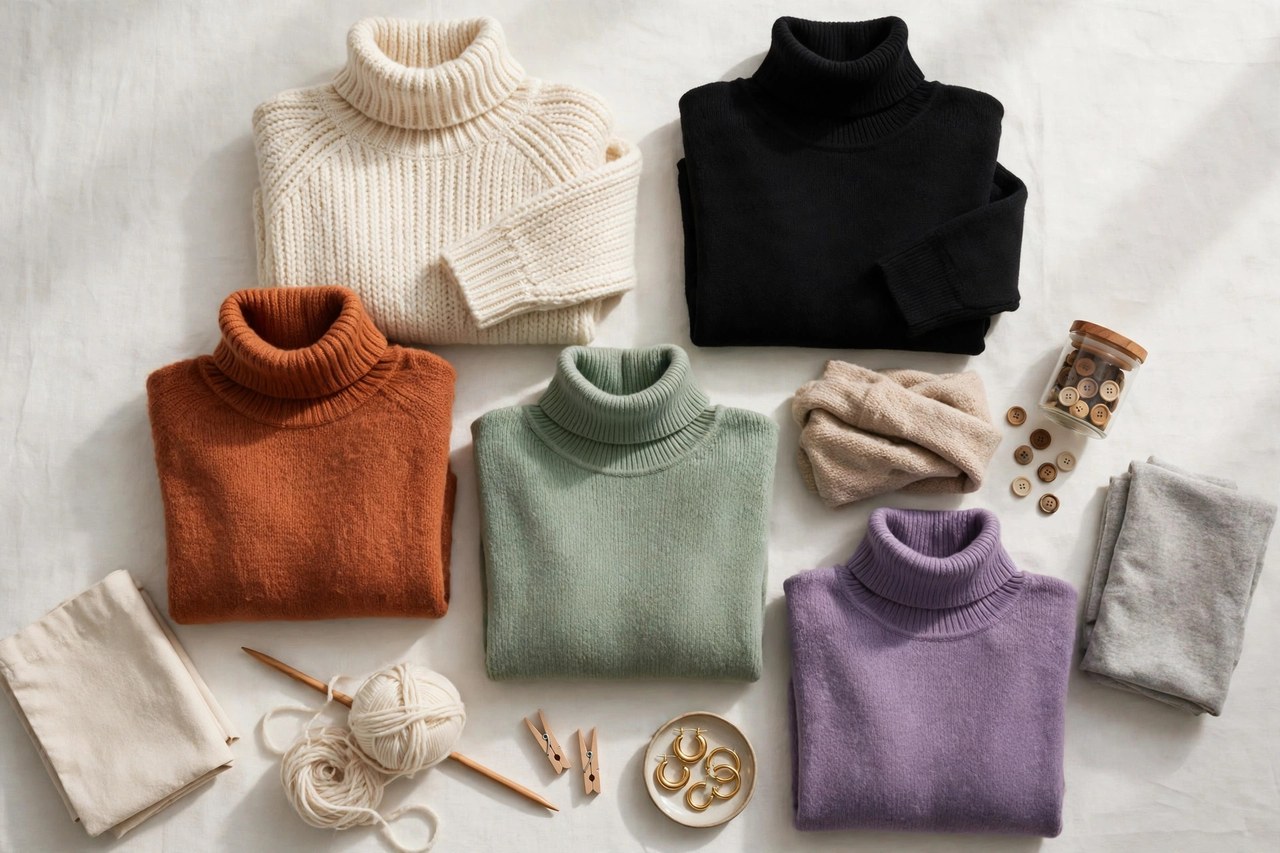
A turtleneck is defined by its collar, and that collar is exactly why plus shoppers need a dedicated guide rather than general knit advice. In sizes 14W to 32W and 1X to 6X, the collar must stretch over the head, settle around the neck without rolling unevenly or pressing, and connect to a body that fits the bust and midsection without the knit pulling thin across the fullest points. A turtleneck that fits the body but chokes at the neck, or fits the neck but bags at the waist, fails at its one defining feature.
This guide focuses on neckline construction: full turtlenecks, mock necks and funnel necks, the rib and jersey knits they are made from, and how collar height interacts with neck length, bust size and layering. It also covers body fit, sleeve room and knit care for curves. Whether you wear turtlenecks as a warm base under blazers and coats, or as a clean standalone top with trousers and skirts, the checks here help you choose a collar you will forget you are wearing within minutes of putting it on each morning.
Collar Types: Full, Mock and Funnel Necks
A full turtleneck has a tall collar, usually 6 to 8 inches unfolded, that folds over once and covers the neck fully. It suits cold weather and creates a long, clean line, but it needs generous stretch and recovery so the fold holds its height without slouching or strangling. A mock neck stands 1.5 to 2.5 inches high without folding; it frames the jaw with less bulk and less heat, layers more easily under jackets, and is often the most comfortable starting point for shoppers who find full collars confining or warm indoors during a working day.
A funnel or cowl-style high neck drapes loosely away from the neck with soft folds, giving coverage without contact, which suits sensitive skin and transitional weather. Whatever the style, test the collar by turning your head, swallowing, and wearing it for several minutes in the store: a good collar stretches for entry, recovers to a smooth circle, and does not need constant straightening. Seamed collars should sit at the back without a bulky ridge, and ribbed collars should have even tension all around rather than gripping at the front and gaping at the sides.
Knit Weights, Rib and Fabric Choice
Turtlenecks come in fine jersey, rib knit, interlock and sweater knits, and weight changes both warmth and fit. Fine cotton or modal jersey with a little spandex makes a smooth layering turtleneck that fits under blazers without adding shoulder bulk. Rib knit expands generously across the bust and recovers at the waist, making it forgiving for curves, though deep ribs can look casual. Merino and wool-blend sweater turtlenecks are warm standalone pieces that need a looser body fit, since heavier knit stretched tight across the bust loses both insulation and shape over repeated wear.
Stretch and recovery decide how a knit turtleneck ages through a day. A collar and body with quality elastane return after stretching over the head and bust; poor recovery leaves a wavy collar and baggy elbows by evening. Hold knit up to light in the store: if it turns sheer across your hand when gently stretched, it will look thin across the bust. Matte knits layer most versatilely, while a slight sheen or heathered yarn adds interest to a standalone sweater turtleneck. For sensitive necks, look for soft modal, merino with a smooth finish, or a lined collar band rather than coarse wool against the skin.
Body, Bust and Sleeve Fit for Curves
The body of a plus turtleneck should skim the bust and midsection with enough ease to sit smoothly over underlayers without outlining them. Because knit stretches, the temptation is to size down, but a turtleneck worn too tight rides up at the hem, pulls the collar down at the front, and wears out faster at stress points. Front length must account for the bust curve so the hem hangs level, and side seams should stay vertical. A slightly longer body, around 29 to 31 inches in larger sizes, tucks securely into trousers and skirts and stays tucked when you sit and reach during the day.
Sleeves need upper-arm room and a wrist that stays at the wrist. In layering weights, the sleeve should be slim enough for a jacket armhole yet not so tight that it binds over a long-sleeve base. In sweater weights, check that the shoulder seam sits correctly, since dropped shoulders plus a high collar can shorten the look of the neck. Raise your arms and check that the whole body does not climb; a well-graded plus turtleneck has enough length and balanced stretch to move with you. If you consistently need to size up for the bust but swim at the waist, a rib knit or a shaped sweater knit will follow your proportions better than a straight tube cut.
Layering, Styling and Knit Care
Layer a fine turtleneck under blazers, cardigans, shirt dresses and sleeveless dresses to extend their season, choosing a collar height that sits cleanly inside the outer neckline without competing bulk at the throat. A black, cream and deep jewel-tone set covers most layering needs. Worn alone, a sweater turtleneck pairs with tailored trousers, midi skirts and jeans; add a long pendant that falls below the bust or a scarf over, not under, the collar for definition. Earrings show especially well against a high neck, so they are the simplest way to finish a standalone turtleneck outfit without adding layers at the neck.
Wash knit turtlenecks inside out on gentle cycles, reshape the collar while damp, and fold for storage instead of hanging, which stretches the neck and shoulders under the garment weight. Keep wool-blend turtlenecks with cedar or lavender sachets in the off season and check collars for makeup and sunscreen buildup, washing promptly so the fold does not stain permanently. Replace a turtleneck when the collar will no longer stand or fold evenly, since no body fit compensates for a collapsed neckline. Bought with the right collar and knit for your climate, a plus turtleneck becomes the quiet workhorse of a cold-weather wardrobe for years.
Related Women's Guides
More to Explore on Apparel Search
- Plus Size Clothing
- Plus Size Clothing Stores
- Shop for Plus Sizes
- women's tops
- neckline styles
- Moc Necks
- types of shirts
- Plus Size Shirts
- plus size
- fashion
- trendy
- stylish
- plus size fashion model
- plus size fashion definition
- Clothing Stores
- Fashion Designers
- Popular Brands
- Apparel
- Women's Clothing Stores
- Women's Clothing Wholesalers
- Women's Fashion
Looking for Women's Clothing Stores?
This guide helps you choose women's plus size turtlenecks. To browse where to buy, visit our women's clothing store directory, where you can find retailers that carry them.