Women's Plus Size Blouses Guide
Plus size blouses are cut for a fuller bust, waist and upper arm in 14W and up — with room to close without gaping, sleeves that bend freely and lengths that cover as intended.
Shop Women's Plus Size Blouses Now
Shop Women's Plus Size Blouses on Amazon Shop Women's Plus Size Blouses on eBayThe Amazon and eBay links on this page are affiliate links. If you make a purchase through them, Apparel Search may earn a commission.
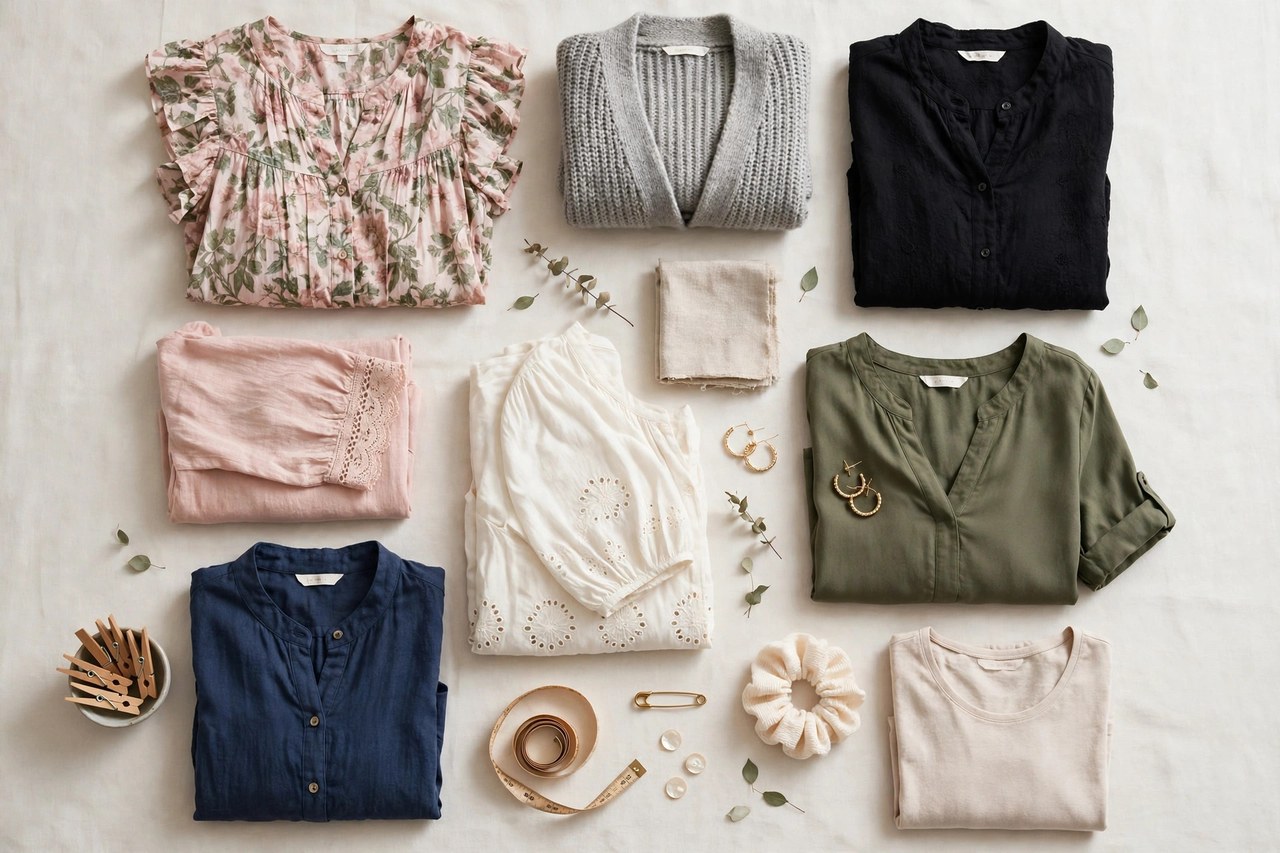
A blouse fails on a plus size body in predictable places: buttons gape at the bust, sleeves bind on the upper arm, the front rides up shorter than the back, and the whole garment pulls across the back when you reach. Plus size blouses are patterned to prevent exactly those failures for sizes 14W and up, with bust shaping, wider sleeves, longer fronts and fabrics chosen to drape over curves instead of fighting them at every seam.
This guide covers the main plus size blouse styles, tailored shirts, wraps, shells, peasant and tunic blouses, how the pattern creates ease without shapelessness, which fabrics and prints flatter fuller figures, and the fit checks that separate a blouse you will wear weekly from one that lives in the closet. The goal is a soft, dressier top that closes, moves and stays comfortable from morning to evening without tape, pins or a camisole doing rescue work.
Bust, Back and Upper-Arm Fit
Bust room is engineered, not just added. Good plus blouses use bust darts, princess seams, shirring or a shaped front so fabric goes around the bust and still falls cleanly below it, and they place buttons with the stress points in mind, sometimes adding a hidden snap or button at the fullest point. The front length is graded longer than a straight size, because fabric traveling over a fuller bust needs more length to reach the same hem point; without it, blouses hike in front and expose the waistband.
The back and sleeves deserve equal attention. A back yoke with soft pleats or gathers gives reach room across the shoulder blades, and a sleeve cut with a fuller biceps, often an inch or more of extra ease over straight sizing, lets the arm bend without the whole blouse shifting. Check sleeve circumference in the size chart when offered, and test by reaching forward and up. Necklines are also graded: a V, scoop or split neck should land at the designed depth over a fuller bust, not plunge or choke because the proportions shifted.
Styles: Shirts, Wraps, Shells and Tunics
The plus size shirt-blouse is the tailored workhorse, with a collar scaled to the garment, cuffs that close around the wrist without strain and a hem that tucks into plus trousers and skirts and stays tucked. The wrap and faux-wrap blouse is a standout for curves: it defines the waist where it truly is, adjusts at the tie or side closure and accommodates bust variation gracefully. Choose faux wraps or wraps with a modesty snap if a true wrap gaps at the front when you sit or move.
Shells and sleeveless blouses need armholes cut high and shaped so they neither gape nor cut in, with enough coverage to handle standard bra straps. Peasant, smocked and tie-neck blouses carry gathering and detail that should be distributed over the fuller frame, with smocking that stretches comfortably across the bust rather than compressing it. Tunics in plus sizes should end at a deliberate point, mid-thigh or just below the hip, and be worn with slimmer bottoms; look for side slits that let the hem move over hips without pulling.
Fabrics, Drape and Print Scale
Drape is the plus blouse fabric test. Crepe, matte jersey, rayon, viscose, silk and fluid polyester blends fall over the bust, waist and hip in a smooth line and release wrinkles better than stiff cloth. Cotton poplin gives a crisper shirt but needs the bust and arm ease described above to stay comfortable, and benefits from a touch of stretch. Avoid very clingy thin knits that trace every undergarment line unless the blouse is lined or the knit has enough body and recovery to skim.
Print scale should match the garment scale. Medium to larger motifs, spaced florals, abstracts and vertical or diagonal patterns sit naturally on a fuller frame, while tiny ditsy prints can look lost and overly horizontal bands at the hem or bust can widen the read. Solid colors with texture, crepe, dobby, subtle jacquard, give the most versatile mileage and show the quality of the cut. Place one statement, print or color or jewelry, per outfit, and let the blouse clean lines do the rest of the work.
Fit Checks, Tucking and Care
Check in order: buttons closed at the bust with no gap when you sit and breathe deeply, shoulder seams on the shoulder, sleeve room to bend the elbow fully, armholes comfortable with no digging, and hem length even front and back in the mirror. A blouse meant for tucking should stay tucked through sitting and standing against a plus rise; one meant to be worn out should end at a clean point, at the hip bone or deliberately longer as a tunic, never at the widest point of the hip by accident.
Care follows the fabric label: most fluid blouses prefer gentle washing, low heat and hanging on padded or wide hangers that support the fuller shoulder without stretching it. Button the placket before washing to protect closures, and steam rather than press delicate crepes and rayons. Keep a small supply of the blouse most useful partners ready, a smooth nude camisole for sheers, the right belt for wraps. Bought for bust, arm and length together, plus size blouses become the most versatile dressier tops you own.
Related Women's Guides
More to Explore on Apparel Search
Looking for Women's Clothing Stores?
This guide helps you choose women's plus size blouses. To browse where to buy, visit our women's clothing store directory, where you can find retailers that carry them.