Women's Short White Dresses Guide
A short white dress is an above-the-knee dress in white or near-white, in fabrics from cotton voile and lace to crepe, worn heavily in summer and at celebrations.
Shop Women's Short White Dresses Now
Shop Women's Short White Dresses on Amazon Shop Women's Short White Dresses on eBayThe Amazon and eBay links on this page are affiliate links. If you make a purchase through them, Apparel Search may earn a commission.
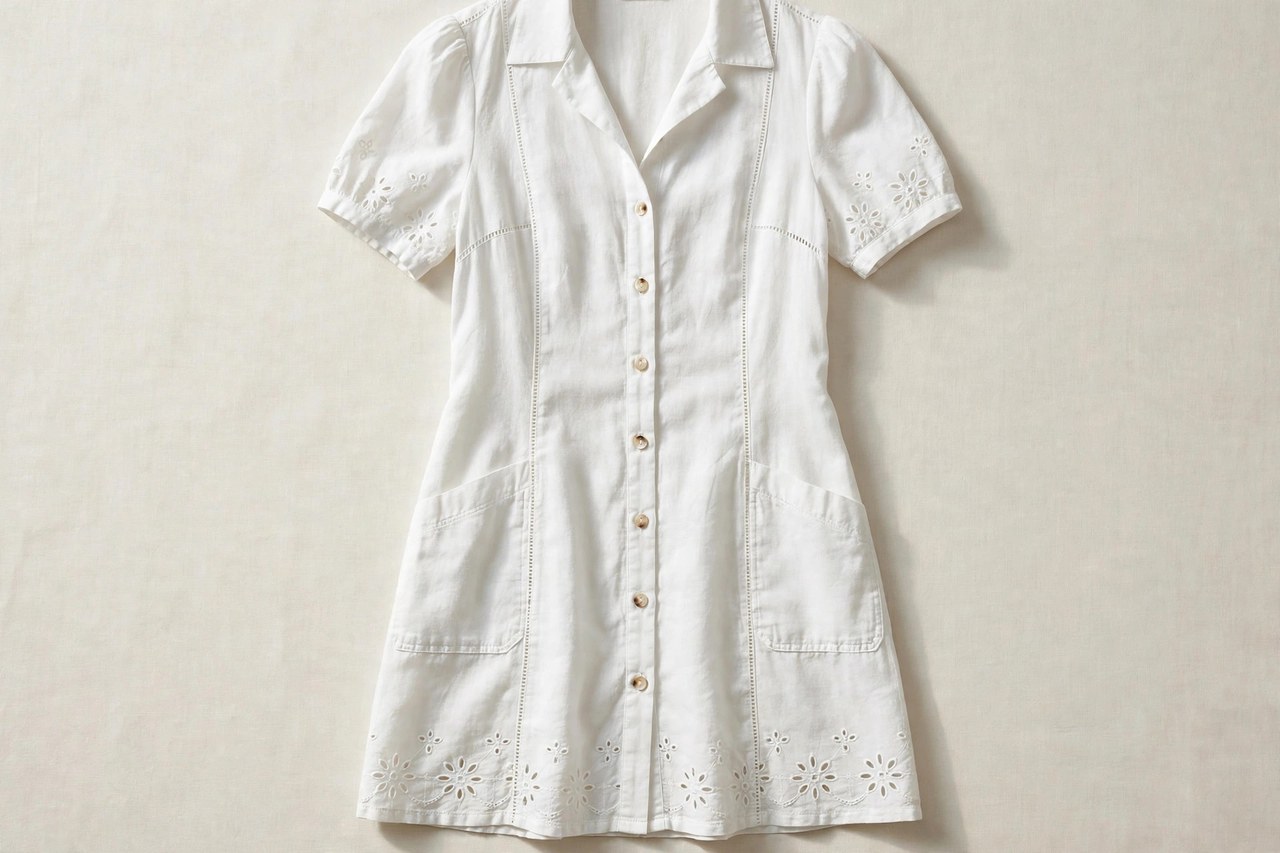
A short white dress is an above-the-knee dress in white or near-white, in fabrics from cotton voile and lace to crepe, worn heavily in summer and at celebrations. White raises questions no other color does — opacity, lining, undergarment show-through and stain care — and this page is organized around answering them.
This guide covers short white dresses in the order a careful buyer needs it: what the garment is made from, how it is constructed, how it should fit, how to choose it for real use, and how to care for it so it lasts. The focus is on measurable details, named materials and checks you can perform in a shop or on a parcel's arrival, rather than general fashion language.
Fabrics and Construction
A short dress succeeds or fails on proportion and fabric working together: with less skirt to balance the bodice, the cloth's weight decides how the whole garment moves. In short white dresses, structured fabrics — crepe, ponte, scuba, tailored twill — hold a clean silhouette and suit work and occasion dressing, while fluid fabrics — chiffon, georgette, rayon, silk — soften the short length into something more relaxed. Knit dresses bridge the two, following the body without formal structure. Check whether the dress is lined: lining a short dress is not a luxury detail, because the skirt has less distance in which to recover from sitting, and an unlined skirt creases and clings in ways a longer one forgives.
Construction details worth inspecting are the zip, the hem and the waist. A concealed zip should run smoothly without catching, and the waist seam — or its deliberate absence in a shift — should sit at the natural waist it was designed for, because on a short dress a waist that lands an inch off changes the apparent leg length noticeably. Hems should be even when the dress hangs, and any pleats, gathers or flare should distribute symmetrically. Hold white fabric to the light before buying: a lined bodice and skirt, or a fabric dense enough to stay opaque, is a requirement, not a luxury. Finally, sit down in the fitting room: a short dress that works standing but fails sitting has failed its actual job.
Length, Fit and Sizing
Length is measured language on this page's subject, so use it precisely when shopping for short white dresses. 'Mini' usually ends mid-thigh, 'short' ends just above the knee, and listings may state either the full length from shoulder or the skirt length from the waist — two numbers that differ by the bodice's length, which is why comparing them directly misleads. Your height re-scales every stated length: the same dress is shorter on a tall wearer in absolute coverage terms. If you are between the proportions a brand assumes, the product's garment measurements, compared against a dress you already wear at the length you like, are the only reliable guide.
Fit through the bodice decides comfort, because a short skirt gives the garment less weight to hold itself in place. Straps and sleeves should stay where they are placed when you raise your arms; a fitted waist should allow a full breath and a meal; an A-line or skater cut should skim rather than grip the hip. Try the dress with the shoes you intend — heel height changes both the apparent length and the balance of the silhouette more at short lengths than at any other. Keep in mind that many short dresses can be let down a fraction if a hem allowance exists, but none can be lengthened beyond it.
Choosing by Occasion and Shade
Work backwards from setting when choosing short white dresses. Structured, matte, knee-approaching versions in navy, black or deep colors handle offices and formal daytime events; fluid, brighter or embellished versions belong to parties and evenings; casual cotton and knit versions take the style into weekends. The short length already makes one statement, so the reliable styling rule is to let it make only one: pair a short dress with simpler shoes, bags and jewellery than you would choose for the same dress in a longer cut, and let proportion, not decoration, carry the look.
Layering extends a short dress across seasons: opaque tights and boots in winter, a fine knit or shirt beneath in shoulder seasons, a long coat that restores the line outdoors. When buying, weigh cost per wear across those layered uses rather than judging the dress as a single-season piece. In practice, rank the checks above in the order your own use demands — frequency of wear first, then weather, washing facilities and budget — because that order differs by household, and it is the real reason two careful buyers can correctly choose differently from the same shelf. A short dress in a fabric that presses well, a shade that suits your coloring in daylight, and a length you have verified sitting down will out-earn almost anything else in an occasion wardrobe.
Care and Keeping the Color
Care for short white dresses follows fabric first: cotton and many synthetics machine wash gently, silk, embellished and structured dresses usually want dry cleaning or careful hand washing, and knit dresses should be dried flat so the short skirt does not grow longer under its own wet weight — a real risk when there is less garment to distribute the strain. Wash dark and saturated colors inside out, separately at first, in cool water, and dry them out of direct sun, which fades one side of a skirt unevenly on a line or hanger.
Press on the reverse where the fabric allows, steam fluid fabrics rather than ironing them flat, and store short dresses hung by their loops or waist rather than by delicate straps, which stretch. Check hems and side seams after the first wears: short skirts flex more in sitting and stair-climbing than longer ones, and a stitch caught early is a two-minute repair instead of a split seam at an event. Keep a stain treatment routine that matches the fabric — blotting, never rubbing — and the dress will hold both its color and its line.
Related Women's Guides
Photos

More to Explore on Apparel Search
- Women's Short Dresses
- Clothes
- Fashion
- Clothing Retail Stores
- Fashion Designers
- Popular Brands
- Apparel
- Women's Clothing Stores
- Women's Clothing Wholesalers
- Women's Fashion
- Dress Definition
- Women's Dress Guide
- Fashion Videos
- Fashion Calendar
- Celebrity Fashion
- white clothing
- Fashion Designer Directory
- Short Navy Dress
- Short Red Dress
Women’s Clothes Guide by Letter: Women's Apparel Directory N · Women's Clothes Directory O · Women's Clothing Directory P · Women's Apparel Directory Q · Women's Fashion Directory R · Women's Clothes Directory T
References & Further Reading
Looking for Women's Clothing Stores?
This guide helps you choose women's short white dresses. To browse where to buy, visit our women's clothing store directory, where you can find retailers that carry them.