Women's Silk Interlock Pants Guide
Silk interlock pants are knitted trousers in double-knit interlock jersey with silk content, cut like tailored pants but with the comfort and pull-on ease of a knit.
Shop Women's Silk Interlock Pants Now
Shop Women's Silk Interlock Pants on Amazon Shop Women's Silk Interlock Pants on eBayThe Amazon and eBay links on this page are affiliate links. If you make a purchase through them, Apparel Search may earn a commission.
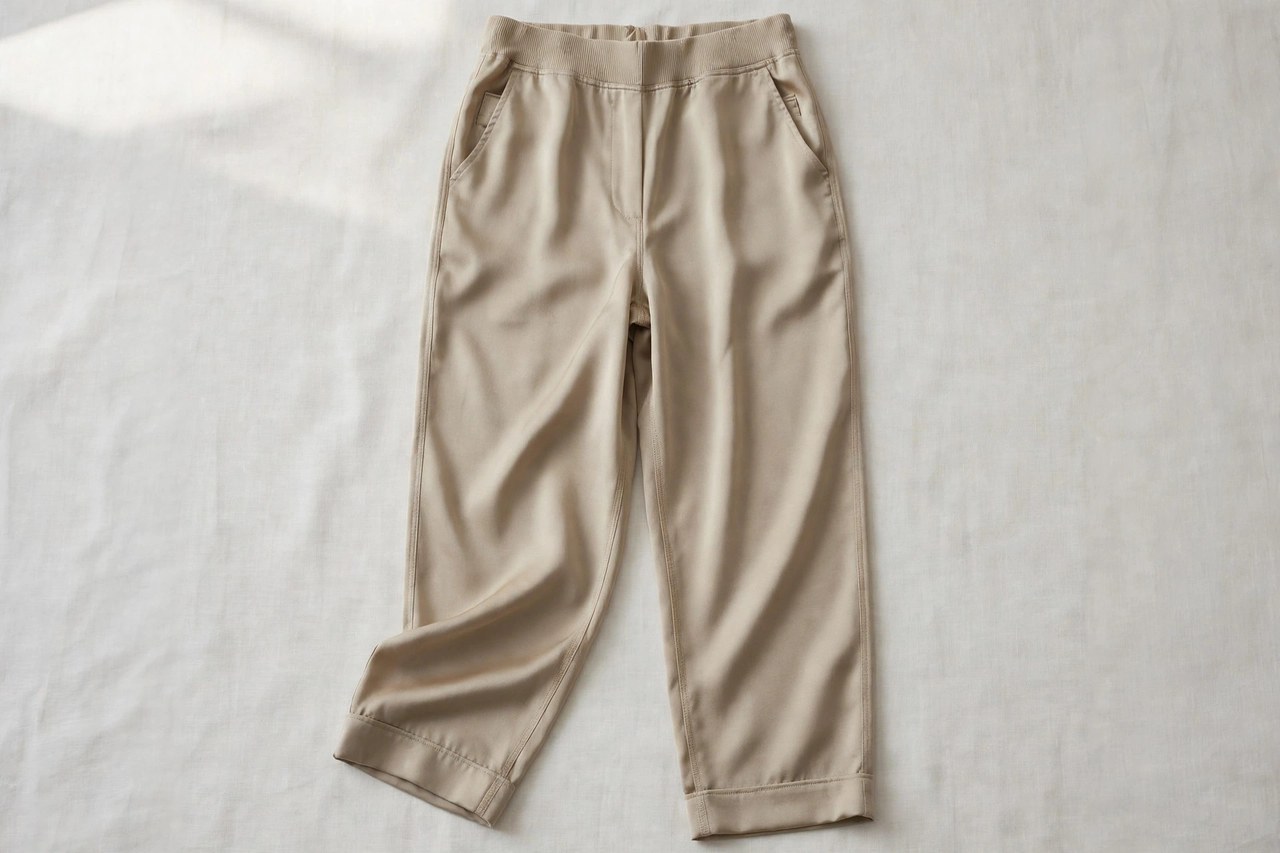
Silk interlock pants are knitted trousers in double-knit interlock jersey with silk content, cut like tailored pants but with the comfort and pull-on ease of a knit. Knitted trousers in silk raise specific questions — knee bagging, seat recovery, waistband construction — and this page answers them from the interlock structure up.
This guide covers silk interlock pants in the order a careful buyer needs it: what the garment is made from, how it is constructed, how it should fit, how to choose it for real use, and how to care for it so it lasts. Apparel Search has published guides to women's clothing for decades, and this rebuilt page keeps the subject focused — measurable details, named materials and checks you can perform in a shop or on a parcel's arrival, rather than general fashion language.
The Fibre and Its Fabrics
Silk is a natural protein fibre produced by silkworm larvae, and a single filament can run for hundreds of metres before it is reeled, thrown and woven or knitted into cloth. For silk interlock pants, what matters is which construction that filament ends up in, because 'silk' on a label names the fibre, not the fabric. Charmeuse is the satin-weave form — glossy face, matte back, fluid pour. Crepe de chine is matte, slightly pebbly and the working silk of blouses and dresses. Chiffon and georgette are sheers, habotai is a light plain weave, dupioni and taffeta are crisp with slubbed or smooth yarns, noil (raw silk) is matte and nubby, and silk jerseys and interlocks are knits with a completely different behaviour.
Weight is quoted in momme (mm): around 12–16 momme is blouse and scarf territory, 19–22 momme is the durable middle for garments and pillowcase-grade cloth, and heavier duchess and tailoring silks run beyond that. Higher momme generally means more silk per square metre, better opacity and longer life. Grade matters too — long, even filaments (the best grades) make smooth, strong cloth, while short-fibre spun silk is softer, matter and less lustrous. Recovery is the test: interlock pants need elastane or a resilient blend and a proper waistband, or the knees and seat will bag within a day's wear. Judge any silk in daylight and in motion: good cloth glows evenly and falls in continuous curves; poor cloth glares, crackles with static and shows creases as pale lines.
Fit, Cut and Sizing
Woven silk has almost no natural stretch, so fit in silk interlock pants is created by cut: darts, seams, bias cutting and closures do the work that elastane does in a knit. Bias cutting — pattern pieces placed at forty-five degrees — lets woven silk skim and move with the body, at the cost of garments that can grow in length on the hanger and twist if badly cut. Straight-grain silk holds its measurements exactly and needs honest ease at bust, waist and hip. Read the brand's measurement chart rather than your usual size, because silk shows strain instantly as horizontal pull lines, and a size up in silk almost always looks more expensive than a size down.
Knitted silk fits differently: jersey and interlock follow the body, but silk yarn has low elastic recovery, so knits depend on rib structures or elastane blends to avoid growing through the day. Whichever construction you are buying, test the garment sitting, reaching and walking — silk's smooth surface slides over layers (a virtue under tailoring) but also slides on the body where a garment must stay anchored. Between sizes, choose the one that lets seams lie flat and closures meet without strain; silk seams under constant tension will eventually tear at the stitch line, which no repair can disguise.
Choosing and Wearing
Choose silk interlock pants by the job across a real season, not a single occasion. Silk regulates temperature — cool against skin in heat, insulating as a layer in cold — and it takes dye with a depth no synthetic matches, which is why jewel tones and complex prints are silk's home ground. Balance its shine deliberately: matte partners such as wool, cotton, denim and knitwear keep silk looking intentional, while head-to-toe gloss needs a clear contrast of texture or colour to work. Colour choice has practical weight as well — pale silks show water marks and need linings against sheerness, mid-tones are the forgiving workhorses, and dark silks show lint.
For value, weigh fibre against frequency of wear. A rarely worn occasion piece can justify a delicate, dry-clean silk; a garment in weekly rotation earns its keep in a heavier momme weight, a crepe weave that hides creasing, or a washable silk whose care you will genuinely keep up. In practice, rank the checks above in the order your own use demands — frequency of wear first, then weather, washing facilities and budget — because that order differs by household, and it is the real reason two careful buyers can correctly choose differently from the same shelf. Check the returns policy on silk bought online: photographs flatten the difference between a soft liquid glow and a harsh papery glare that is obvious the moment the parcel is opened, and hand-feel — silk's cool, smooth, slightly gripping touch — cannot be judged from a screen.
Care, Washing and Storage
Silk is a protein fibre, so its enemies are alkaline detergents, hot water, chlorine bleach, prolonged sunlight and friction while wet (wet silk is significantly weaker than dry silk). Unless the label says a garment is washable silk, plan on hand washing in cool water with a pH-neutral or silk-specific detergent, or dry cleaning for structured and lined pieces. Wash colours separately at first, never wring — roll the garment in a clean towel to press out water — and dry it away from radiators and sun. Water spotting is silk's characteristic mishap: droplets dry as rings on many weaves, so a full even wash is safer than dabbing at one mark.
Iron on the reverse at a low silk setting, ideally while the cloth is very slightly damp or under a press cloth, and steam cautiously because some silks spot under steam. Store silk clean (moths and silverfish target soiled protein fibres), folded with acid-free tissue at the folds or hung on padded hangers, out of sunlight, which yellows white silk and fades colours. Keep silk away from direct contact with perfume, deodorant and hairspray — apply them before dressing and let them dry — because alcohol and aluminium salts stain and weaken the fibre. Treated this way, silk is not fragile: it is one of the strongest natural fibres by weight, and garments routinely last decades.
Related Women's Guides
More to Explore on Apparel Search
Women’s Clothes Guide by Letter: Women's Apparel Directory N · Women's Clothes Directory O · Women's Clothing Directory P · Women's Apparel Directory Q · Women's Fashion Directory R · Women's Clothes Directory T
References & Further Reading
Looking for Women's Clothing Stores?
This guide helps you choose women's silk interlock pants. To browse where to buy, visit our women's clothing store directory, where you can find retailers that carry them.