Women's Wedge Sandals Guide
Women's wedge sandals are open sandals built on a wedge sole, with straps in leather, textile, cork-look and synthetic materials, from flat-form low wedges to high espadrille styles with jute-wrapped soles.
Shop Women's Wedge Sandals Now
Shop Women's Wedge Sandals on Amazon Shop Women's Wedge Sandals on eBayThe Amazon and eBay links on this page are affiliate links. If you make a purchase through them, Apparel Search may earn a commission.
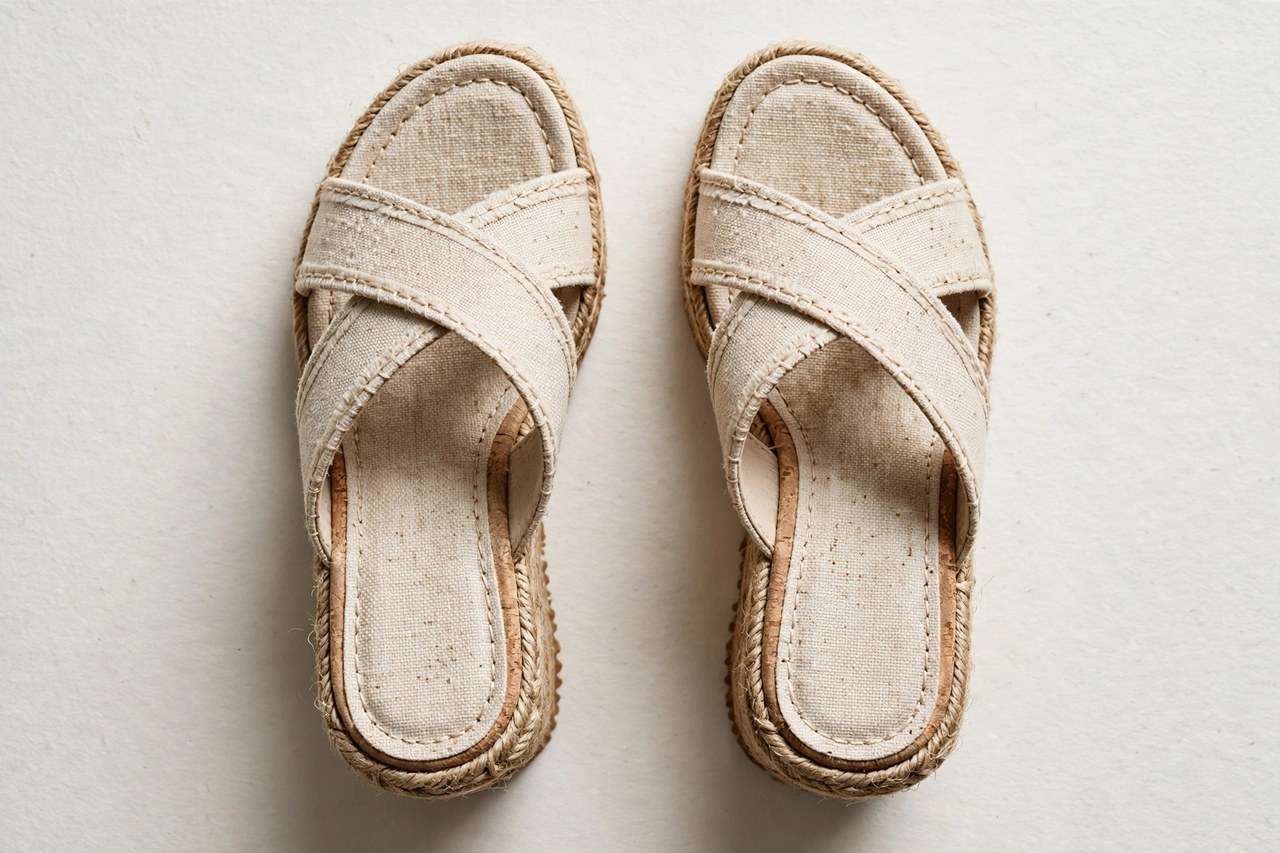
Women's wedge sandals are open sandals built on a wedge sole, with straps in leather, textile, cork-look and synthetic materials, from flat-form low wedges to high espadrille styles with jute-wrapped soles. A sandal on a wedge is mostly straps and sole, so this guide concentrates on strap placement over a raised foot, espadrille construction and its water limits, cork and EVA wedge cores, and ankle-strap fit at height.
This guide covers wedge sandals in the order a careful buyer needs it: what the product is made from, how it is constructed, how it should fit, how to choose it for real use, and how to care for it so it lasts. The focus here is on measurable details, named materials and checks you can perform in a shop or on a parcel's arrival, rather than general fashion language.
Straps, Footbed and Sole
A sandal is a sole held to the foot by straps, so its quality lives in exactly two places: the strap materials and placement (leather, textile or synthetic, padded or raw-edged) and the footbed, which ranges from a flat slab to a moulded, arch-supporting unit in cork, EVA or leather over foam.
Construction faults in sandals are visible: straps anchored only by glue pull out, raw synthetic edges cut skin, and thin soles telegraph every stone. Espadrille wedges are wrapped in braided jute, which is a natural fibre that rots if it stays wet: an espadrille that gets soaked needs slow, complete drying and should never be a rain shoe. Check that straps are stitched or slotted through the sole, that the footbed has some moulding, and that edges against the skin are finished.
Fit on an Open Foot
Fit sandals with the heel seated fully on the footbed and the toes inside its edge — an overhanging toe or heel means the length is wrong however the straps feel. Straps should hold without being fastened to their last hole, leaving adjustment for feet that swell in summer heat by half a size across a hot day.
Walk on a hard floor and listen: a slapping sandal is a loose sandal, and the foot is working to hold it on, which tires arches and rubs straps. Ankle straps, when present, should be snug without biting; forefoot straps should sit behind the toe joints, not across them.
Choosing Sandals That Earn Their Place
Choose wedge sandals in a fixed order: footbed support for the hours they will actually be worn, strap comfort against bare skin, sole grip and thickness for the ground involved, and only then style. In practice, rank these checks in the order your own use demands — frequency of wear first, then weather, washing facilities and budget — because that order differs by wardrobe, and it is the real reason two careful buyers can correctly choose differently from the same rail.
Judge price by the footbed and strap leather: a moulded supportive footbed and lined, finished straps are the cost of a sandal that can be worn all day, while a flat sole with raw straps is a beach mat with buckles at any price.
Care and Storage
Rinse sandals free of salt, sand and sunscreen, which degrade leather and adhesives; dry leather sandals slowly in shade and feed them lightly with conditioner. Cork footbeds seal and clean with a damp brush; EVA styles simply wash and air.
Store sandals flat and unstacked so straps are not creased into new shapes, out of the sunlight that fades and embrittles them over a winter. Check strap anchors and sole bonds each spring — a strap repaired before the season is a sandal saved; one that fails mid-walk is not.
Common Questions
Are wedge sandals more comfortable than heeled sandals?
Usually, because the wedge supports the full length of the foot instead of concentrating pressure under the ball, and there is no thin heel to wobble. Comfort still depends on strap placement — a strap that crosses the ankle bone or cuts across swollen summer feet will ruin any sole.
Can espadrille wedges get wet?
Light splashes dry out, but jute absorbs water, swells and eventually rots, and the glues in espadrille construction soften when soaked. Keep espadrilles as dry-weather shoes; for wet summer wear choose a moulded EVA or rubber wedge sandal instead.
How tight should ankle straps on wedge sandals be?
Snug enough that the heel cannot lift and shift — a moving foot on a high wedge twists ankles — but with a finger's room for summer swelling. Fasten the strap, walk on a hard floor, and check that the heel stays seated through the stride.
Related Women's Guides
Photos

Looking for Women's Clothing Stores?
This guide helps you choose women's wedge sandals. To browse where to buy, visit our women's clothing store directory, where you can find retailers that carry them.