Shawl
Clothing Definitions — definitions of garments and clothing terms from Apparel Search
Search Apparel Search
At a Glance
Definition: A shawl is a large piece of cloth, usually rectangular and often folded into a triangle, draped loosely over the shoulders, upper body and arms, and sometimes over the head, for warmth, dress or ceremony.
Category: Clothing Definitions
Word Origin
From Persian shāl, the word travelled with the cloth itself: the fine woollen wraps of Kashmir were exported west under their local name, in early English often spelled shal, and the name stayed with the garment as European mills took up making it.
A shawl is the simplest constructed garment in the wardrobe: no seams, no fastenings, no shaping — a single length of cloth whose whole effect comes from its size, its fabric and the way it is draped. Worn over the shoulders and upper arms, and at times over the head, it adds warmth without the structure of a coat, finishes a dress without competing with it, and in its ceremonial forms carries meanings that go well beyond covering. This page covers where the shawl comes from, how its traditional types are decorated, and how it is worn today.
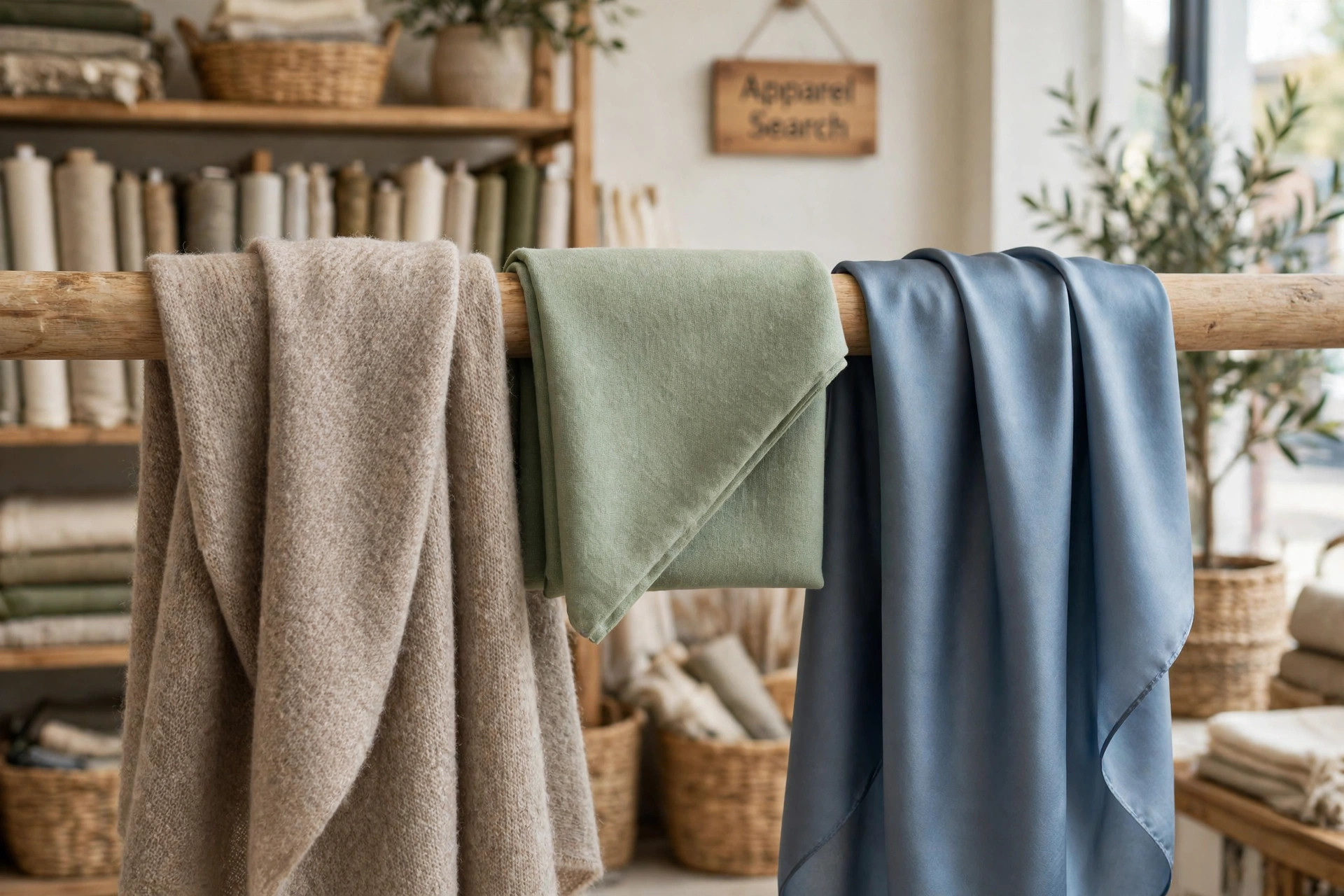
The Kashmir Shawl
The shawl's reputation was made in Kashmir, where it began as part of men's traditional dress. Kashmiri weavers worked in an exceptionally fine woollen twill, and the best cloth was so light and soft that a whole shawl was said to be able to pass through a ring — while still being warm enough to serve as a man's main wrap. Warmth without weight is a rare combination in textiles, and it made the Kashmir shawl a luxury export: in Europe it became a fashion garment in its own right, and its woven patterns, the curving paisley-style motifs among them, were taken up and imitated by mills in Scotland and France.
The Kashmir trade sorted its shawls by how the decoration was made, and the type names survive. A shawl woven in a single colour is the plain form. A shawl woven in several colours, with the pattern built into the weaving itself, is called tilikar. A shawl decorated on the surface of the finished cloth, with crochet or embroidery worked onto it, is called ameli. Three routes — plain weave, coloured weave, surface work — produce very different cloths from the same basic rectangle.
Warmth, Dress and Ceremony
The shawl has always had three jobs, and it still does all of them. For warmth, it fills a gap that tailored clothing leaves open: at an indoor or outdoor evening occasion, the temperature that suits men in wool suits can leave women in dresses cold, and a jacket would spoil the outfit — a shawl adds a layer that can be put on, adjusted or set aside as the evening changes. As dress, it survives in the national folk dress of many cultures, a survival from the centuries when a large wrap was everyday wear rather than an accessory. As ceremony, it carries symbolic weight: the best-known example is the tallit, the fringed shawl worn for Jewish prayer and ritual, where the garment's meaning matters far more than its warmth.
Wearing a shawl is a matter of drape rather than fit, since there is nothing to fit. Centred over both shoulders it gives even warmth and the classic wrapped look. Folded into a triangle, with the point falling at the back, it covers the shoulders and upper arms in the traditional arrangement. Thrown over one shoulder, it works as an accent — a way of carrying colour or pattern over a plain dress. Because nothing fastens it, a shawl is adjusted as it is worn, which is part of its character: it is clothing the wearer arranges continuously, not clothing that holds a set shape.
Fabrics and Care
Fabric decides a shawl's season, formality and care. Fine wool — including the very soft goat wools sold in the pashmina tradition — is the warm, formal choice; it is stored folded, away from moths. Cotton and linen shawls are summer weights, easy to wash and suited to covering bare shoulders in the evening rather than to real cold. Silk shawls are dress accessories, brilliant in colour but easily snagged and faded by strong light, and are kept rolled or folded away from rough surfaces.
A shawl's lack of structure is also its durability. With no seams to strain, no fastenings to break and no lining to wear out, a well-made shawl can last for decades, and the finest Kashmir and paisley shawls of earlier centuries are now collected as textiles in their own right. The distinctions between a shawl and its neighbours — the scarf, the stole and the wrap — are set out in the Not to Be Confused With box below.
The paisley story belongs here too. The curving teardrop motif that European mills wove into their imitation Kashmir shawls took its English name from Paisley, the Scottish town that made the imitations most successfully — so successfully that the pattern and the shawl became almost the same word in the nineteenth-century wardrobe. An antique shawl is therefore identified by exactly the features this page describes: its size, its weave, and whether its pattern was woven in as tilikar or worked on afterwards as ameli.
Not to Be Confused With
Four wraps, separated by size and purpose. A shawl is the large cloth draped over the shoulders and upper body. A scarf is smaller and narrower, worn at the neck or head. A stole is a long, narrow, formal shawl of dress fabric, worn over the shoulders with evening dress. A wrap is the general modern word for any of these worn as an outer layer. The stola is a different garment altogether — the long draped dress of Roman women — despite the similar name it shares with the stole.
Common Questions
What is a shawl?
A shawl is a large piece of cloth, usually rectangular and often folded into a triangle, draped loosely over the shoulders, upper body and arms, and sometimes over the head. It is worn for warmth, to complement an outfit, and in ceremonial forms such as the tallit for symbolic reasons.
What are tilikar and ameli shawls?
Both names come from the Kashmir shawl tradition. A tilikar shawl is woven in different colours so the pattern is part of the weaving. An ameli shawl is decorated on the surface of the woven cloth with crochet or embroidery. Plain single-colour weaving is the third basic type.
How is a shawl different from a scarf?
By size and placement. A shawl is large enough to wrap the shoulders and torso and is draped over them. A scarf is a longer, narrower cloth worn around the neck or over the head. A stole is a narrower, more formal shawl, usually of dressy fabric.