Tippet
Clothing Definitions — definitions of garments and clothing terms from Apparel Search
Search Apparel Search
At a Glance
Definition: A tippet is a narrow, scarf-like strip of clothing worn about the neck or arms — today usually a short fur wrap, and in Anglican dress the ceremonial scarf of choir dress.
Also known as: Black scarf or blue scarf (the Anglican clerical tippet, by its colour)
Category: Clothing Definitions
A tippet is a stole- or scarf-like narrow piece of clothing, worn around the arms and above the elbow. Tippets evolved in the fourteenth century from long sleeves, and typically had one end hanging down to the knees. Nowadays a tippet is often any scarf-like wrap, usually made of fur. The word also names the ceremonial scarf worn by Anglican ministers with choir dress — black for ordained clergy, blue for licensed readers. This page follows all three lives of the garment: sleeve, fur wrap and clerical scarf.
The Sleeve That Became a Scarf
Fourteenth-century fashion lengthened sleeves past usefulness, and the tippet is what utility made of the excess: the overlong hanging end, detached in effect if not always in fact, worn as a narrow band around the arm above the elbow with its end falling toward the knee. As sleeves normalised, the band survived on its own as an accessory — a strip of cloth whose whole form is a memory of the sleeve it came from.
The tippet belongs to the wrap family — scarf, shawl and stole — but it is the narrowest and most specialised member of it. Its near-namesake the stola is not a wrap at all but the long dress of Roman women; the resemblance is in the names, both from the vocabulary of classical dress, not in the garments.
The Fur Tippet
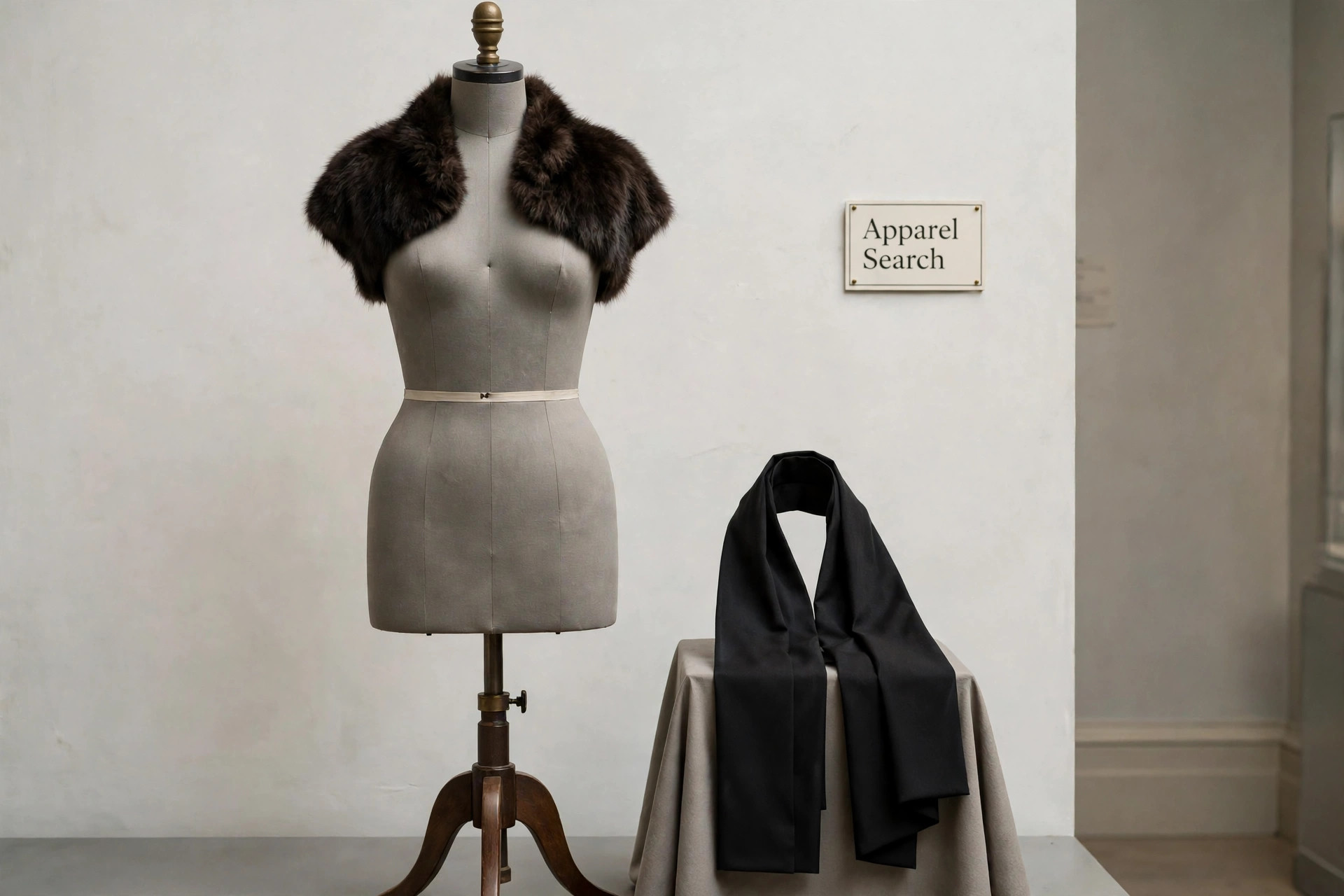
In its everyday modern sense, a tippet is a scarf-like wrap, usually made of fur: short, close to the neck, and worn with coats and evening dress for warmth and display. The fur tippet keeps the medieval band's proportions — a narrow strip rather than a broad shawl — while changing its position from the arm to the neck and shoulders.
That combination of small size and rich material is the tippet's character in every period. It is a finishing garment, not a foundation one: it completes a coat or a dress the way the hanging sleeve-end completed a fourteenth-century gown, and it is judged by its material and fall rather than by any structure of its own.
A celebrated American example ties the garment's senses together. The explorer Meriwether Lewis is pictured wearing a tippet given to him by Cameahwait — a long, richly worked strip worn about the neck and shoulders, at once a garment, a gift of honour and a piece of display. Lewis's tippet is not the medieval sleeve-end or the Anglican scarf, but it shares their logic exactly: a narrow band of fine material, worn where it will be seen, whose value lies in its material and its meaning rather than in any coverage it provides.
The Clerical Tippet
Ceremonial dress preserved the tippet longest. The ceremonial scarf worn by Anglican ministers is worn with choir dress and hangs straight down at the front. Ordained clergy wear a black tippet, while licensed readers wear a blue one, and it is often simply called a black scarf or blue scarf. In choir dress — cassock, surplice, academic hood and tippet — the scarf marks the wearer's office at a glance in procession and choir: a colour code any congregation can read.
The distinction from the stole matters in that setting, because the two scarves say different things: the stole is a liturgical vestment with its own rules and symbolism, speaking of sacramental office at the altar, while the tippet speaks of the wearer's standing in the choir and the daily offices. Costume and church suppliers still sell both, and confusing them is the most common error the definitions exist to prevent. Outside clothing, tippet also names the part of the leader that a fishing fly is tied to, and a bird's or other animal's ruff of colourful feathers or neck hair — separate senses of the same word for a narrow strip or band.
The Lewis example also explains the tippet's place in portraiture. Because the garment is small, rich and worn high on the body, it appears in portraits out of all proportion to its size — a band of fur, lace or worked cloth at the neck or arm that tells the viewer about the sitter's standing in a single detail. Few accessories carry so much information in so little cloth, which is why costume historians meet the tippet constantly in images long after it left everyday dress.
Not to Be Confused With
Two clerical scarves that are constantly mixed up. The tippet is the ceremonial scarf of choir dress: it hangs straight down at the front, in black for ordained clergy and blue for licensed readers, and marks the wearer's standing in the choir. The stole, although often worn like a scarf, is a liturgical vestment with its own rules and symbolism, belonging to the altar rather than the choir. Colour gives the tippet away: a black or blue scarf in choir dress is a tippet, not a stole.
Common Questions
How does a tippet differ from a stole?
A tippet is a ceremonial scarf worn with choir dress, hanging straight down at the front. A stole, although often worn like a scarf, is a liturgical vestment with its own rules and symbolism. The colour of an Anglican tippet also signals office: black for ordained clergy, blue for licensed readers.
Where does the tippet come from?
Tippets evolved in the fourteenth century from long sleeves, typically with one end hanging down to the knees. The hanging sleeve-end became a separate narrow strip of cloth, and the form survived in ceremonial dress and in fur wraps long after everyday sleeves shortened.
What else does tippet mean?
Tippet also names the part of the leader that a fishing fly is tied to, and a bird's or other animal's ruff of colourful feathers or neck hair. In dress it is a narrow scarf-like wrap, usually of fur, and the Anglican ceremonial scarf.