Tapestry
Embroidery Definitions — embroidery and needlework definitions from Apparel Search
Search Apparel Search
At a Glance
Definition: Tapestry is a woven textile in which the design is formed by coloured weft threads packed down on a loom, so that the cloth itself is the picture.
Category: Embroidery Definitions
Tapestry names a woven textile tradition — and, on Apparel Search, the word also gathers the celebrated embroidered cloths defined in this section, the Bayeux tapestry and the Quaker tapestry, together with needlepoint. A further fashion-industry use of the name is recorded here as well: the company behind Coach handbags changed its corporate name to Tapestry. Keeping the senses separate matters, because the commonest error in the subject is describing an embroidered cloth as woven, or crediting a loom with work done by a needle.
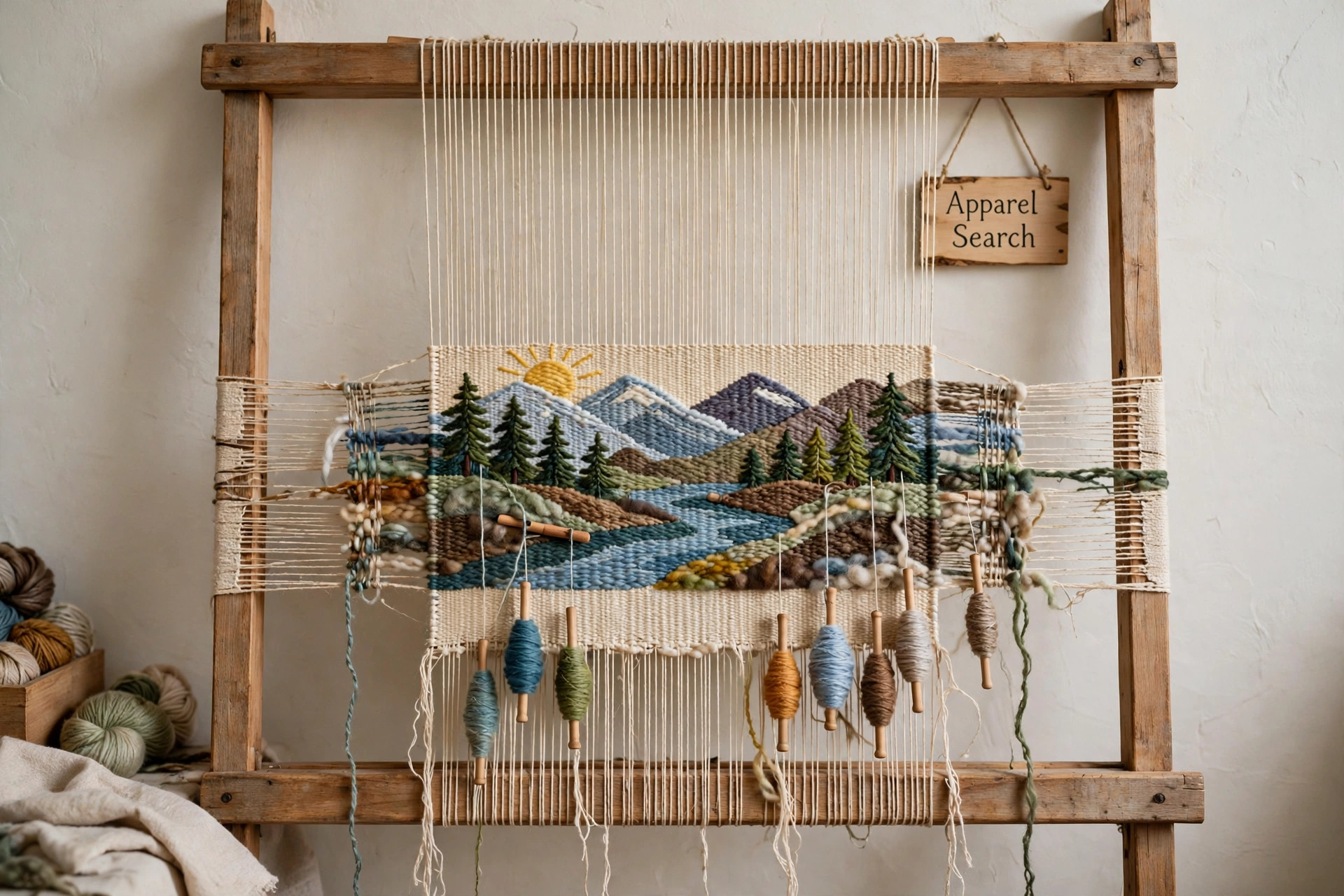
Woven Pictures
True tapestry weaving builds a picture the slow way. The design exists only as coloured weft threads packed down on a loom, each colour carried only where the design needs it, so the finished cloth is the image — front and back — with no ground fabric underneath. The Gobelins and Aubusson wall hangings are the classic European products: insulation, status and narrative combined in one heavy textile.
Stitched Pictures With the Same Name
A stitched picture cloth reaches a similar visual end by the opposite route. A finished linen ground receives a design in thread, which makes it lighter, faster to work at large scale, and able to mix techniques — laid work, couching, applique — across a single panel. History gave both products the same popular name, and museums still live with the ambiguity: the Bayeux and Quaker works are catalogued under tapestry by everyone, and defined as embroidery by anyone describing how they were made.
Needlepoint and the Tapestry Name
Needlepoint has its own claim on the name: in Britain the craft is still widely sold as tapestry, in kits of wool, canvas and a printed or painted design, worked in tent stitch until no canvas shows. The resemblance that earned the name is the finished surface — a dense, pictorial textile with the weight and presence of a hanging. Technically the two could hardly differ more, one woven thread by thread on a loom, the other stitched square by square through a ready-made mesh, yet hung side by side they serve the same decorative purpose.
The Name in Fashion
Tapestry has also become a general metaphor for anything woven from many strands — a life, a history, a brand portfolio. The fashion group's adoption of the name follows that metaphor exactly: separate brands as separate threads, one corporate cloth — see the Tapestry company profile. For the textile reader the older meanings remain the load-bearing ones, and this section keeps them distinct: woven tapestry as a loom technique, the Bayeux and Quaker cloths as embroideries that carry the name by tradition, and needlepoint as canvas work that carries it by resemblance.
Not to Be Confused With
Tapestry is not embroidery. A true tapestry is woven: its picture is built thread by thread from coloured wefts on a loom, with no ground fabric beneath it. Embroidery works the opposite way, stitching a design onto a finished cloth. The two famous exceptions prove the rule by their names alone — the Bayeux and Quaker "tapestries" are embroideries that carry the tapestry name by tradition, not by technique.
Common Questions
Are the Bayeux and Quaker tapestries woven tapestry?
No. Both are embroidery: their designs are stitched in wool onto a linen ground, the Bayeux cloth in laid work and stem stitch and the Quaker panels in crewel embroidery. True tapestry is woven, with the design formed by the weft threads of the loom itself — the shared name is historical usage, not technique.
What is the fashion company named Tapestry?
Tapestry is the corporate name adopted by the company behind Coach handbags and related brands. The change took a word long associated with woven and embroidered picture cloth and applied it to a fashion group built of distinct brands, much as a tapestry is built of many threads.
How does needlepoint relate to tapestry?
Needlepoint is canvas work often called tapestry work in Britain, stitched in wool through an open canvas mesh — embroidery again, not weaving. Its counted, fully covered surface imitates the dense picture surface of woven tapestry, which is how the tapestry name attached itself to it.