Kirtle
Fashion Definitions — fashion history and style definitions from Apparel Search
Search Apparel Search
At a Glance
Definition: The kirtle was the fitted gown at the heart of women's dress in medieval and Tudor England, worn over a linen smock and usually beneath an overgown, its laced bodice and full skirt forming the foundation of the outfit.
Category: Fashion Definitions
Word Origin
The word is old English: in Anglo-Saxon England a kirtle was a man's tunic. By the sixteenth century the name had settled on the woman's fitted undergown, the garment it means today.
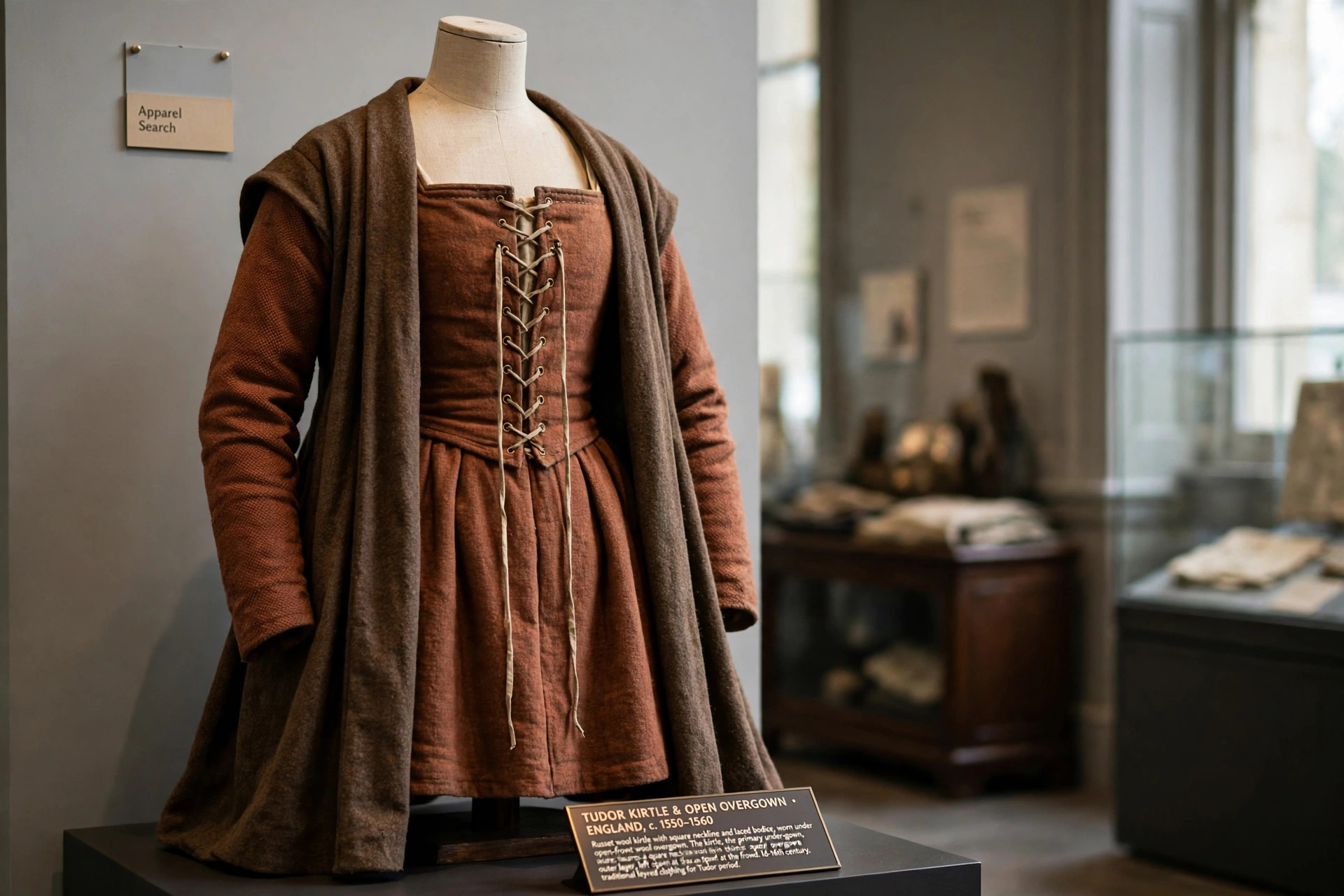
The kirtle was the fitted gown at the heart of women's dress in medieval and Tudor England. Worn over a linen smock and beneath a more formal overgown, it provided the smooth, shaped bodice and full skirt on which the visible splendour of a Tudor outfit depended. For women without overgowns, the kirtle was simply the dress itself. The word is old — it served for men's tunics in Anglo-Saxon England — but by the sixteenth century it meant the woman's fitted undergown seen throughout 1550–1600 fashion, its square neckline and laced front framing the jewelled partlets and foreparts of Elizabethan portraits.
Layers and Construction
A Tudor kirtle consisted of a fitted bodice, often stiffened and laced at the front, back, or side, joined to a full skirt. It was worn over the smock and over a petticoat. It might have its own sleeves, or the sleeves might be separate pieces pinned or tied on — precious sleeves of silk or embroidery could dress up several different kirtles. The front of the skirt, the forepart, was frequently made of richer material than the rest, since it alone showed beneath the open overgown.
Fabrics marked the wearer's station exactly: wool in russet, blue, or green for working women; silk damask, velvet, and cloth of gold for the court. A wealthy woman's kirtle could carry the family jewels in its budget; a labourer's kirtle was her best and often her only gown.
One Garment, Every Rank
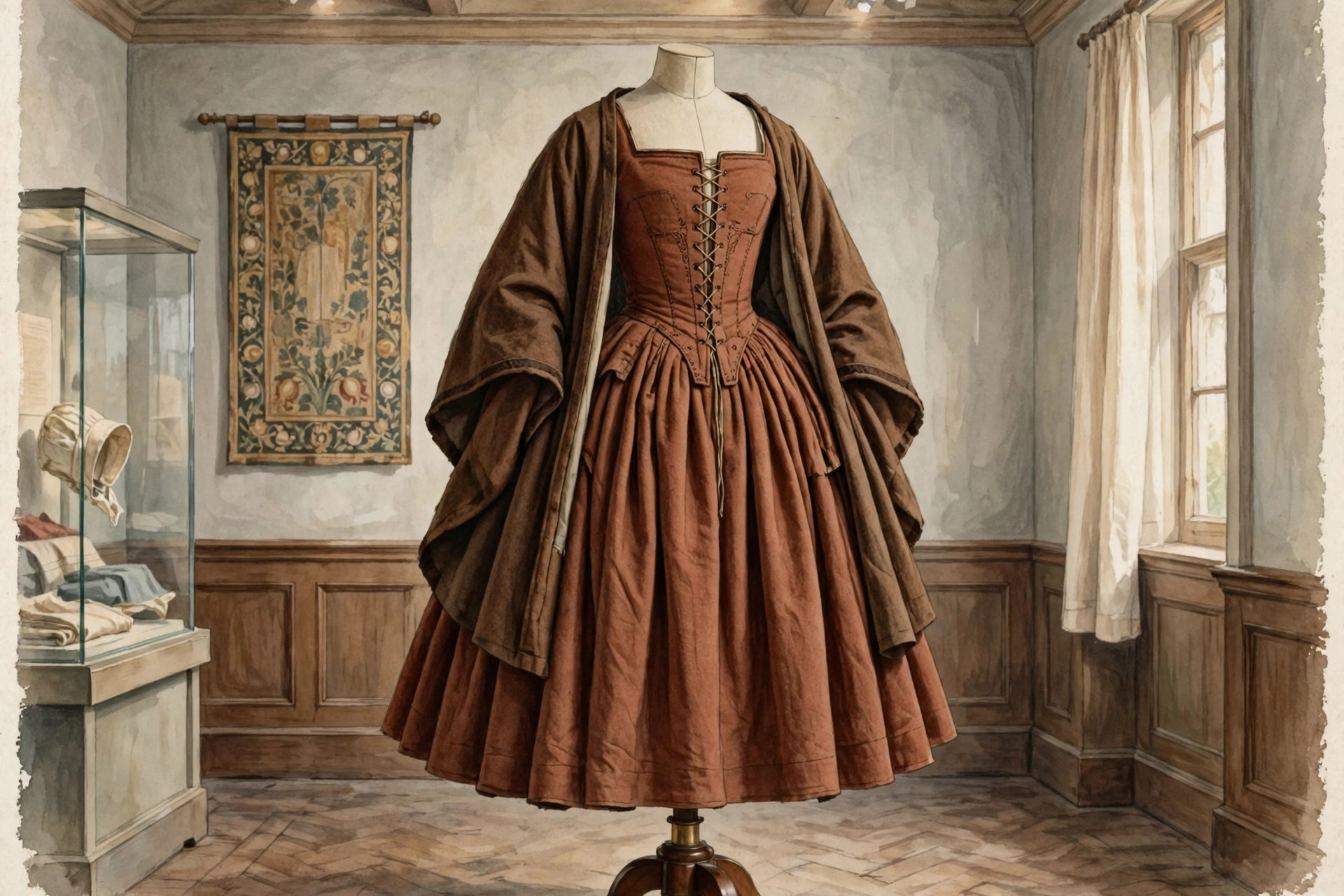
What makes the kirtle historically precious is its universality. Household accounts show queens ordering kirtles by the dozen, while probate inventories list a single kirtle as a poor woman's chief possession. It was worn for work, for church, for court, and for portraits, adjusted in fabric and trimming rather than in kind.
For working women the kirtle was practical dress: skirts could be hitched up for labour, sleeves rolled or removed, and the whole garment washed or re-dyed as means allowed. The innumerable Tudor and Stuart images of women in square-necked, laced gowns show the kirtle in this everyday role.
The Kirtle Fades
During the seventeenth century the one-piece kirtle separated into its components — a bodice and a petticoat skirt worn as distinct garments — and the word dropped out of ordinary use, surviving in dialect and in historical writing. Its layered principle survived: the fitted, laced foundation worn under a decorative outer layer shaped European women's dress for another two centuries, and the kirtle remains the starting point for historically accurate Tudor re-creation today.
Not to Be Confused With
A kirtle is not the same as a petticoat. A kirtle combined a fitted bodice and a full skirt in one garment, worn as the foundation dress itself. A petticoat is a skirt alone, worn under a gown or bodice. The two are linked by history — in the 17th century the one-piece kirtle separated into distinct bodices and petticoat skirts — but in Tudor dress they were different layers.
Common Questions
What was a kirtle worn over and under?
Over a linen smock, and usually under an overgown whose open front displayed the kirtle's bodice and forepart. Poorer women wore the kirtle alone as their main dress.
How did a kirtle fasten?
The bodice laced closed, at the front, back, or side depending on date and region. Sleeves were often separate and pinned or tied in place.
Is a kirtle the same as a petticoat?
Not exactly. A kirtle combined a fitted bodice and skirt in one garment. In the 17th century the kirtle split into separate bodices and petticoat skirts, and the older word faded.