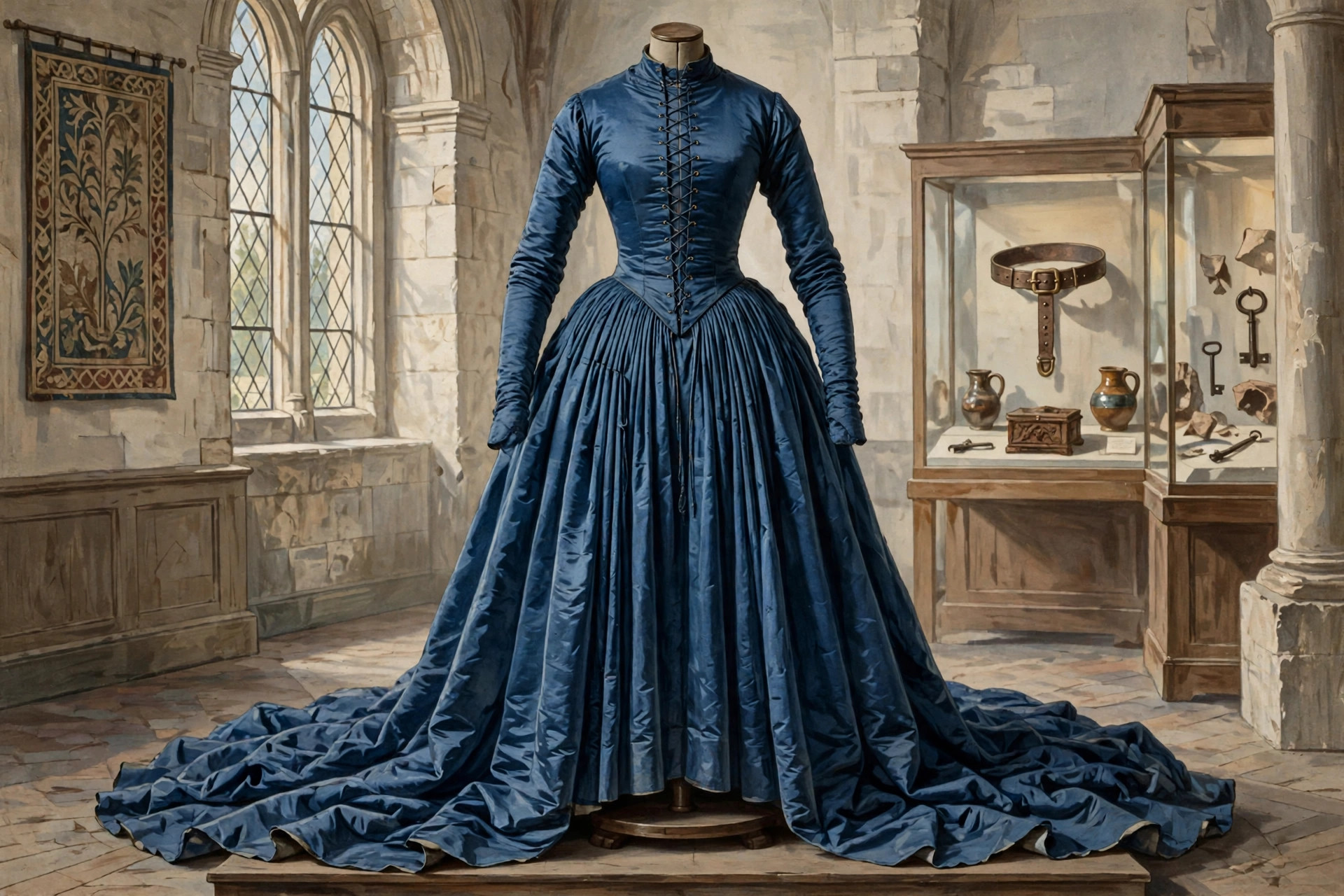
The bliaut was the elegant gown of twelfth-century courts, worn in France and Norman England in the age of Eleanor of Aquitaine. It fitted the torso closely — often laced at the sides to shape it — then released into a full, pleated skirt that pooled around the feet, while its sleeves, tight to the elbow, could flare or hang in long, graceful points.
Our evidence is sculpture, manuscript painting, and literature rather than surviving cloth: the stone figures of Chartres Cathedral wear bliauts, and the romances of Chrétien de Troyes dress their heroines in them. In the long story told by the history of Western fashion, the bliaut is the first medieval garment cut to display the body's shape rather than conceal it.
Cut: Lacing, Pleats, and Sleeves
The bliaut's bodice was shaped by side lacing over the chemise beneath, creating the smooth, elongated torso celebrated in courtly art. From the hips the skirt was set in fine pleats or gathers, using a generous width of cloth that swirled as the wearer walked and signified wealth in every fold. A girdle of silk or metalwork rested low on the hips.
Sleeves gave the style its drama. In the earlier bliaut they flared widely from the elbow; in the form art historians call the bliaut gironé, the lower sleeve lengthened into a hanging pendant that could trail or be knotted up. Linings in contrasting colours flashed as the arms moved.
Who Wore the Bliaut
This was aristocratic dress: queens, ladies of great households, and the heroines of romance. Fine silk, imported through Mediterranean trade, was the prestige material, though rich wool served lesser occasions. Men, too, wore a shorter bliaut or tunic of similar cut at court in the earlier twelfth century, before male and female silhouettes diverged.
The garment belonged to a culture that was inventing courtly love, troubadour song, and the romance itself. Dress that shaped and celebrated the body was part of that new courtliness, and moralists who condemned tight lacing and trailing skirts confirm how fashionable it was.
Decline and Echoes
In the thirteenth century the bliaut gave way to the cotehardie and the surcoat, garments with their own fitted lines, and by 1300 the bliaut survived mainly in art and poetry. Its echoes are nonetheless long: the fitted bodice over a pleated skirt became a permanent formula of Western dress, and the medieval revival movements of the nineteenth century, followed by modern fantasy and film costume, returned again and again to the bliaut's laced waist and hanging sleeves.
Common Questions
- When was the bliaut worn?
- Chiefly in the 12th century, roughly 1100 to 1200, at the courts of France and Norman England. Stone carvings at Chartres Cathedral show the style clearly.
- How did a bliaut fit?
- It laced at the sides to fit the torso closely over a chemise, then opened into a full pleated skirt at the hips, usually held by a low girdle.
- What were the sleeves of a bliaut like?
- Tight to the elbow, then flaring or lengthening into hanging pendants that could trail or be knotted up, often lined in a contrasting colour.