Pomander
Fashion Definitions — fashion history and style definitions from Apparel Search
Search Apparel Search
At a Glance
Definition: A pomander was a small perforated ball of precious metal filled with aromatic substances, worn as a pendant or carried in the hand so its scent reached the wearer's nose with every movement.
Pronunciation: POH-man-der
Category: Fashion Definitions
Word Origin
From the French pomme d'ambre, “apple of amber” — named for the ball of ambergris paste that was the pomander's earliest form, before goldsmiths enclosed the scents in perforated metal cases.
A pomander was a small perforated ball of precious metal, filled with aromatic substances and worn as a pendant or carried in the hand, so that its scent reached the wearer's nose with every movement. In an age that believed disease travelled in foul air, the pomander was simultaneously a jewel, a perfume and a piece of preventive medicine. The name comes from the French pomme d'ambre, “apple of amber,” after the ball of ambergris paste that was its earliest form. Surviving gold and silver examples light up the treasuries of 1550–1600 fashion and remained fashionable through 1600–1650 fashion.
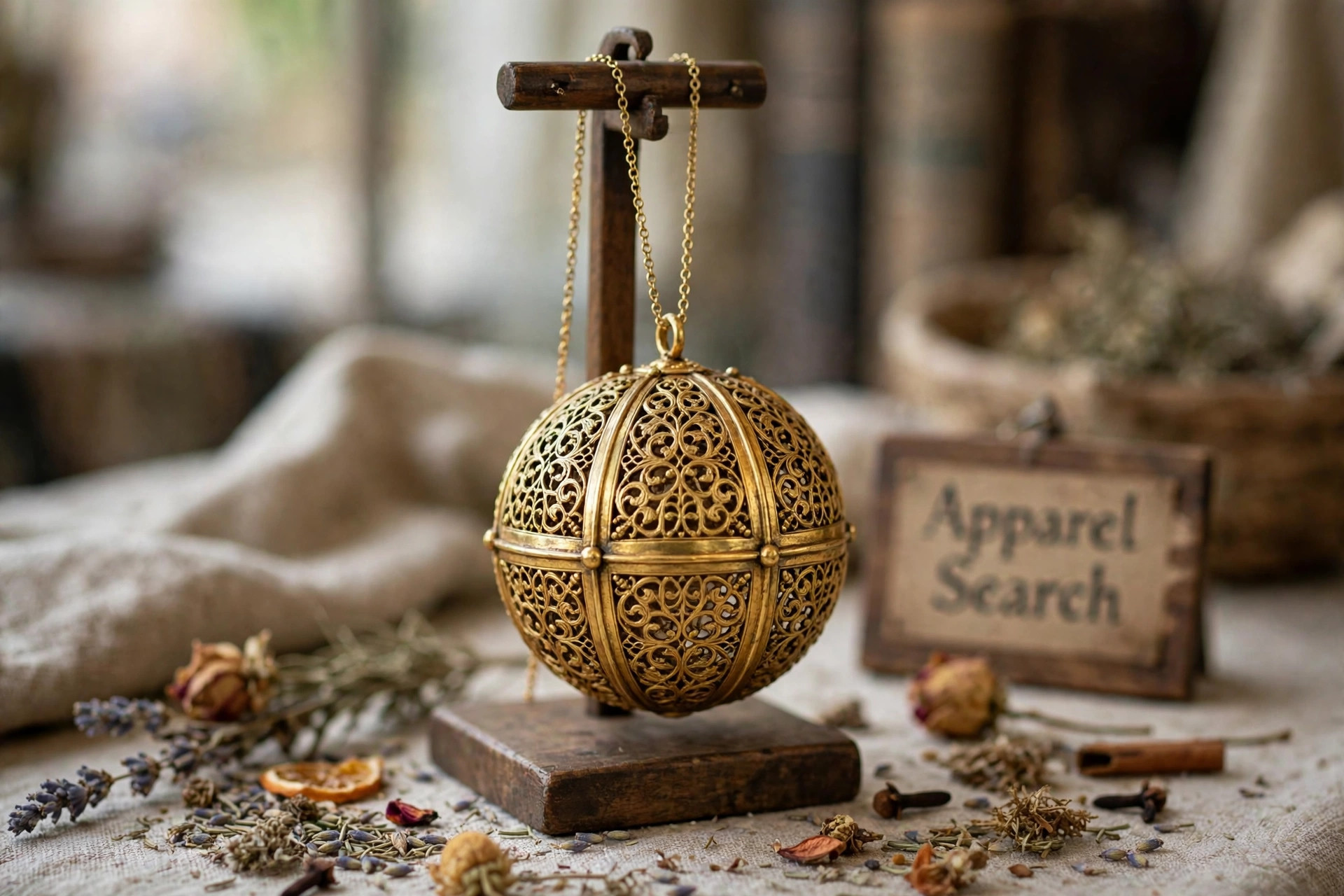
Construction: Compartments of Scent
The finest pomanders open like an orange. A central core carries hinged segments — commonly six or eight — each a tiny lidded compartment engraved with the name of the scent it should hold: ambergris, musk, civet, rose, cloves, nutmeg, cinnamon. The outer case was pierced and chased with filigree so the blended perfumes could breathe out, and a ring at the top took the chain or girdle from which the ball hung.
Simpler versions were a single pierced sphere. Goldsmiths in Augsburg and other German centres produced pomanders as luxury exports, and inventories of great households list them among the plate and jewels, valued accordingly.
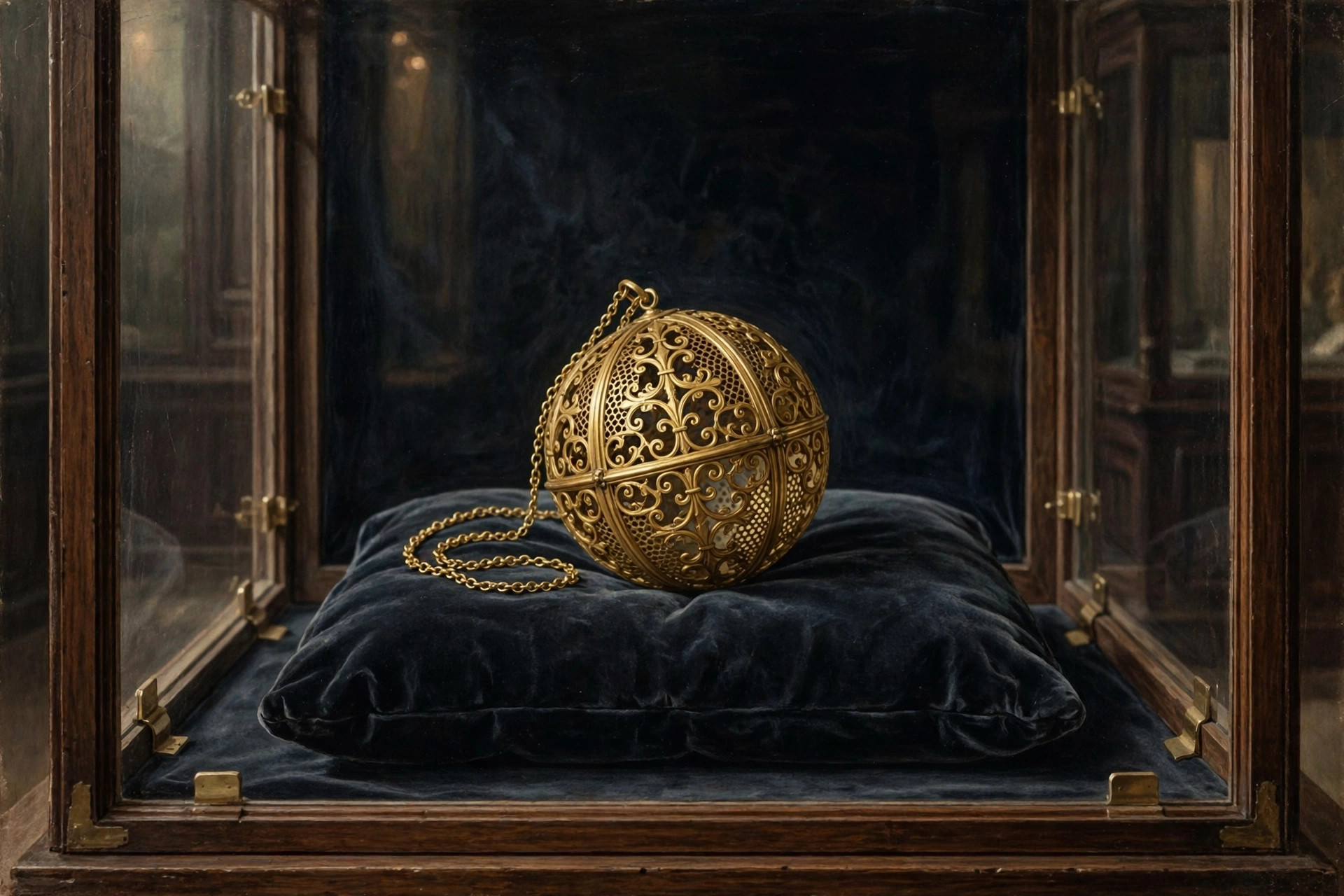
Worn Against Bad Air
Pomanders hung from chains at the neck or from the girdle at the waist, and were lifted to the nose in crowds, sickrooms and streets. Portraits show them in the hands of Tudor and Stuart ladies and gentlemen, paired with gloves perfumed to match. When plague threatened, demand rose; physicians recommended strong aromatics to correct the air, and the pomander was the wearable form of that prescription.
The accessory also signalled cultivation: a taste for rare Eastern aromatics, displayed in precious metalwork, placed the wearer at the summit of Renaissance consumption.
From Pomander to Vinaigrette
As miasma theory faded in the later seventeenth century, the pomander shrank into the vinaigrette — a small box holding a scented sponge — and into smelling bottles, while the word migrated to the clove-studded orange still made at Christmas. The original jewel survives in museum cases, and its idea survives with it: modern scent lockets, solid-perfume pendants and aromatherapy necklaces are the pomander's direct descendants, perfume worn as jewellery once again.
Royal inventories show how prized the objects were. Tudor queens received pomanders as New Year gifts, goldsmiths recorded them by weight alongside plate and jewels, and a fine segmented example could cost as much as a horse. Few accessories so small carried so much meaning: devotion to health, command of rare materials and the goldsmith's art, all swinging from a single chain.
Common Questions
What was put inside a pomander?
Aromatic substances such as ambergris, musk, civet, dried rose, cloves, nutmeg and cinnamon, each in its own labelled compartment in the finest segmented examples.
Why did people wear pomanders?
People believed disease spread through foul air, so strong pleasant scents were thought to protect the wearer. Pomanders were also fashionable jewels and personal perfume.
What does the word pomander mean?
It comes from the French pomme d'ambre, “apple of amber,” named for the ball of ambergris paste that preceded the metal cases.