Polonaise
Fashion Definitions — fashion history and style definitions from Apparel Search
Search Apparel Search
At a Glance
Definition: A polonaise was a gown fashionable from about 1772 into the 1780s whose overskirt was drawn up and draped in three swags to reveal a contrasting decorative petticoat beneath.
Pronunciation: pol-uh-NAYZ
Category: Fashion Definitions
Word Origin
Polonaise is French for “Polish.” The name followed the fashion for Polish references in the early 1770s, around the first partition of Poland in 1772.
The polonaise, fashionable from about 1772 into the 1780s, was a style of gown in which the overskirt was drawn up and draped in three soft swags — one at the back and one at each side — to reveal the contrasting petticoat beneath. The effect was bouffant, mobile and deliberately less formal than the wide court gowns it displaced. Its name, French for “Polish,” reflected the era's fascination with Poland following the first partition of the country in 1772. In the full survey of 1750–1795 fashion, the polonaise marks the moment when fashionable dress began to value ease and movement over rigid ceremony.
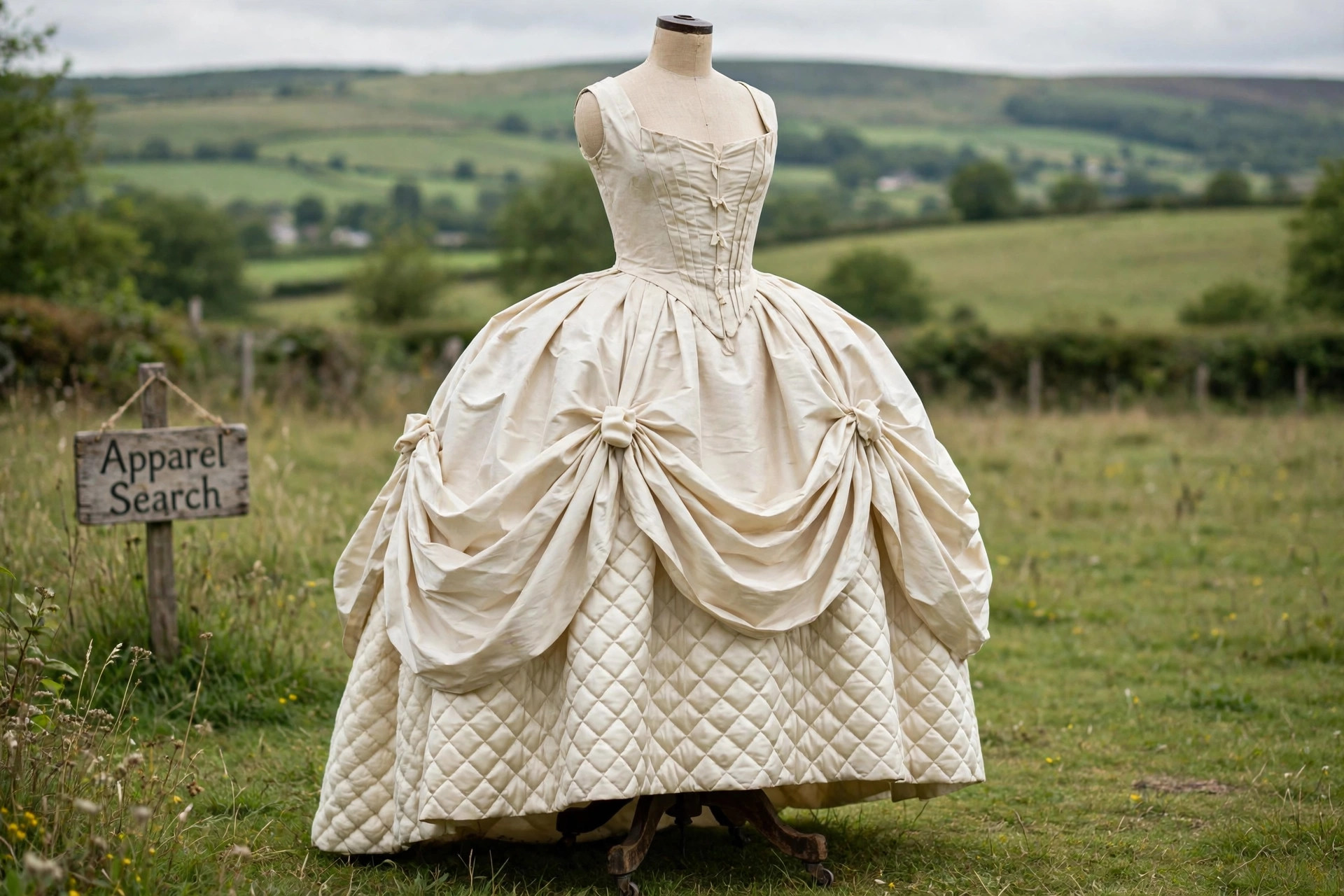
How the Drapery Was Arranged
The polonaise was not a separate garment so much as a way of arranging one. The gown's overskirt was pulled up through loops, cords or rings worked inside the skirt, or fastened with buttons and tassels, so the fabric pouched into swags. How high the skirt was drawn was adjustable: raised for walking, it showed the ankles above neat shoes, an informality that struck older observers as daring.
Beneath the swags showed a petticoat chosen to be seen — quilted satin in winter, printed cotton or plain silk in summer. The bodice was close-fitting with three-quarter sleeves ending in cuffs, and the whole gown was typically made in silk, fine wool or, increasingly, printed cottons.
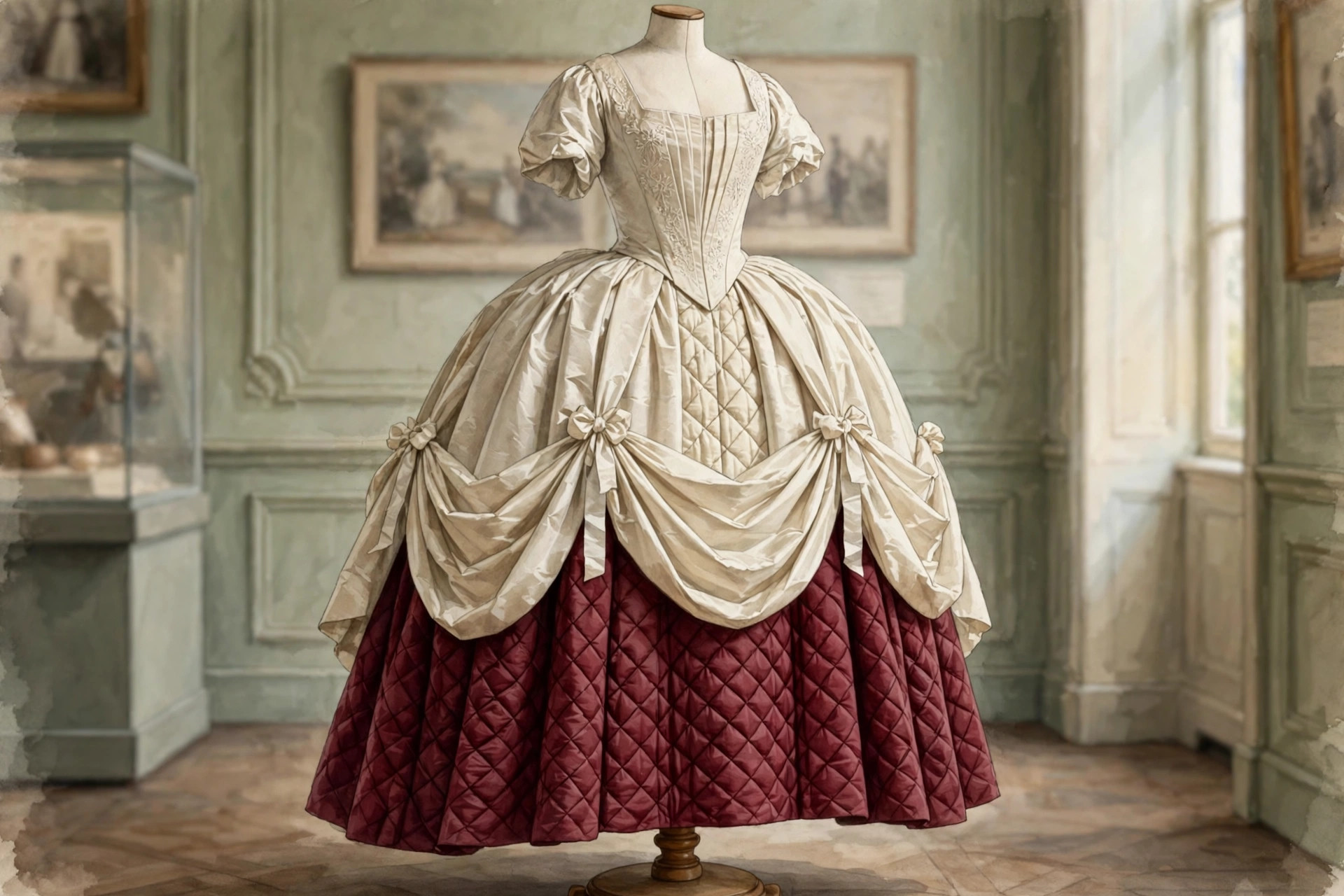
Who Wore It, and Where
The polonaise belonged to a generation of younger fashionable women and to settings outside the court: country-house mornings, walks in gardens and spas, informal visiting. It suited the new taste for the picturesque and the pastoral — the same taste that filled gardens with temples and ladies with sketchbooks.
Because the draping could be done to many gowns, the style crossed budgets. A dressmaker could convert an existing gown with tapes and loops, and the revealed petticoat let one gown present several looks.
Decline and Echoes
By the mid-1780s the taste for soft muslin and the chemise gown pushed the polonaise aside, and its swagged drapery retreated to fancy dress. Yet the idea of a skirt caught up to show a second layer returned repeatedly: in the bustle draperies of the 1870s and 1880s, in Edwardian draped skirts, and in the pick-up skirts of modern bridal and ball gowns, where the polonaise's swags are still clearly recognisable.
The Victorians remembered the style by name: the draped overskirts of the 1870s were marketed as polonaises in honour of the eighteenth-century original, a compliment few garments receive a century on. Dress historians value the polonaise for the same reason — it shows how the supposedly rigid world of Georgian dress could improvise, converting one gown into another with nothing more than tapes, loops and a sense of theatre.
Common Questions
How was a polonaise skirt held up?
Tapes, cords or loops sewn inside the overskirt drew the fabric up into three swags, sometimes secured with buttons or tassels. The arrangement was adjustable, so the skirt could be raised higher for walking.
What was worn under a polonaise?
A decorative petticoat, often quilted satin, printed cotton or silk, chosen to be seen beneath the draped overskirt, over hoops or hip pads much smaller than court paniers.
Why is it called a polonaise?
The French word polonaise means Polish. The name followed the fashion for Polish references in the early 1770s, around the first partition of Poland in 1772.