Robe à la Française
Fashion Definitions — fashion history and style definitions from Apparel Search
Search Apparel Search
At a Glance
Definition: The robe à la française, or sack-back gown, was the characteristic formal dress of the 18th century, defined by deep box pleats at the back that fell free from the shoulders over wide paniers.
Also known as: Sack-back gown
Pronunciation: ROHB ah lah frahn-SEZ
Category: Fashion Definitions
Word Origin
The French name means the gown in the French style — robe à la française, the French-style gown. Its English name, sack-back, describes the construction: the back pleats hang loose and full from the shoulders like a sack rather than being fitted to the body.
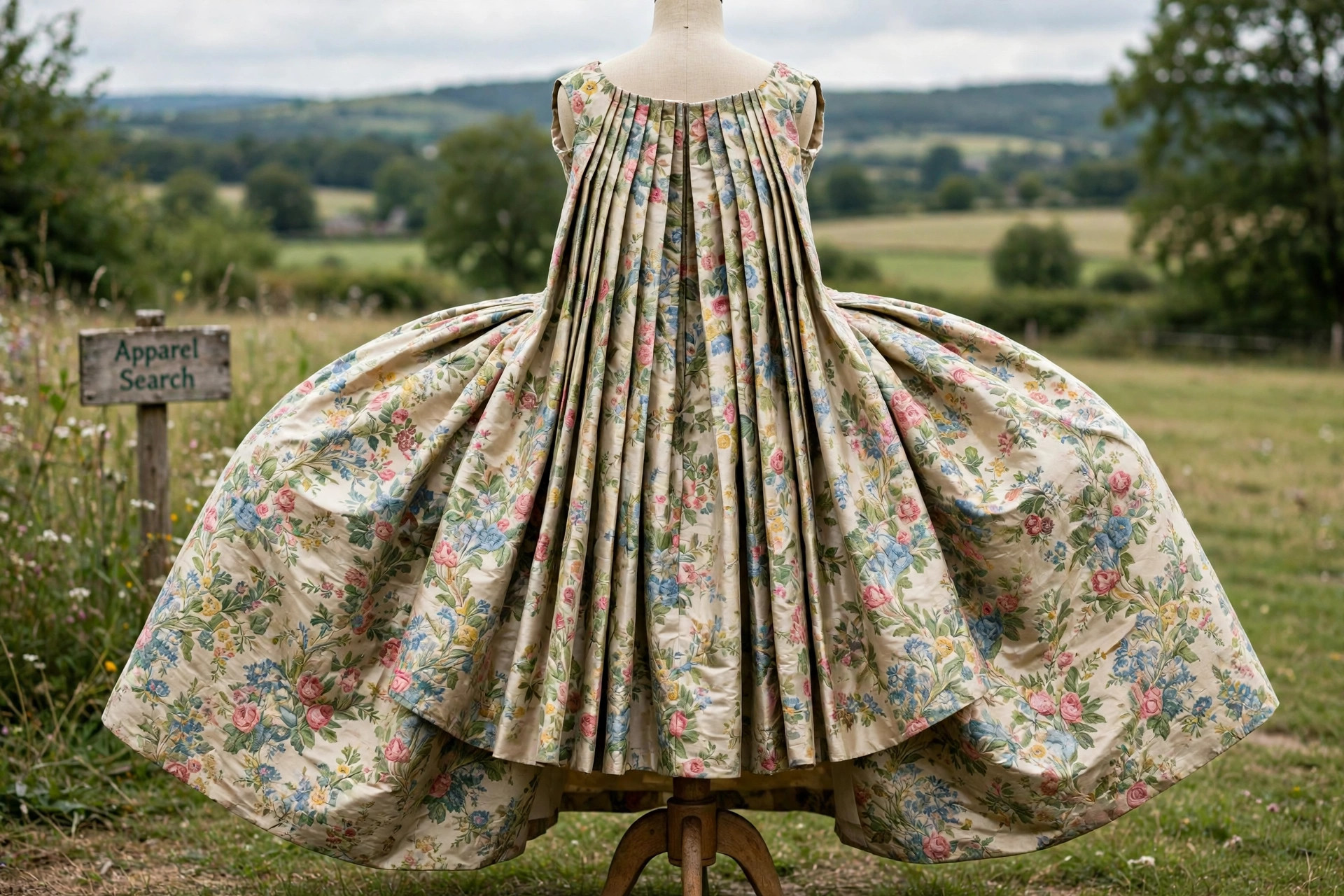
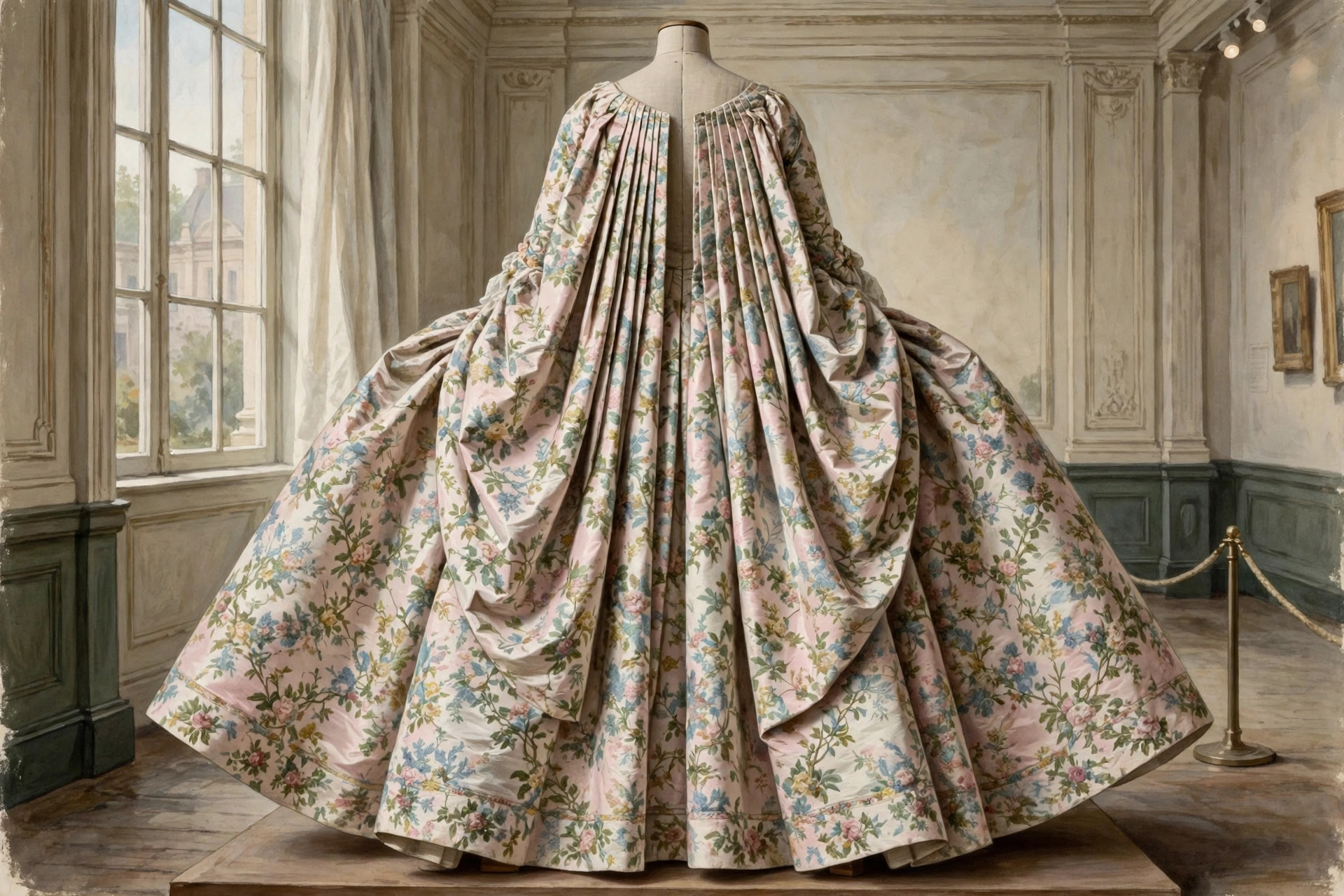
The robe à la française, known in English as the sack-back gown, was the most characteristic formal dress of the eighteenth century. Seen from behind, it could not be mistaken: two deep box pleats, stitched down only at the neckline, fell free from the shoulders to the hem in a train-like sweep. Those pleats are still called Watteau pleats, after the painter Antoine Watteau, who depicted their loose ancestors in the early 1700s. The gown developed from the informal mantua and sack of the early century — the world of 1700–1750 fashion — and by the 1740s it had become the standard of elegance across Europe and America, dominating 1750–1795 fashion at court and in the ballroom.
Construction: Pleats, Paniers, and the Stomacher
The back pleats were the gown's engineering. Fabric was folded into box pleats at the back neck and then released, so the silk flowed out over the side hoops called paniers, which held the skirt wide while keeping it flat at the front and back. The front of the bodice did the opposite work: it fitted the body closely over stays, and the gown's open front displayed a decorated triangular stomacher above a matching petticoat.
Robings — bands of gathered or pleated trim edging the front opening — and sleeve ruffles of lace or gauze completed the effect. Because the free pleats consumed a great width of silk, a robe à la française was a conspicuous statement of wealth, above all in the large floral brocades woven at Lyon and Spitalfields.
Who Wore It
This was the gown of formal life: court presentations, balls, the opera, and grand visiting. Madame de Pompadour and Marie Antoinette were painted in versions of it, and every woman with social ambitions owned at least one, remade and retrimmed as her fabrics allowed. In less extreme widths it also served for church and formal dinners throughout polite society.
Decline and Echoes
The sack back survived remarkably long, but by the late 1770s narrower silhouettes — the close-bodied anglaise and then the muslin chemise — made its pleats and paniers look old-fashioned, and by the 1780s it had retreated to court dress and older wearers.
Its afterlife in couture is distinguished. The free-falling back inspired elements of Balenciaga's sack line of 1957, back-draped evening gowns, and bridal trains cut to fall from the shoulders. The Watteau train on a modern gown is the robe à la française remembered.
Not to Be Confused With
The robe à la française is most often set against the robe à l'anglaise, its close-bodied contemporary, and the two are sometimes mixed up because both are formal 18th-century gowns worn over stays. The backs give them away: the française carries loose box pleats that fall free from the shoulders, while the anglaise is cut in fitted, seamed panels that follow the body.
Common Questions
Why is it called a sack-back gown?
Because the back pleats hang loose and full from the shoulders like a sack instead of being fitted to the body. The French name, robe à la française, means the gown in the French style.
What are Watteau pleats?
They are the pair of deep box pleats stitched down at the back neckline of the gown and released to fall free to the hem. The name comes from the painter Antoine Watteau, who depicted similar flowing gowns in the early 1700s.
What held the skirt out so wide?
Paniers — hooped understructures of cane or whalebone worn at the hips — held the skirt wide at the sides while leaving it comparatively flat at the front and back.