Pelisse
Fashion Definitions — fashion history and style definitions from Apparel Search
Search Apparel Search
At a Glance
Definition: A pelisse was a long, closely fitted coat-dress worn by women from the late 1790s to the 1840s, cut to follow the dress beneath it and often trimmed with fur or military-style braided frogging.
Pronunciation: puh-LEES
Category: Fashion Definitions
Word Origin
From the French pelisse, a fur-lined cloak. Early pelisses were indeed trimmed or lined with fur, and the name kept that origin even as the garment became a fitted coat-dress in wool, silk or velvet.
The pelisse was a long, closely fitted coat-dress worn by women from the late 1790s through the 1840s. It began as an outdoor garment — a warm coat cut to follow the high-waisted line of the dresses beneath it — but at its height it was far more than outerwear. A pelisse reached to the ankle, fastened down the front, and presented a complete, finished silhouette in its own right, so a woman arriving at a morning visit could be fully dressed in her pelisse alone. The name came from the French pelisse, a fur-lined cloak, and early examples were indeed trimmed or lined with fur. As 1820s fashion developed, the pelisse settled into the defining outer garment of the Regency wardrobe, worn for promenades, carriage calls, shopping and travel in all but the warmest months. It is one of the historic garments surveyed in the Fashion History Guide.
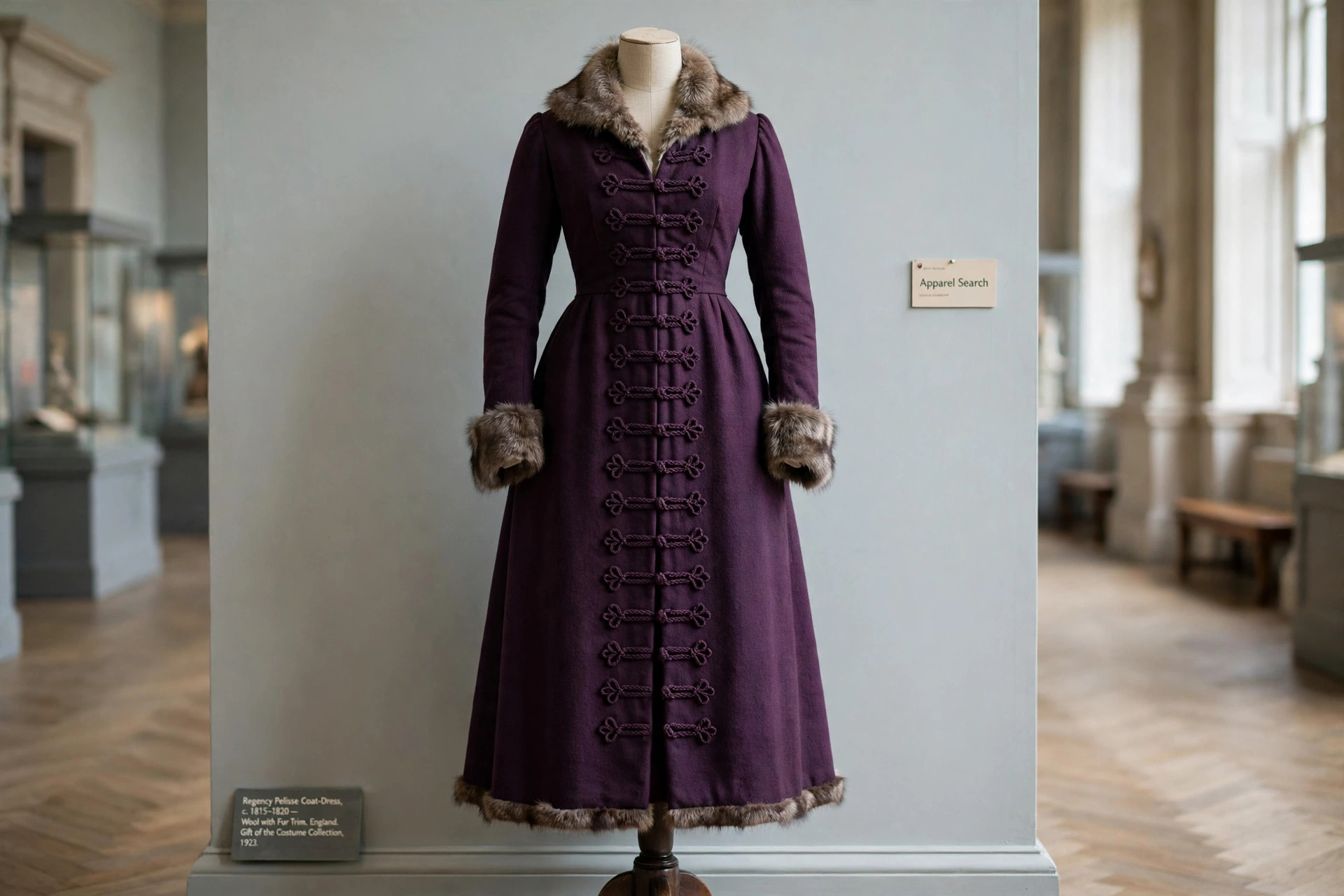
From Hussar Uniform to Coat-Dress
The pelisse borrowed its most recognisable decoration from military dress. Hussar regiments wore a short, fur-trimmed jacket slung over the shoulder, rich with braided frogging and rows of buttons, and fashionable tailors translated that braiding onto women's long coats. Frogging across the chest, braided borders and tasselled fastenings gave even a plain wool pelisse a dashing, martial air during the Napoleonic Wars.
By the 1810s the garment had lengthened to match the dress under it. Morning pelisses were made in fine wool, sarsnet or silk; evening and carriage versions used velvet or satin with swansdown and fur. Half-pelisses and spencer-length versions existed, but the full-length form was the classic.
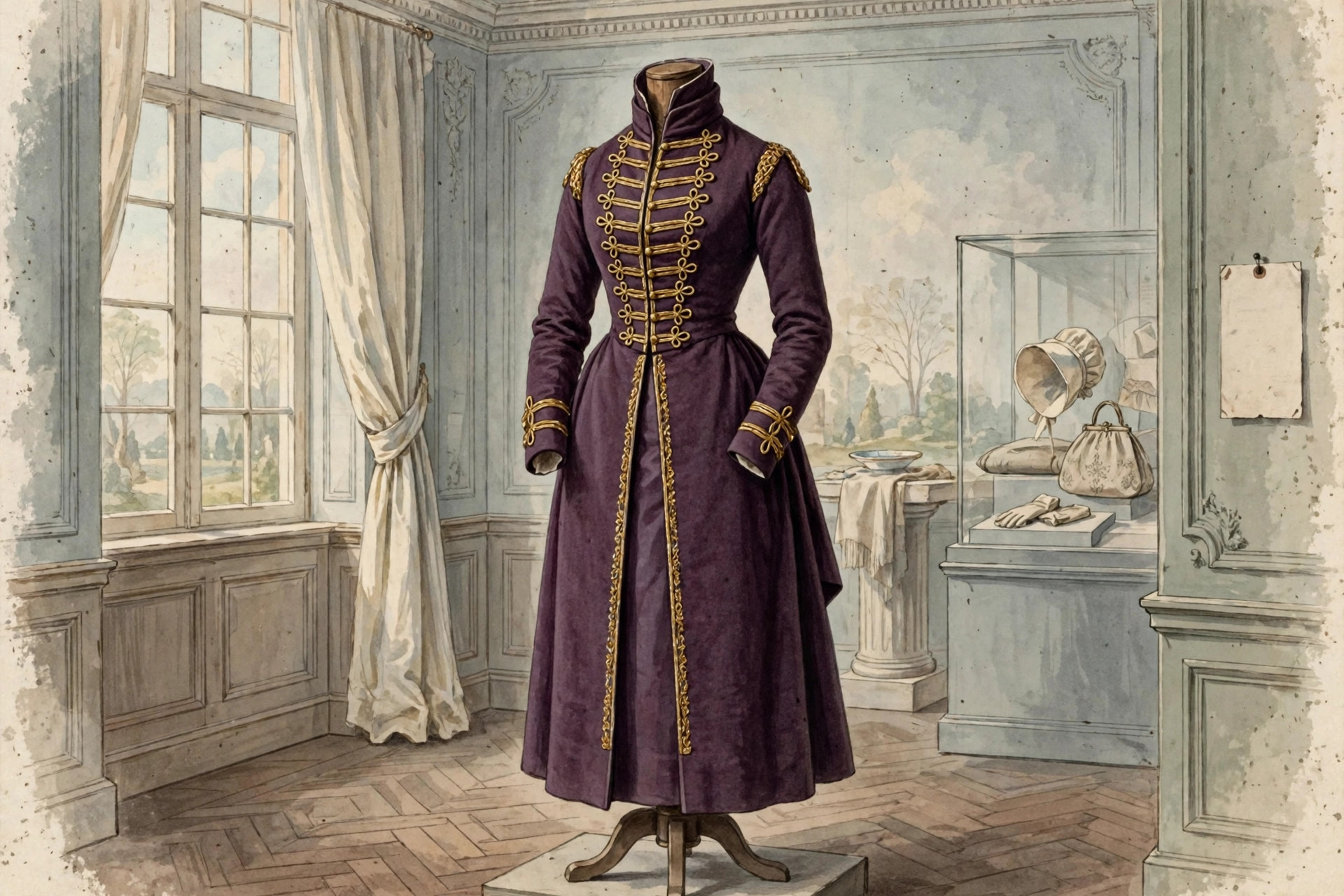
Construction and Silhouette
A pelisse was built like a dress and a coat at once. The bodice fitted closely, usually over light stays, with long tight sleeves and a high neck finished with a small collar, a ruff or a cape-like tippet. The skirt opened or fastened down the front, sometimes revealing a strip of the dress beneath. Back seams shaped the garment to the waist, which sat high until the 1820s and then descended steadily toward the natural waistline.
Trimmings carried the fashion news: fur or swansdown in winter, quilted satin linings, padded hem borders in the 1820s, and the widening sleeves and fuller skirts of 1830s–1840s fashion as the silhouette changed underneath.
Decline and Modern Echoes
By the 1850s the wide crinoline skirt made a fitted full-length coat impractical, and the pelisse gave way to loose mantles, shawls and short jackets. The name faded from fashion plates, but the idea — a coat cut as carefully as a dress, meant to be seen and judged as an outfit — survived.
Modern coat-dresses, military frogging on tailored coats and the long fitted wool coat all descend from the pelisse. When a designer sends a button-through coat-dress down a runway, the Regency pelisse is its direct ancestor.
Surviving pelisses in museum collections also record the garment's social range. Silk pelisses trimmed with fur belonged to carriage folk, but plain wool examples, endlessly retrimmed and let out, served governesses, shopkeepers' wives and travellers. Fashion journals treated the pelisse as the thinking woman's purchase of the season: one good pelisse, well chosen, could carry a modest wardrobe through months of visiting with complete respectability.
Common Questions
What is the difference between a pelisse and a coat?
A pelisse was cut and fitted like a dress, following the waistline and silhouette of the gown beneath, and could be worn as a complete outfit in itself. An ordinary coat of the period was looser outerwear put on purely for warmth.
Why do many pelisses have braided frogging?
The braiding imitated the uniform of hussar cavalry regiments, whose fur-trimmed, frogged jackets became a fashionable influence on women's dress during the Napoleonic Wars.
When was the pelisse worn?
Pelisses were worn mainly from the late 1790s to the 1840s, for daytime outings such as promenades, visits, shopping and carriage rides.