Robe en Chemise (Chemise à la Reine)
Fashion Definitions — fashion history and style definitions from Apparel Search
Search Apparel Search
At a Glance
Definition: The robe en chemise, or chemise à la reine, was the soft, high-waisted gown of white muslin popularised by Marie Antoinette in the early 1780s, worn without paniers and held only by a sash at the waist.
Also known as: Chemise à la reine
Pronunciation: ROHB ahn shuh-MEEZ
Category: Fashion Definitions
Word Origin
The gown took its name from the chemise, the linen undergarment worn next to the skin — the resemblance was the whole point of the style, and the whole of the scandal. Its second name, chemise à la reine, means the queen's chemise, after Marie Antoinette, who popularised it.
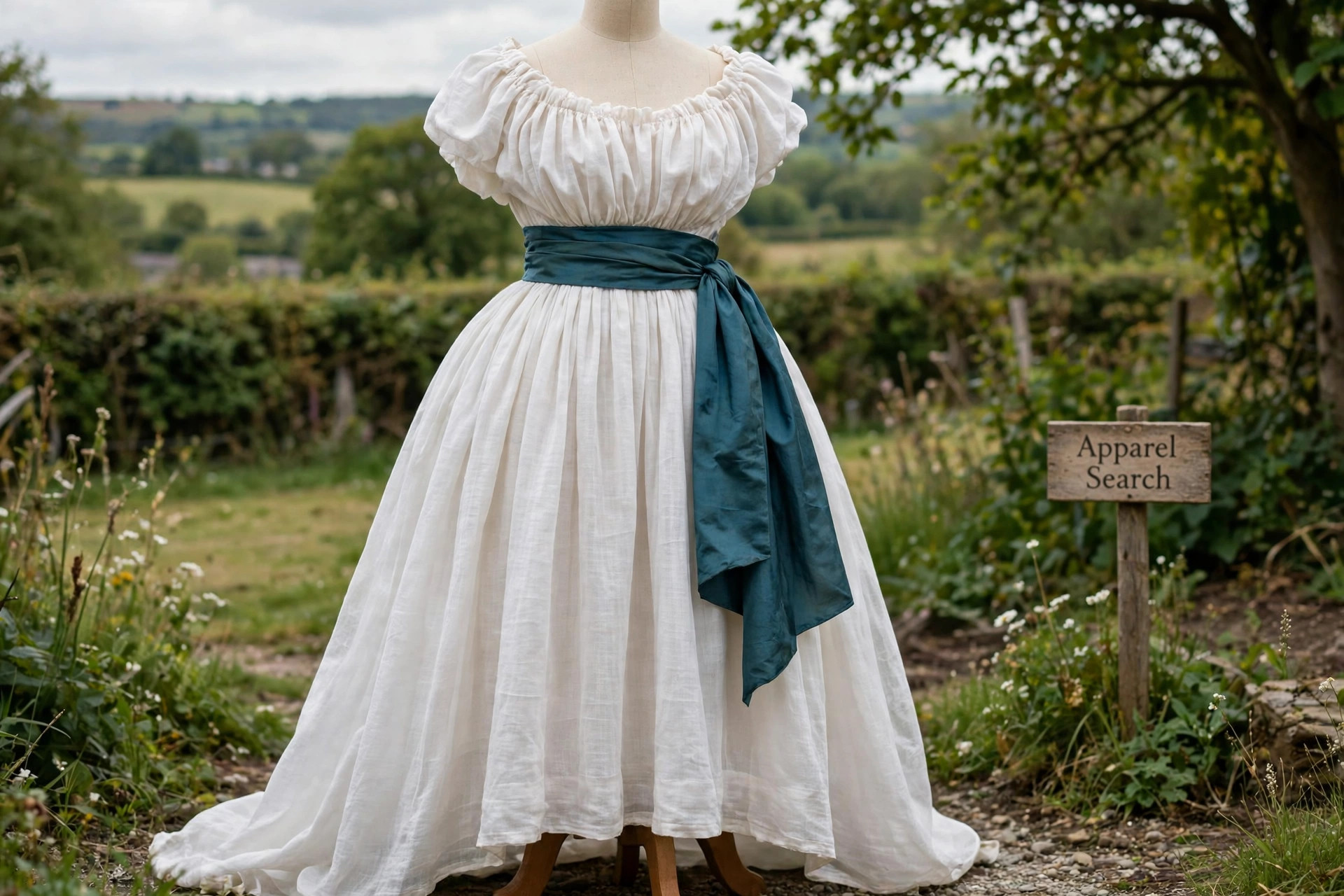
The robe en chemise, immortalised as the chemise à la reine, was a soft, high-waisted gown of white muslin that swept away the structure of eighteenth-century dress in a single decade. Worn without paniers, with minimal stays or none, its bodice gathered into a wide neckline and its skirt fell in light folds, held only by a broad coloured sash at the waist. It took its name from the chemise, the linen undergarment worn next to the skin — and that was precisely the scandal. When Marie Antoinette popularised the style in the early 1780s, within 1750–1795 fashion, critics declared that the Queen of France had been painted in her underclothes.
A Portrait, a Scandal, a Fashion
In 1781 Élisabeth Vigée Le Brun exhibited a portrait of Marie Antoinette in a white muslin chemise dress and straw hat. The outcry — that royalty had been shown in undress, and that French silk weavers were being ruined by imported cotton muslin — forced the portrait's withdrawal, and the Queen had it repainted in blue silk. The damage, and the fashion, were done: every fashionable woman wanted the gown.
The style had roots in the French colonies of the Caribbean, where white muslin suited the climate, and in the era's cult of nature and Rousseau's philosophy. It promised a body freed from court machinery — an idea with unmistakable political charge in the 1780s.
Construction and Materials
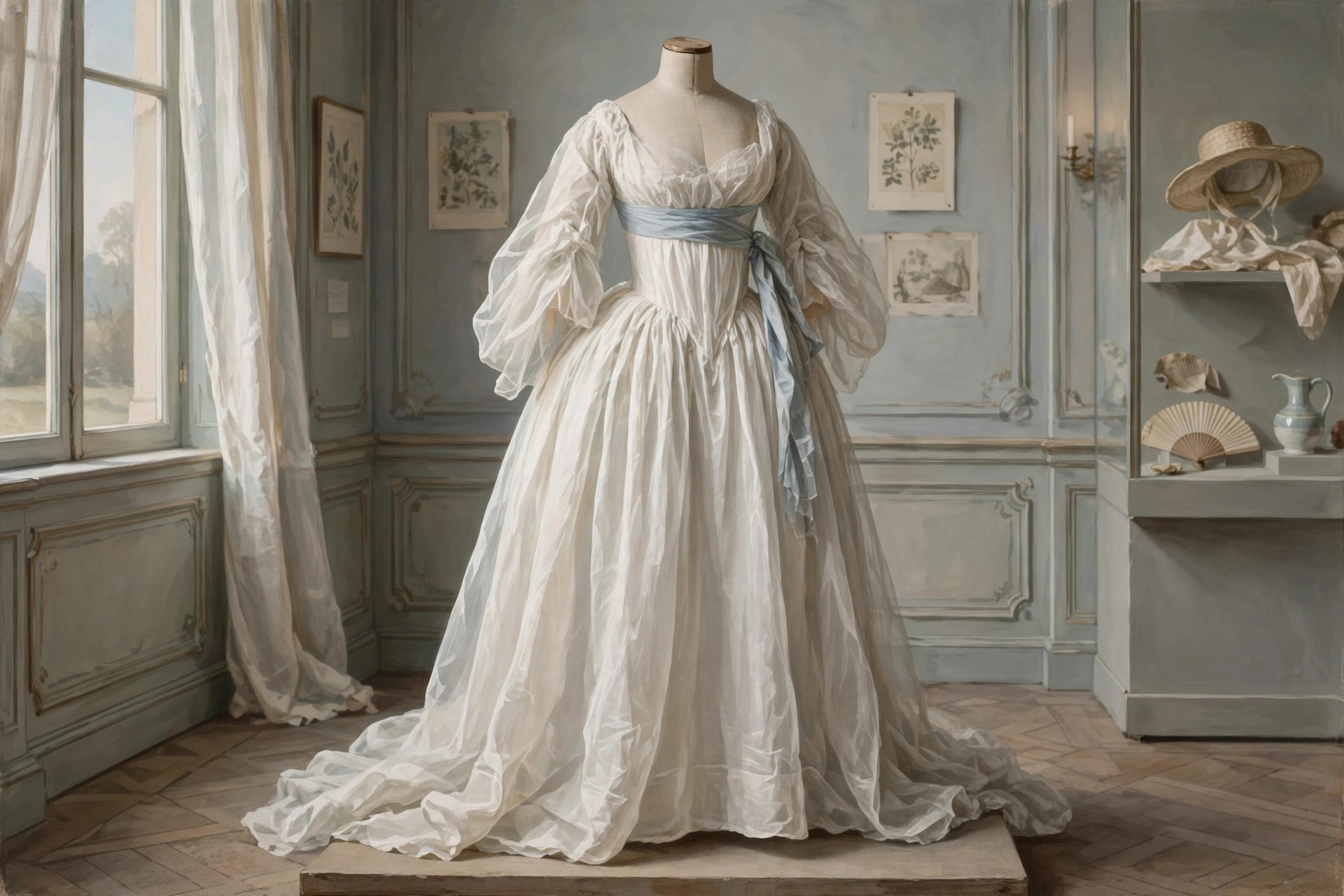
The chemise gown was made of fine white cotton muslin, much of it imported from India, gathered by drawstrings at the neck and waist rather than fitted by seams. A sash of coloured silk defined the high waist, the sleeves were soft and full or simply fitted, and the skirt needed little understructure — a plain petticoat sufficed.
Its simplicity was partly an illusion: fine muslin was costly, washing white was labour, and the gown's ease depended on an excellent figure beneath. But compared with a brocaded sack-back gown it was radically light, cheap to make, and quick to put on.
Legacy: The First Modern Dress
Through the 1790s the chemise principle conquered Europe: waistlines rose to just under the bust, white muslin became the uniform of fashion, and the classical Empire silhouette was born. The chemise à la reine is therefore often called the first modern dress — unstructured, washable, and democratic in appearance.
Its echoes recur whenever fashion reacts against structure: the soft white dresses of the 1820s, Edwardian tea gowns, 1970s peasant dresses, and today's flowing boho and cottagecore styles all repeat its formula of white cloth, gathers, and a sash.
Common Questions
Why was the chemise à la reine scandalous?
It resembled the chemise, a linen undergarment, so the Queen was criticised for appearing in public and in portraiture in what looked like undress — and in imported cotton rather than French silk.
Who introduced the chemise dress?
Marie Antoinette popularised it in the early 1780s, helped by her portraitist Élisabeth Vigée Le Brun, whose 1781 portrait of the Queen in white muslin caused a sensation.
What fabric was a robe en chemise made from?
Fine white cotton muslin, much of it imported from India, gathered with drawstrings and worn with a broad coloured silk sash at the high waist.