Bergère Hat
Fashion Definitions — fashion history and style definitions from Apparel Search
Search Apparel Search
At a Glance
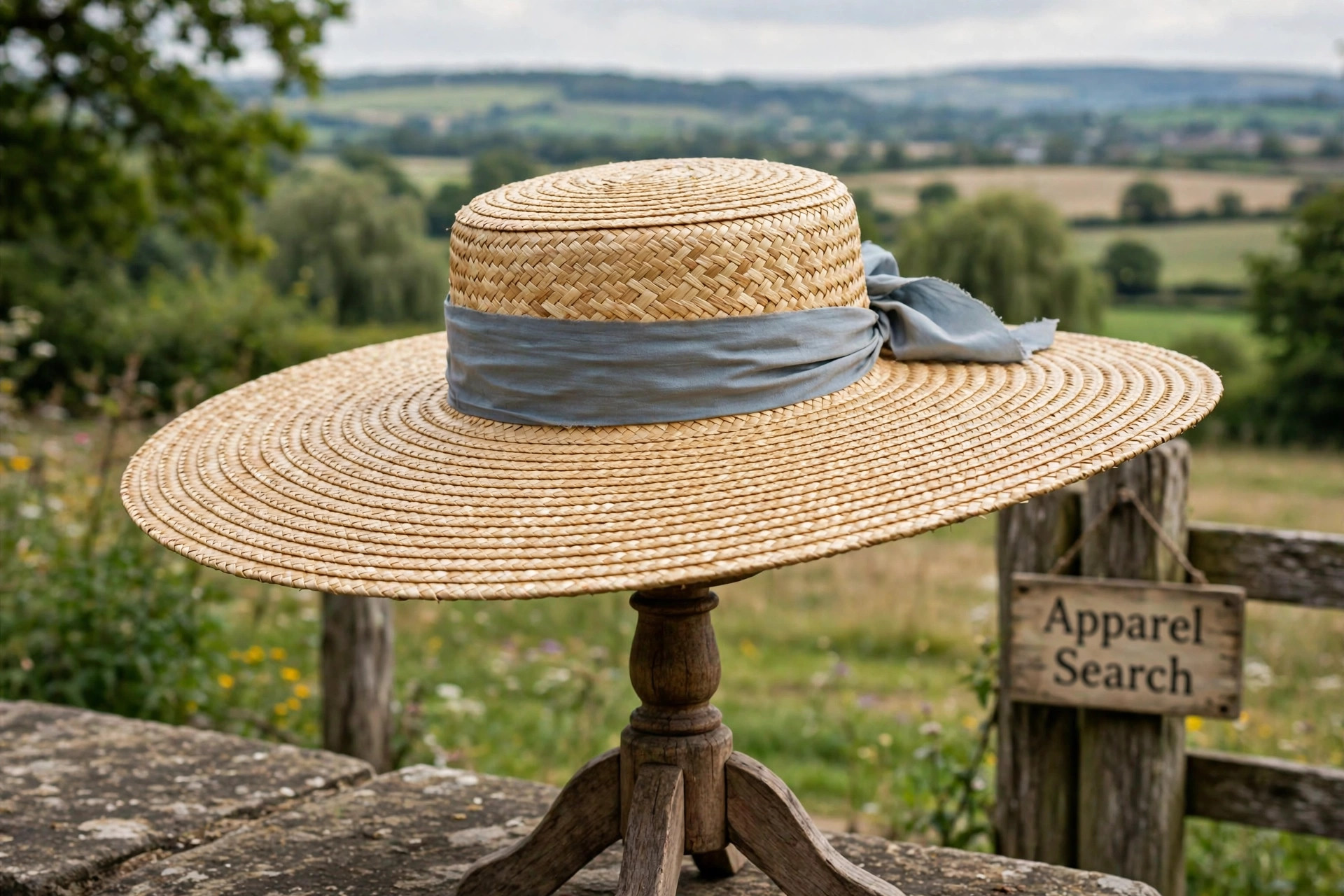
Definition: A bergère was a low-crowned, wide-brimmed straw hat worn by women through much of the 18th century, tied on with ribbon and named for the French word for a shepherdess.
Pronunciation: ber-ZHAIR
Category: Fashion Definitions
Word Origin
Bergère is French for shepherdess. The name was the hat's whole argument: a simple country hat, tied on with ribbon, suggested fresh air, youth, and artless charm at a time when court dress could be towering and elaborate.
The bergère was a low-crowned, wide-brimmed straw hat worn by women through much of the 18th century. Its name is French for shepherdess, and that pastoral reference was the point: a simple country hat, tied on with ribbon, suggested fresh air, youth, and artless charm at a time when court dress could be towering and elaborate. In 1750–1795 fashion the bergère became a signature accessory. It shaded the face, framed powdered or natural hair without crushing it, and could be dressed up or down with a change of ribbon, flowers, or feathers. Few hats have carried so much meaning with so little structure.
Shepherdess Style and the Marie Antoinette Era
The bergère rose with the taste for pastoral play. Aristocratic women visited model farms and dairies dressed as idealised milkmaids, and Marie Antoinette at the Petit Trianon made rustic simplicity fashionable at the highest level. A straw bergère worn with a muslin dress announced that the wearer understood the new mood: natural, sentimental, and deliberately unlike stiff court silk.
Yet the hat was practical as well as poetic. Working women had worn broad straw hats outdoors for generations, for real sun protection. Fashion borrowed a useful labourer's shape, refined its weave, and sold it back as elegance — a pattern fashion repeats in every century.
Straw, Ribbon, and Construction
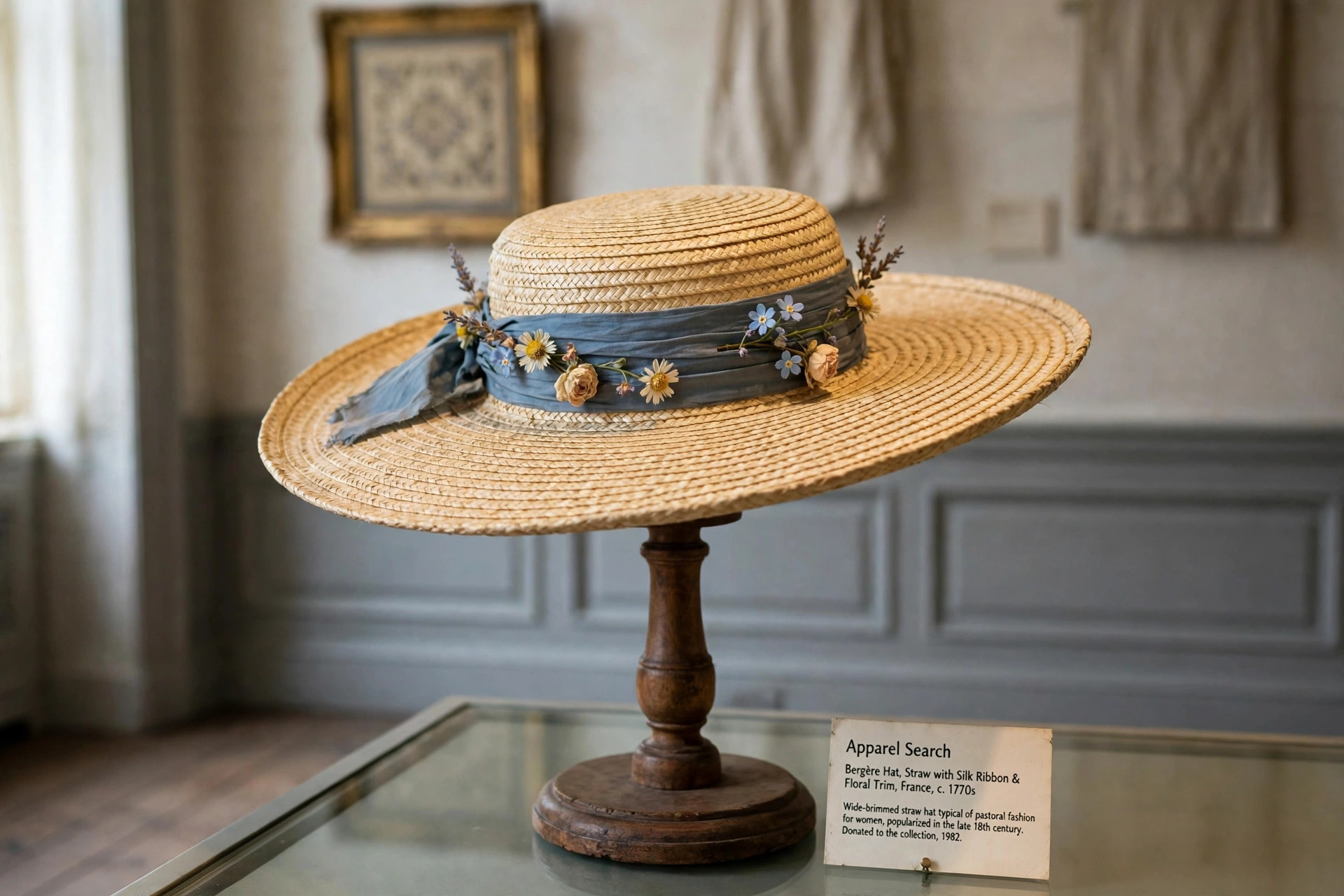
Most bergères were plaited straw, woven in fine braids and sewn in spirals to form a shallow crown and a broad, fairly flat brim. The crown sat low because it perched on top of dressed hair rather than enclosing the head. Ribbons passed under the chin or over the crown to hold the hat against a breeze, and milliners trimmed it with silk ribbon, gauze, artificial flowers, or a single feather.
The brim could be left flat, tipped forward, or turned up at one side, giving one inexpensive hat several different looks. Colours stayed natural — pale straw, sometimes dyed black — so the trimmings supplied the fashion news each season.
Decline and Legacy
As hairstyles and bonnets changed in the 1790s, the wide flat bergère lost ground, though broad straw hats returned whenever summer and pastoral revivals called for them. Victorian garden hats, Edwardian picture hats, and modern wide-brimmed straw sun hats all descend from its simple formula.
The bergère endures because it flatters and protects at once. A shallow crown, a generous brim, and a ribbon remain one of the most copied hat designs in history.
Not to Be Confused With
The bergère is sometimes muddled with the later capeline, another wide-brimmed straw hat, but the two belong to different centuries and sit differently. The bergère is an 18th-century hat: a shallow crown perched on top of dressed hair and a broad, fairly flat brim of plaited straw. The capeline is a hat of the 1830s to 1850s, with a soft, low crown and a flexible brim that droops down around the face rather than spreading flat.
Common Questions
What does bergère mean?
Bergère is French for shepherdess. The name reflected the hat's rustic, pastoral associations, which fashionable women in the 18th century deliberately adopted as a charming contrast to formal court dress.
What was a bergère hat made of?
Most bergères were made of plaited straw sewn into a low crown and wide brim, trimmed with silk ribbon, gauze, artificial flowers, or feathers, and tied on with ribbon under the chin.
Who made the bergère fashionable?
The hat suited the pastoral taste of the Marie Antoinette era, when the queen and her circle popularised simple muslin dresses and country-style straw hats at the Petit Trianon.