Capeline
Fashion Definitions — fashion history and style definitions from Apparel Search
Search Apparel Search
At a Glance
Definition: A capeline was a soft, wide-brimmed women's hat of the 1830s to 1850s, in straw, felt, or silk, whose brim spread around the face and drooped gently downward to shade the complexion.
Pronunciation: KAP-uh-leen
Category: Fashion Definitions
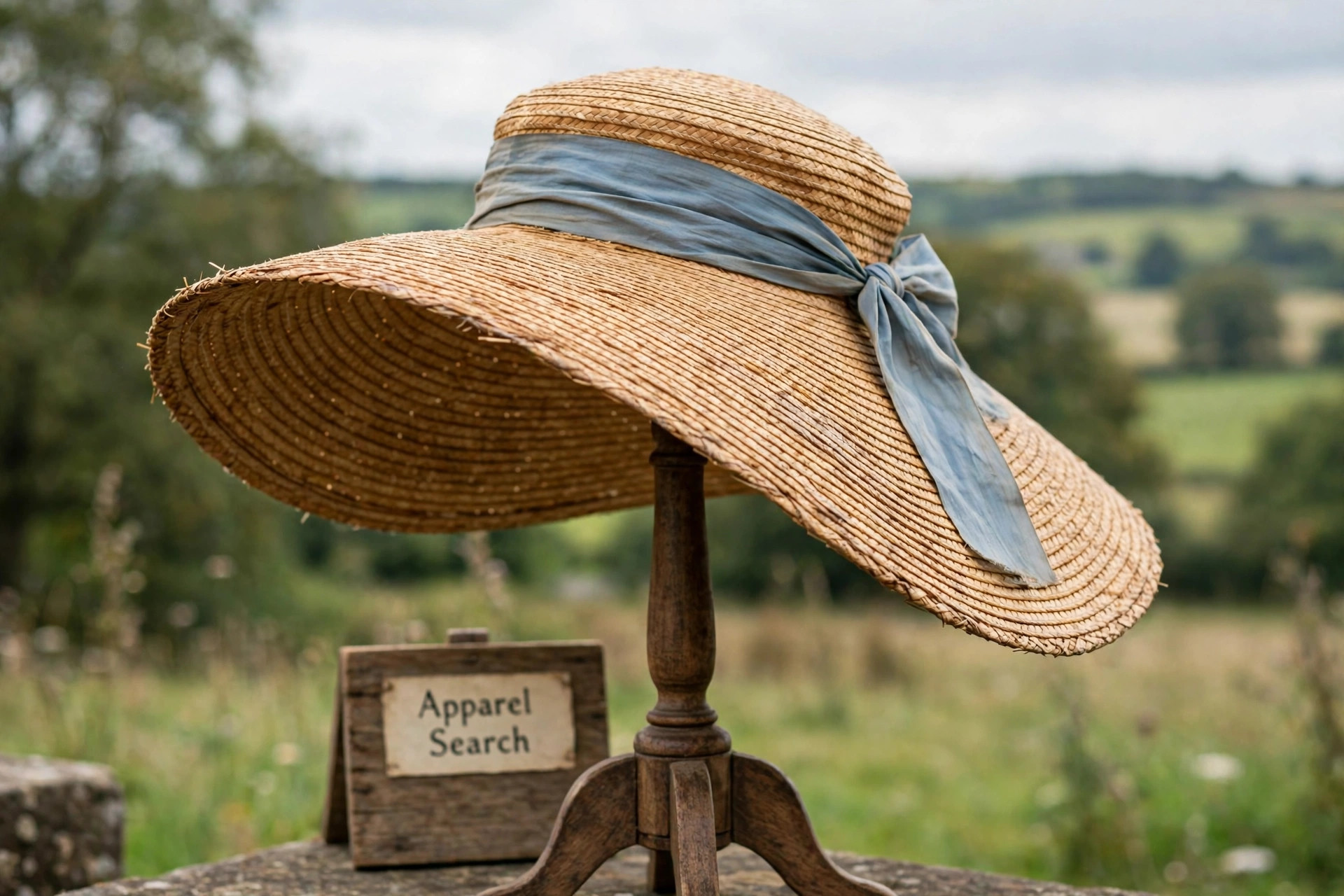
The capeline was a wide-brimmed soft hat worn by women from the 1830s into the 1850s. Unlike the close bonnet, its brim spread out around the face and drooped gently downward, shading the complexion that fashionable culture prized as pale and delicate. In straw for summer and felt or silk for cooler months, it was a softer, more relaxed alternative to structured headwear. The word had an earlier life: in the 17th century a capeline could mean a wide-brimmed hat, and in armour a simple steel skull cap. The 19th-century fashion sense, seen across 1830s–1840s fashion, is the one dress historians usually mean.
Romantic Softness
The 1830s loved a picturesque silhouette: huge sleeves, a pointed waist, and a hat that curved protectively around the face. The capeline fitted that mood perfectly. Its brim framed the features like the oval of a portrait, and contemporary fashion plates show it tilted slightly, ribbons fluttering, with flowers tucked under the brim where only a close companion would see them.
By 1850s fashion the capeline remained a favourite for seaside, garden, and morning wear, even as bonnets dominated formal dress. It was informal without being careless — the hat for a walk, a sketching expedition, or a summer visit.
Materials and Making
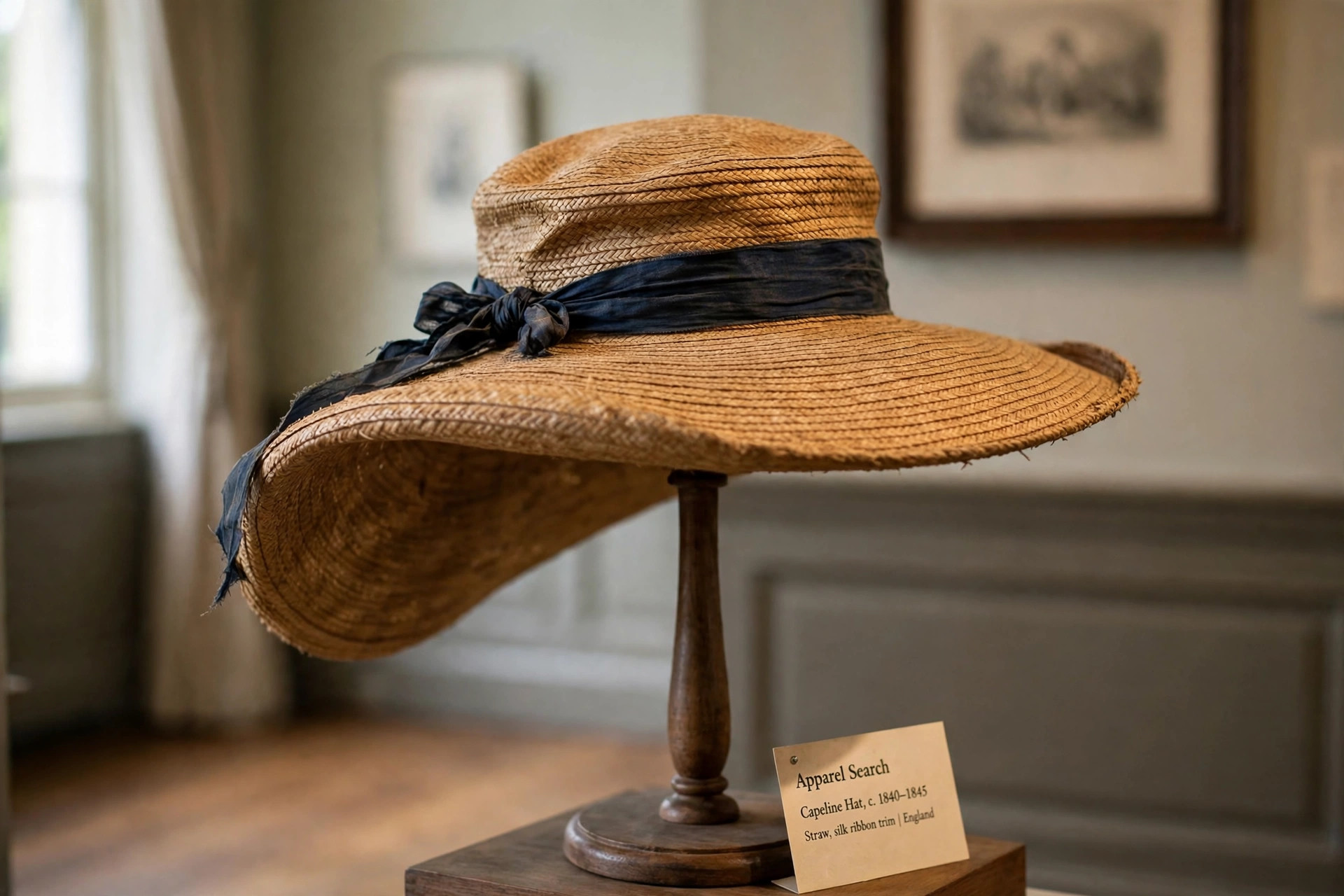
Summer capelines were woven straw, often fine leghorn straw imported from Italy, valued for its smooth golden plait. Winter versions used felt, velvet, or silk over a light foundation. The crown was deliberately soft and low, sometimes little more than a gathered cap, so the brim did most of the work.
Trimmings were generous: broad silk ribbons tied under the chin, lace, feathers, and artificial flowers. Because the shape was simple, a milliner could retrim a capeline each season, and surviving examples often show several layers of stitching where old ornaments were removed and new ones applied.
After the Capeline
As crinoline skirts widened in the later 1850s, hats shrank in proportion and the capeline faded, replaced by small tilted hats and renewed bonnets. Its spirit returned in the floppy garden hats of the 1860s, the wide picture hats of the Edwardian years, and the soft sun hats of the 1970s revival.
Today the word capeline survives in millinery for any wide, flexible brim — a direct memory of the Romantic original, still doing its original job of graceful shade.
Not to Be Confused With
The capeline is sometimes muddled with the earlier bergère, another wide-brimmed straw hat, but the two belong to different centuries and sit differently. The bergère is an 18th-century hat: a shallow crown perched on top of dressed hair and a broad, fairly flat brim of plaited straw. The capeline is a hat of the 1830s to 1850s, with a soft, low crown and a flexible brim that droops down around the face rather than spreading flat.
Common Questions
What is a capeline hat?
A capeline is a soft, wide-brimmed women's hat of the 1830s to 1850s, usually of straw, felt, or silk, whose brim drooped gently around the face to provide shade.
How was a capeline different from a bonnet?
A bonnet fitted closely, with a brim projecting forward and a curtain at the back. A capeline spread wide around the whole head with a soft crown and a drooping, flexible brim.
Did capeline mean anything earlier?
Yes. In the 17th century capeline could describe a wide-brimmed hat and also a simple steel skull cap worn as armour, long before its 19th-century fashion meaning.