Cartwheel Hat
Fashion Definitions — fashion history and style definitions from Apparel Search
Search Apparel Search
At a Glance
Definition: A cartwheel hat was a women's hat with an enormous, flat, circular brim like a cart's wheel, worn tilted sharply over one eye on a very small crown, fashionable from the mid-1930s through the 1940s.
Category: Fashion Definitions
Word Origin
The name is purely descriptive: the hat's huge, flat, circular brim resembled the wheel of a cart.
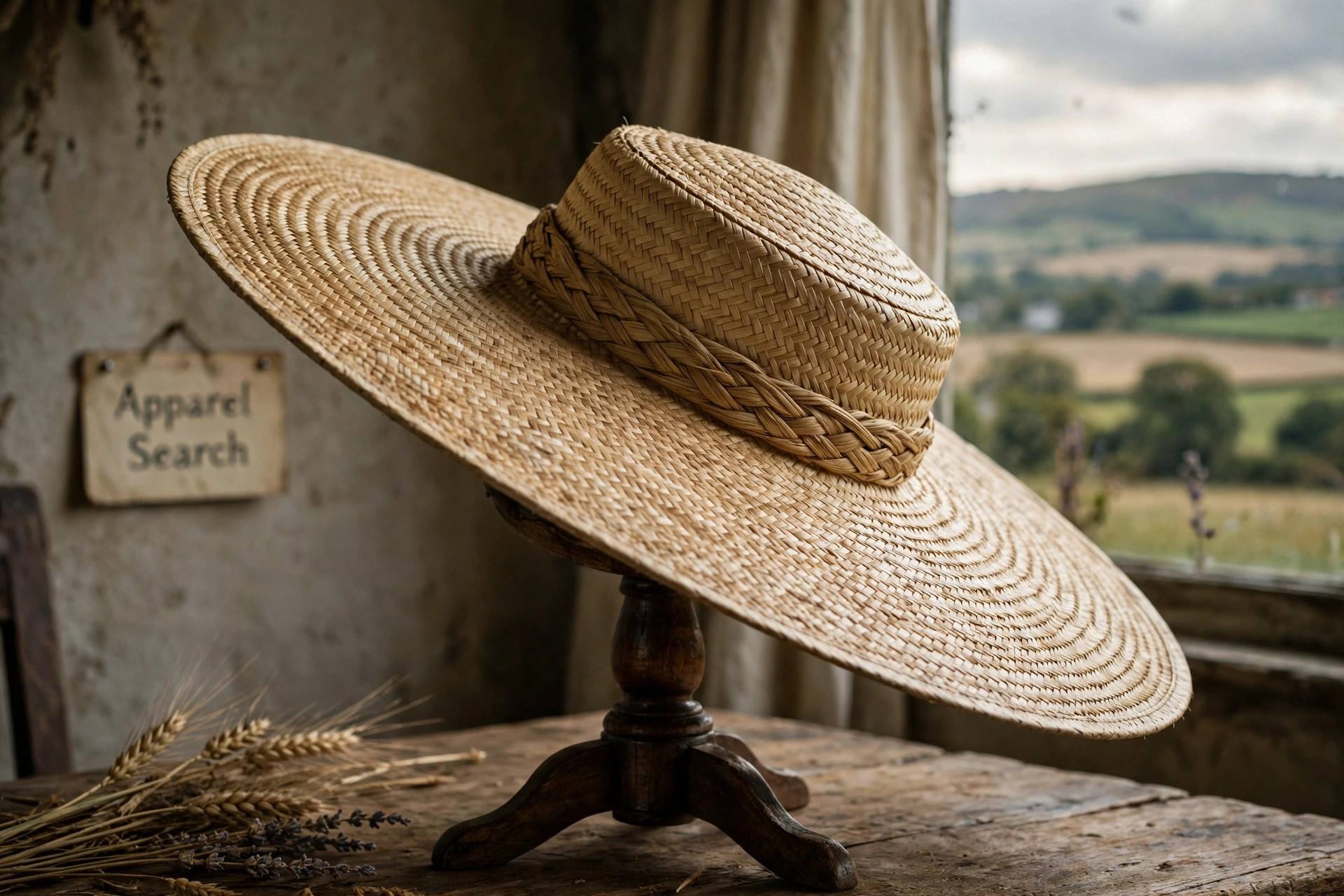
The cartwheel hat was exactly what its name promises: an enormous, flat disc of a brim, like a cart's wheel, worn tilted sharply over one eye. It appeared in the mid-1930s and became one of the most recognisable silhouettes of 1930s fashion, photographed on film stars, society women, and brides who wanted maximum drama from a single accessory. The scale was deliberate. As dresses grew simpler and more sculptural in the 1930s, hats carried the extravagance: a cartwheel framed the face, balanced a bias-cut gown, and made its wearer visible across any room.
Glamour in the Thirties and Forties
Milliners such as Elsa Schiaparelli and the great Paris houses showed wide disc brims tipped at daring angles, held in place with elastic, combs, or a small fitted crown that hid under the disc. Hollywood adopted the shape at once: a cartwheel photographed beautifully, casting a shadowed, mysterious line across the face.
The shape carried into 1940s fashion. Wartime restrictions shrank many hats, but the cartwheel survived for weddings and formal portraits, and returned in full force with the post-war New Look, when Dior's wide skirts demanded a wide hat to balance them.
Straw, Felt, and Engineering
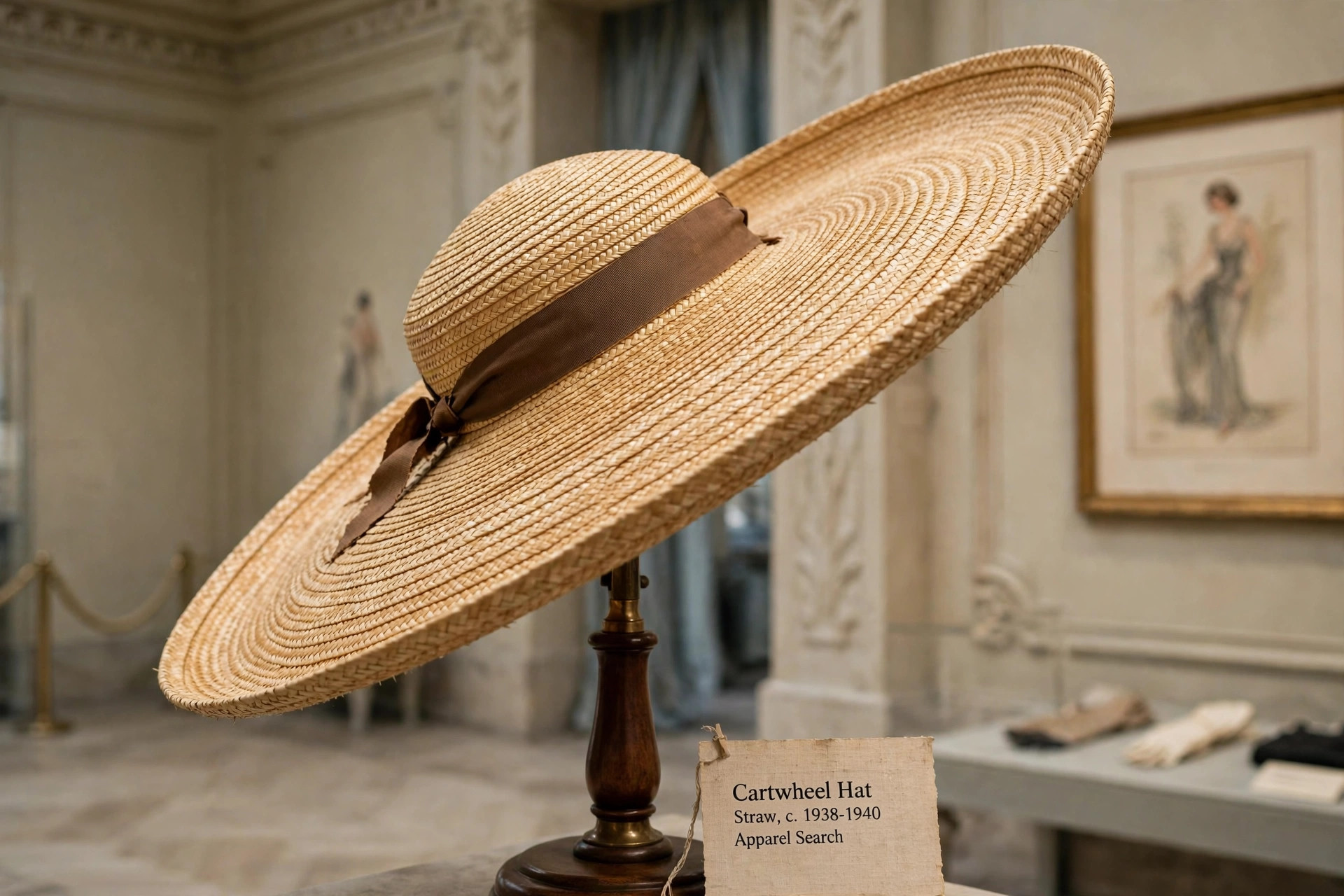
A brim that large needs engineering. Summer cartwheels were woven straw, stiffened and blocked flat; winter versions were felt, sometimes with a wired edge so the disc held its line and did not flop. The crown was kept tiny — often a shallow cap — because the brim, not the crown, made the statement.
Trimming stayed minimal by design: a grosgrain band, a single feather, or a short veil. Anything more would fight the geometry. Colours ranged from natural straw and black to white for brides, with the tilt adjusted to flatter the wearer's profile.
Revivals and Legacy
The cartwheel has never fully disappeared. It returned in the 1960s as a bold counterpoint to short dresses, in the 1980s on runways and at royal weddings, and it remains a first choice for race days and formal summer events whenever maximal hats come back into fashion.
Its lesson is one millinery keeps relearning: proportion is drama. One perfect disc, worn at the right angle, can do the work of an entire outfit.
Common Questions
Why is it called a cartwheel hat?
The name describes its huge, flat, circular brim, which resembled the wheel of a cart. The brim was worn tilted at a sharp angle over a very small crown.
When were cartwheel hats popular?
Cartwheel hats first became fashionable in the mid-1930s, continued through the 1940s for formal wear, and returned strongly with the post-war New Look.
How did a cartwheel hat stay on?
Because the tiny crown could not grip the head alone, milliners added elastic bands, combs, or hatpins, and the steep tilt helped the disc balance against the head.