Halo Hat
Fashion Definitions — fashion history and style definitions from Apparel Search
Search Apparel Search
At a Glance
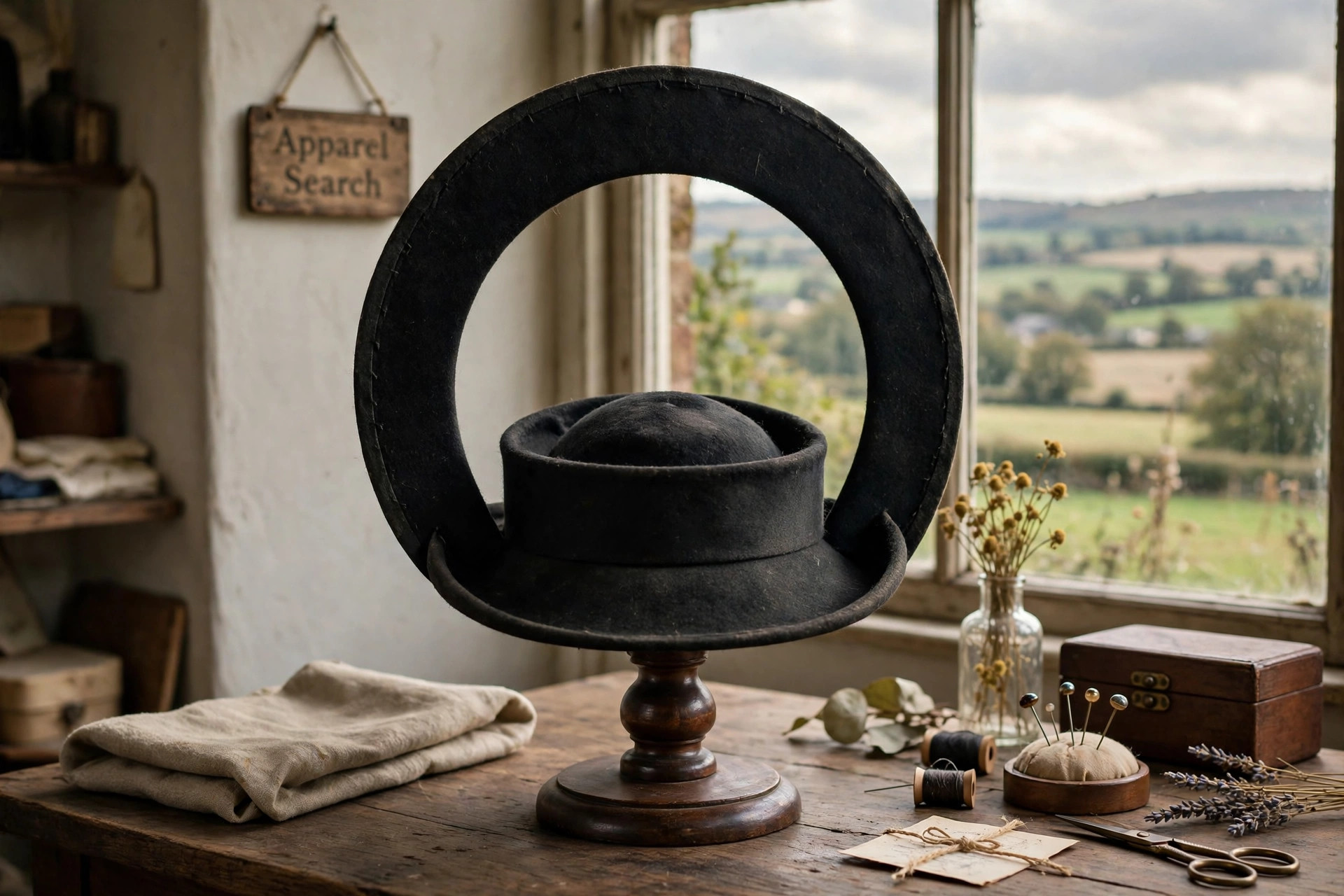
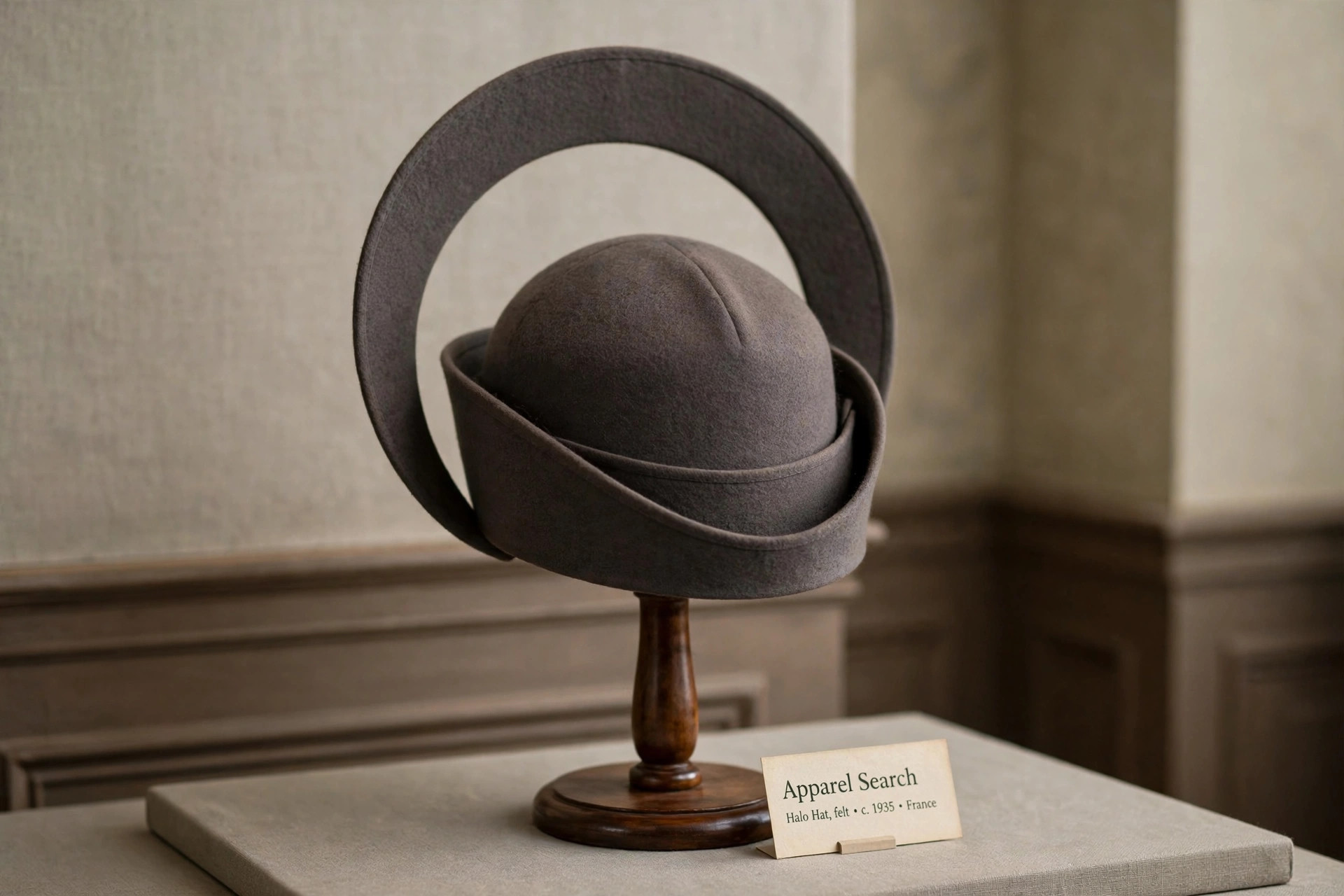
Definition: A halo hat was a women's hat of the 1930s whose brim stood upright in a circle around the head, framing the face like a halo, with a small crown hidden behind the ring.
Category: Fashion Definitions
Word Origin
The name describes the effect: seen from the front, the face appeared inside a neat ring of felt, straw, or fabric, like the halo around a saint in a painting.
The halo hat was a women's hat of the 1930s whose brim stood up behind and around the head, framing the face in a circle — like the halo around a saint in a painting. From the front, the effect was striking and simple: the face appeared inside a neat ring of felt, straw, or fabric, with the small crown hidden behind. It belonged to the inventive millinery of 1930s fashion, a decade when hats changed shape almost every season and designers competed to find a new line. Few of those experiments remain as instantly recognisable as the halo.
A New Silhouette for the Thirties
As 1920s cloches fell away and hair was worn waved and visible, milliners explored brims that showed the face rather than shading it. The halo did this brilliantly: it framed waved hair, suited the decade's sculptural dresses, and photographed like a portrait medallion. Period milliners including Lilly Daché popularised halo and breton-style upturned brims for smart daytime wear.
The halo also answered a practical fashion problem. It gave the presence of a wide hat without a wide hat's shadow or inconvenience — it did not bump in cars, theatres, or crowded restaurants, because its brim rose vertically instead of spreading sideways.
Blocking the Ring
Making a halo required skill. The brim was blocked or wired into a near-vertical circle, stiffened so it held its ring, and joined to a small, shallow crown that sat on the back or top of the head. Felt was the classic material, moulded in one piece; straw and fabric versions followed for summer.
Trimming was restrained — a grosgrain band, a bow at the back, or a short veil — because the ring itself was the decoration. Colours followed the dress palette of the season, with black, navy, and brown the everyday staples and white reserved for summer and brides. The hat was held in place with elastic, combs, or hatpins.
Bridal Echoes and Legacy
The halo's afterlife has been largely bridal. A circular frame behind the head reads naturally as a bridal halo, and 1930s-style halo headpieces, Juliet caps with raised backs, and modern halo crowns all borrow its geometry. Vintage halo hats are prized by collectors of 1930s millinery for exactly this purity of line.
In an era of sculptural fashion, the halo hat endures as proof that a hat need not be large to be dramatic — it need only draw one perfect circle around the face.
Common Questions
What is a halo hat?
A halo hat is a 1930s women's hat whose brim stood upright in a circle around the head, framing the face like a halo, with a small crown hidden behind the ring.
How was a halo hat worn?
It sat toward the back or top of the head so the upright brim formed a ring behind the face, and was held in place with elastic, combs, or hatpins.
Where does the halo hat appear today?
Its shape survives mainly in bridal headpieces and halo-style crowns, and in revivals of 1930s millinery for weddings and period costume.