Poulaine
Fashion Definitions — fashion history and style definitions from Apparel Search
Search Apparel Search
At a Glance
Definition: Poulaines were the long, pointed shoes of fourteenth- and fifteenth-century fashion, their toes extending far beyond the foot, stuffed to hold their shape and sometimes chained to the wearer's knees.
Also known as: Crakows (also spelled crackowes)
Pronunciation: poo-LAYN
Category: Fashion Definitions
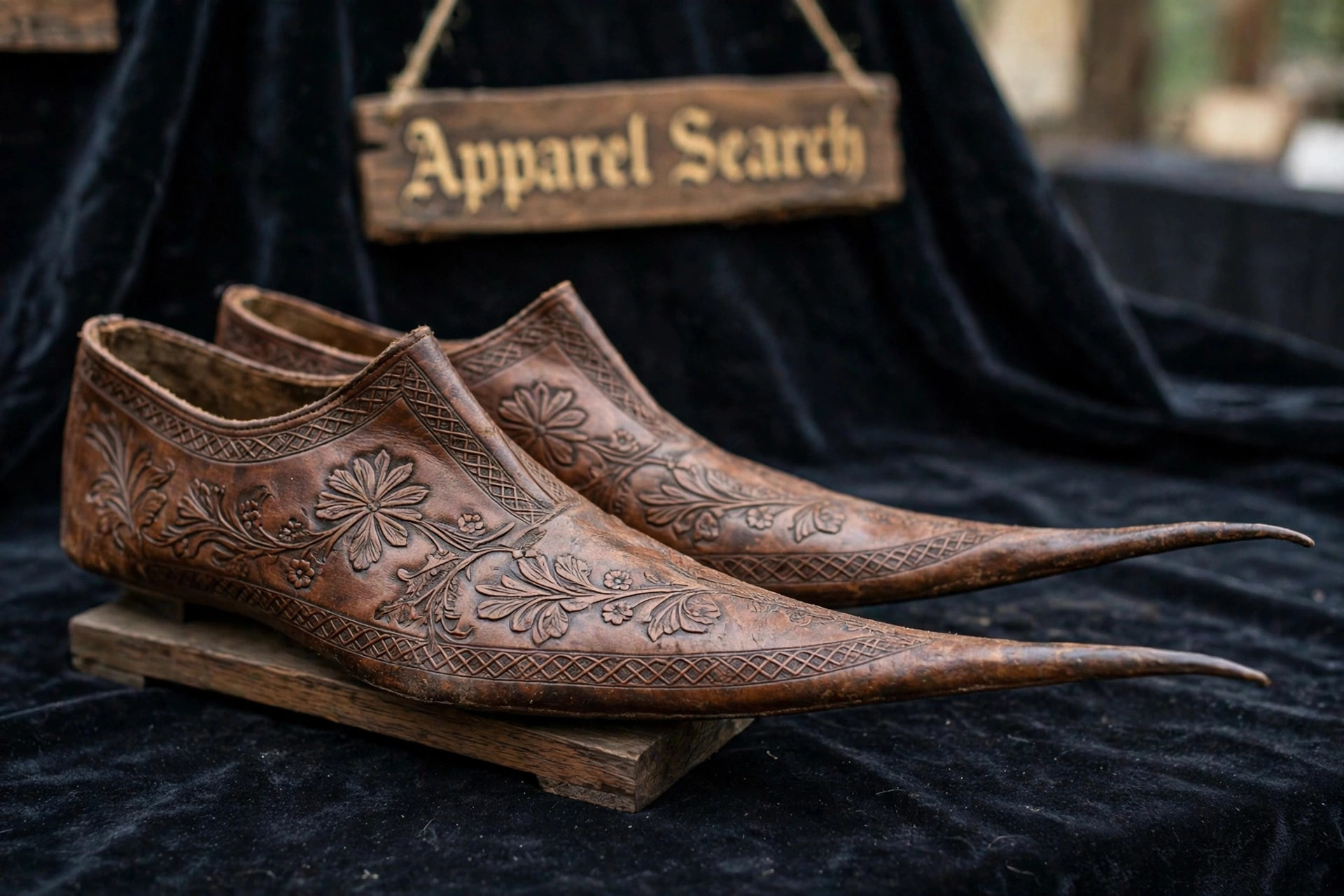
Poulaines were the long, pointed shoes that carried medieval fashion to its most theatrical extreme. In their fourteenth- and fifteenth-century heyday the toes extended far beyond the foot — in the most extravagant examples a foot or more — stuffed to hold their shape, curled upward, and occasionally chained to the wearer's knees so he could walk. The English also called them crakows, after Kraków in Poland, the supposed source of the style. Few garments in the history of Western fashion attracted such a chorus of complaint from chroniclers, preachers and legislators — the surest evidence of how completely they conquered fashionable feet.
Toes by Rank
Contemporary accounts describe toe length graded by status: half a foot for commoners, a foot for gentlemen, two feet for princes — satire, perhaps, but satire with a factual core, since sumptuary legislation repeatedly tried to cap the point. An English statute of 1463 under Edward IV forbade shoes with points longer than two inches for men below the rank of lord, and earlier orders had banned the style in London outright, without lasting effect.
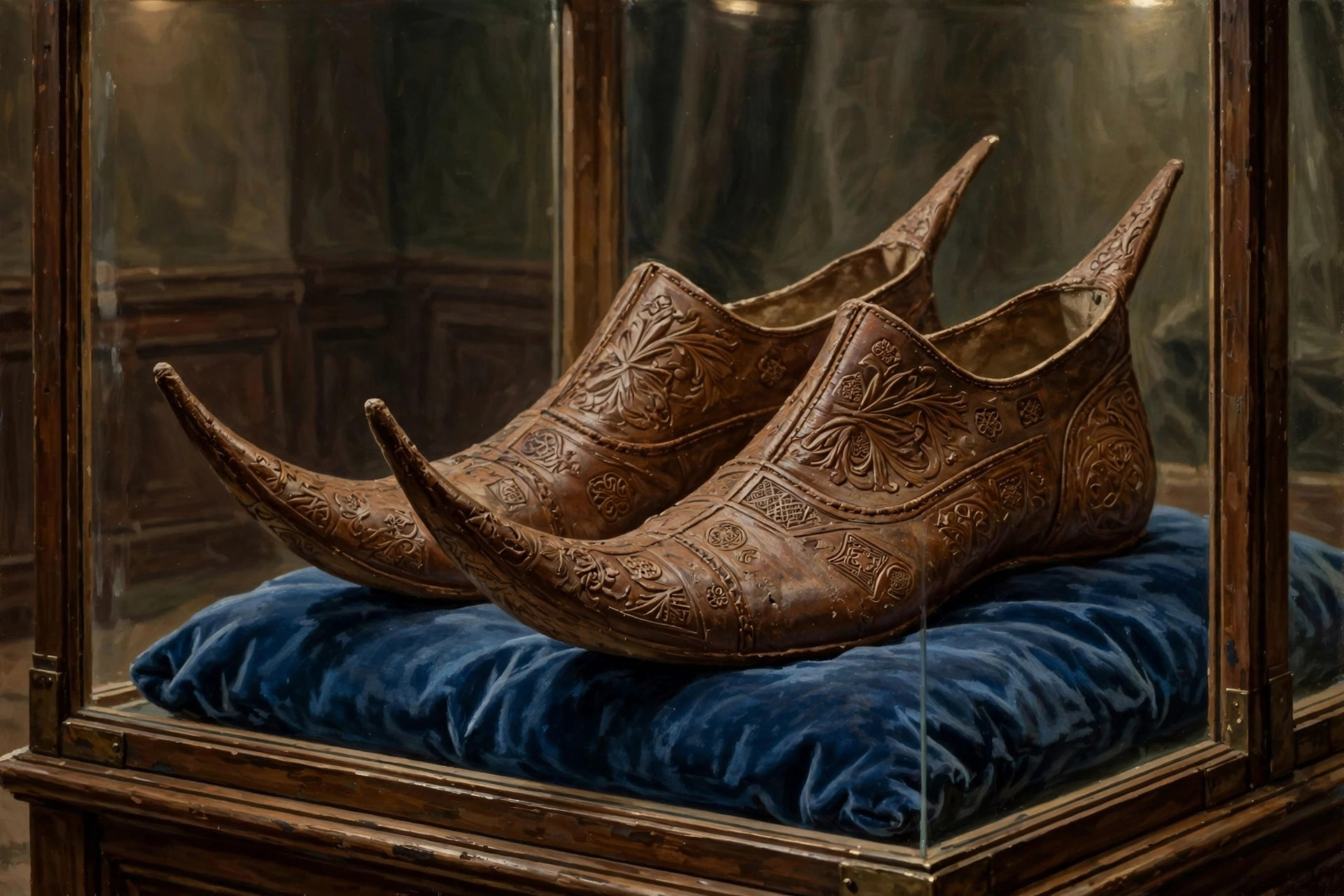
The points were kept rigid with stuffing of moss, wool or horsehair, and shaped with whalebone in fine examples. Shoes were of leather, sometimes tooled, dyed or cut in patterns; the richest were of velvet or silk over leather soles.
Wearing the Unwearable
Poulaines were court and town fashion, worn by young men of rank and by fashionable women in moderated lengths. Critics linked them with vanity, effeminacy and worse: the chronicler John of Reading blamed them for provoking divine displeasure, and after the English defeat at Agincourt, legend held that French knights had mocked English long toes — and that fleeing French men-at-arms at an earlier battle had cut off their points to run.
Impractical as they were for mud, stairs and battlefields, poulaines were entirely rational as display: in an age of sumptuary signals, a useless, ruinous, constantly renewed shoe point advertised leisure and means with every step.
Decline and Echoes
By the 1480s the pendulum swung violently, and the broad, square “duckbill” shoes of the Tudor court replaced the point entirely. Yet the long toe keeps returning: in the sharply pointed shoes of the 1950s — whose English nickname, winklepickers, consciously revived the medieval joke — in 1980s and 2000s pointed boots, and in every exaggerated designer toe since. Fashion's appetite for the absurd point appears to be permanent.
Common Questions
How long were poulaine toes?
Fashionable points extended 6 to 24 inches beyond the toes in extreme accounts, graded by rank. A 1463 English statute tried to limit men below lordly rank to two inches.
What kept poulaine points stiff?
Stuffing of moss, wool or horsehair, sometimes shaped with whalebone. The longest points were sometimes chained up to the knee to make walking easier.
Why were poulaines also called crakows?
English wearers associated the style with Kraków in Poland, then a byword for the fashion's eastern European origin, so the shoes were nicknamed crakows or crackowes.