Olefin Fiber
Fiber Definitions — the synthetic polyolefin fiber, lightest of the textile fibers from Apparel Search
Search Apparel Search
At a Glance
Definition: Olefin fiber is a synthetic fiber made from alkenes: a manufactured fiber in which the fiber-forming substance is any long-chain synthetic polymer composed of at least 85 percent by weight of ethylene, propylene or other olefin units.
Also known as: Polypropylene, polyethylene, polyolefin
Category: Fiber Definitions
Word Origin
The name comes from the term olefiant gas, an early name for ethylene, meaning “oil-forming”.
Olefin fiber is a synthetic fiber made from alkenes, used in the manufacture of various textiles. Olefin is also referred to as polypropylene, polyethylene or polyolefin — names for one polymer family rather than rival fibers. The Federal Trade Commission definition is precise: a manufactured fiber in which the fiber-forming substance is any long-chain synthetic polymer composed of at least 85 percent by weight of ethylene, propylene or other olefin units. This page sets out olefin's properties — including why it must be coloured before it is spun — the carpet-backing substitution that defines its economics, its producers, and its full range of apparel, furnishing, automotive and industrial uses in fabric.
Major Fiber Properties
Olefins are produced as monofilament, multifilament, staple fiber, tow and slit or fibrillated film yarns with variable tenacities. The fibers are waxy and colourless, often round in cross section, and they are resistant to moisture and chemicals. Polypropylene is used more for textiles than polyethylene because of its high melting point. The fibers do not take dye very well, so coloured olefin fibers are produced by adding dye directly to the polymer prior to or during melt spinning — the colour is inside the fiber rather than on its surface, which is part of why olefin is colourfast in service.
Along with being moisture and chemical resistant, olefin is abrasion resistant, low static, stain resistant, colourfast, strong, very comfortable and extremely lightweight — olefin is the lightest textile fiber. Fiber properties can be modified in a wide range with additives, for example for UV and thermal resistance, antibacterial action and flame retardancy. Some interior designers prefer olefin to most other fibers because of its attractive appearance and other positive performance aspects, along with the low-cost aspect compared with similar products made with different fibers.
Carpet Backing: The Use That Ate an Industry
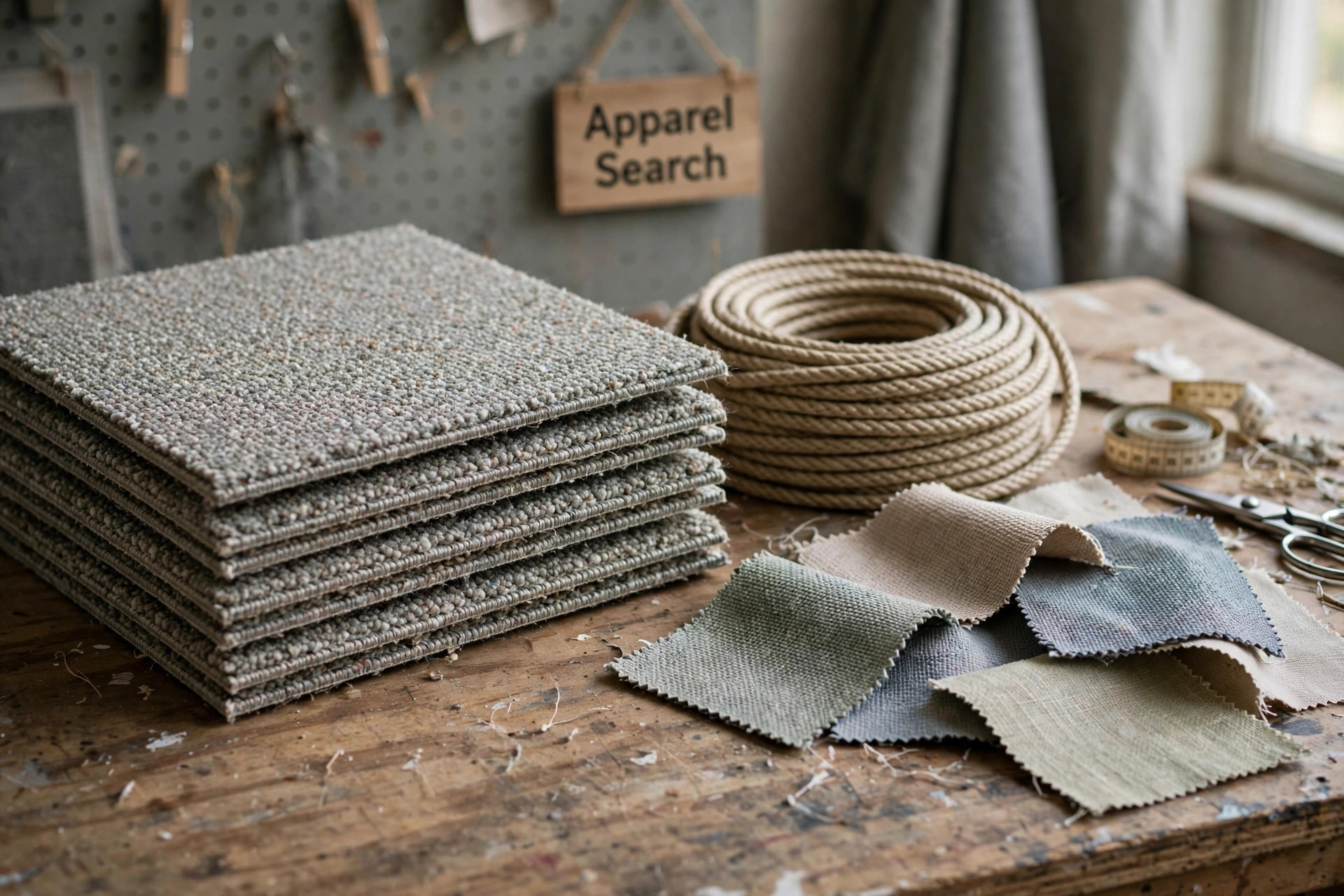
Olefin has almost completely replaced jute in carpet backing because of its low cost, easy processing, excellent durability and suitability. That single substitution summarises the fiber: a natural fiber that had held a job for centuries lost it to olefin on cost and processing, because the synthetic fiber arrives uniform, rot-proof and cheap. In home furnishing, olefin serves in indoor and outdoor carpets and carpet tiles, carpet backing, upholstery, draperies, wall coverings, slipcovers and floor coverings — outdoors, moisture and chemical resistance matter most; indoors, stain resistance, colourfastness and price carry the argument.
The remaining uses show the same range. In apparel: sports and active wear, socks, thermal underwear and lining fabrics — and Telar, by Filament Fiber Technology, Inc., is a fine-denier olefin used in blends for pantyhose, saris and swimwear. In automotive work: interior fabrics, sun visors, arm rests, door and side panels, trunks, parcel shelves, and resin replacement as binder fibers. Industrially: carpets, ropes, geo-textiles that are in contact with the soil, filter fabrics, bagging, concrete reinforcement, and heat-sealable paper such as tea and coffee bags. From geo-textiles and concrete reinforcement at one extreme to the lightest textile fiber in a swimsuit blend at the other, that range is olefin's distinguishing achievement — one polymer family, modified with additives across a wide range, serving nearly every textile market except the dye house, which its chemistry declines to visit.
Producers and the Nobel Prize Fiber
The first commercial producer of an olefin fiber in the United States was Hercules, Inc. (fiberVisions). In 1996, polyolefin was the world's first and only Nobel Prize winning fiber. Other United States olefin fiber producers include Asota; American Fibers and Yarns Co; American Synthetic Fiber, LLC; Color-Fi; fiberVisions; Foss Manufacturing Co., LLC; Drake Extrusion; Filament Fiber Technology, Inc.; TenCate Geosynthetics; and Universal Fiber Systems LLC.
Common Questions
Why is olefin coloured before it is spun?
The fibers do not take dye very well, so coloured olefin fibers are produced by adding dye directly to the polymer prior to or during melt spinning. The colour is therefore inside the fiber rather than on its surface, which is part of why olefin is colourfast in service.
What forms does olefin fiber take?
Olefins are produced as monofilament, multifilament, staple fiber, tow and slit or fibrillated film yarns with variable tenacities. The fibers are waxy, colourless, and often round in cross section, and fiber properties can be modified in a wide range with additives for UV and thermal resistance, antibacterial action and flame retardancy.
What is olefin used for?
In apparel, sports and active wear, socks, thermal underwear and lining fabrics. In home furnishing, indoor and outdoor carpets and carpet tiles, carpet backing, upholstery, draperies, wall coverings, slipcovers and floor coverings. In automotive work, interior fabrics, sun visors, arm rests, door and side panels, trunks and parcel shelves, and industrially in ropes, geo-textiles in contact with soil, filter fabrics, bagging, concrete reinforcement and heat-sealable paper such as tea and coffee bags.